
Instant message translation is the technology that converts chat text between languages in real time using AI-driven machine translation built directly into messaging platforms. You send a message in English, and your contact reads it in Spanish, French, or Mandarin within milliseconds. Platforms like iMessage Live Translation, WhatsApp's translation feature, and Telegram's translate button all rely on this process. Understanding how instant message translation works helps you choose the right tool, set realistic expectations, and communicate more confidently across language gaps.
How does instant message translation work?
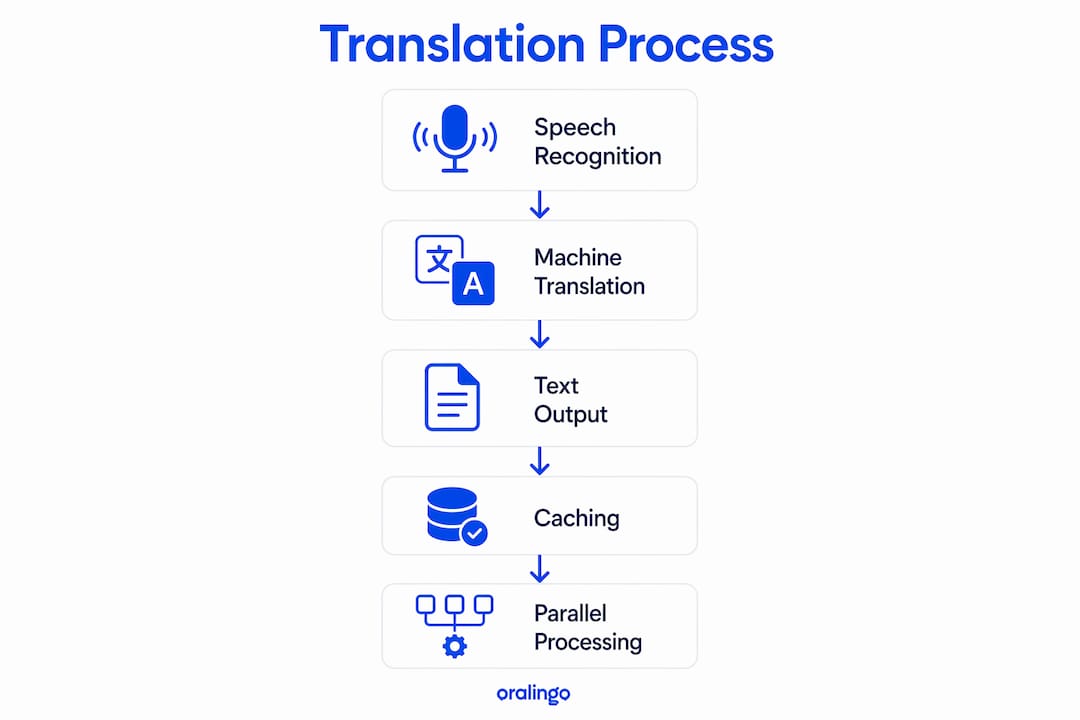
Instant message translation runs on three core technology layers working together: Automatic Speech Recognition (ASR), Neural Machine Translation (NMT), and optional Text-to-Speech (TTS). ASR converts spoken audio into text when voice input is involved. NMT then takes that text and converts it into the target language using deep learning models trained on billions of sentence pairs. TTS converts the translated text back into spoken audio for platforms that support voice output.
Most systems support 100+ languages and depend on cloud-based AI pipelines to run these steps. That cloud dependency means a stable internet connection is the default requirement for most mainstream apps. The AI models behind NMT, such as those used in Google Translate's neural engine or Meta's No Language Left Behind project, are trained on massive multilingual datasets. That training is what allows them to produce natural-sounding translations rather than word-for-word substitutions.

Pro Tip: When evaluating a translation app, check whether it uses NMT or older statistical machine translation. NMT produces noticeably more natural output, especially for complex sentences.
The three layers do not always operate in sequence. Many platforms run ASR and NMT in parallel to cut total processing time. The result is a translation pipeline that feels fast even though multiple AI steps are happening behind the scenes.
What makes real-time message translation so fast?
Speed is the defining challenge of real-time message translation. Chat translation targets sub-200ms latency, with leading platforms hitting well under that threshold. Roblox, for example, achieves roughly 100ms per translation at scale. iRoom reports a p50 latency of 95ms. Those numbers matter because any delay above 300ms starts to feel like a lag to the person reading the message.
Four techniques drive that speed:
- Pipeline parallelism. The original message is broadcast to all recipients immediately. The translation arrives as an asynchronous update roughly 200ms later. Showing the original first then swapping in the translation creates a natural, responsive feel without making the reader wait.
- Exact phrase caching. Common phrases are stored after their first translation. When the same phrase appears again, the system retrieves the cached result instead of reprocessing it.
- Embedding caching. Embedding caches store encoded representations of a message so the system can generate translations into multiple languages from a single encoding pass. This is critical for platforms serving multilingual chat rooms simultaneously.
- GPU batching. Multiple translation requests are grouped and processed together on a GPU, which is far more efficient than handling each request one at a time.
"The secret to the 'instant' feel lies in pipeline parallelism: the original message appears immediately, and the translated version arrives as an asynchronous update within one to two seconds." — auto18n
WebSockets play a supporting role here. They keep a persistent connection open between the client and the server, so translated text can be pushed to the recipient the moment it is ready, without the delay of repeated HTTP requests.
| Metric | Value |
|---|---|
| Roblox translation latency | ~100ms per message |
| iRoom p50 latency | ~95ms per message |
| Target latency for chat translation | Sub-200ms |
| Roblox throughput | 5,000+ chats per second |
Who benefits most from instant messaging translation?
Instant messaging translation solves real problems for three distinct groups: travelers, students, and business professionals.
For travelers, the use case is direct. You are at a hotel in Tokyo or a market in Lisbon, and you need to communicate quickly with someone who speaks a different language. Apps that translate chat in real time remove the friction of switching between a conversation and a separate translation app. Platforms like WhatsApp and Google Chat already have built-in translation features that cover this need for many common language pairs.
For students, the technology goes further than basic translation. AI agents in education have evolved from simple translators into context-aware assistants that preserve the meaning of learning materials across languages. An international student reading a course discussion in English can receive a translation that keeps the academic context intact, not just a literal word swap.
For business professionals, the stakes are higher. A mistranslated message in a contract negotiation or a client chat can cause real damage. The key benefits across all three groups include:
- Faster conversations without stopping to manually translate
- Reduced reliance on bilingual intermediaries
- Greater inclusivity in team chats with international colleagues
- Consistent message delivery regardless of the recipient's language
Pro Tip: For business use, prioritize tools that offer end-to-end encryption alongside translation. Sending sensitive messages through an unencrypted translation service exposes your data to third parties.
Choosing the right tool comes down to four factors: latency, accuracy, language coverage, and ease of use. A tool with 200 languages but 500ms lag will frustrate users in fast-moving chats. A tool with 50 languages but 80ms response time will feel far more natural in daily use.
How does offline instant chat translation work?
Offline instant chat translation runs the full ASR, NMT, and TTS pipeline directly on your device, with no internet connection required. Apps like Sokuji use technologies like WebAssembly (WASM) and WebGPU to run these AI models locally on consumer hardware. WASM allows compiled AI code to run efficiently in a browser or app environment. WebGPU gives the app access to the device's graphics processor for faster inference.
The tradeoff is real. On-device models are smaller than their cloud counterparts, which means they handle fewer languages and can struggle with complex sentence structures. But for many use cases, that tradeoff is worth it.
| Feature | Online translation | Offline translation |
|---|---|---|
| Language coverage | 100+ languages | Typically fewer languages |
| Latency | Sub-200ms with good connection | Varies by device hardware |
| Privacy | Data sent to cloud servers | All processing stays on device |
| Internet required | Yes | No |
| Best for | High-volume, multilingual chats | Travel, confidential conversations |
Offline translation is the right choice when you are traveling without reliable data, working in a location with restricted internet access, or handling conversations where privacy is non-negotiable. The privacy benefit is significant. No message text leaves your device, which removes the risk of interception at the server level.
What challenges affect translation accuracy and usability?
Automated translation is fast, but it is not perfect. Several specific challenges affect the quality of output you get from any instant translation system.
- Idioms and slang. Phrases like "break a leg" or "it's raining cats and dogs" do not translate literally. NMT models handle common idioms well but struggle with regional slang or newly coined expressions.
- Context loss. Short chat messages often lack the surrounding context that helps a model choose the right translation. "Bank" in a two-word message could mean a financial institution or a riverbank.
- Named entity recognition. Product names, brand names, and proper nouns sometimes get incorrectly translated or altered.
- Latency vs. accuracy tradeoffs. Faster models use smaller, less complex neural networks. Those networks sacrifice some accuracy for speed.
Human-in-the-Loop (HITL) approaches address these gaps in enterprise settings. HITL means a human linguist reviews or refines AI-generated translations before they are sent or published. This is standard practice for legal, medical, and high-stakes business communication. For casual chat, uninterrupted conversation flow matters more than flawless accuracy. Most users tolerate a slightly imperfect translation far better than a noticeable delay.
Key Takeaways
Instant message translation works by combining Neural Machine Translation, pipeline parallelism, and caching to deliver translated chat in under 200ms without interrupting the conversation.
| Point | Details |
|---|---|
| Core technology layers | ASR, NMT, and optional TTS work together to convert speech or text across languages. |
| Speed comes from design | Pipeline parallelism shows the original message first, then pushes the translation as an async update. |
| Caching cuts processing time | Embedding caches let one encoding pass generate translations into multiple languages simultaneously. |
| Offline translation is possible | Apps like Sokuji use WASM and WebGPU to run full translation pipelines on-device without internet. |
| Accuracy has real limits | Idioms, slang, and short messages without context remain the hardest challenges for automated translation. |
My take on where this technology is actually headed
I have watched real-time translation go from a novelty to a genuine communication tool over the past several years. The latency improvements are the most striking change. Getting from 500ms to sub-100ms is not just a technical milestone. It changes how conversations feel. At 100ms, the translation appears before you have finished reading the original. That is the point where the technology stops being a tool and starts being invisible.
What concerns me is the gap between casual and professional use. For a traveler asking for directions, a slightly off translation is harmless. For a business professional closing a deal or a student submitting coursework, that same imprecision can cause real problems. The HITL model from enterprise providers is the right answer for high-stakes contexts, but most people never think to look for it.
The shift toward multilingual AI agents is the development worth watching. Context-aware AI that understands what you are trying to communicate, not just what you literally typed, is a meaningful upgrade over pure translation. My advice: try more than one tool before committing. The difference between a 95ms response and a 400ms response is something you feel immediately, and no feature list will tell you which one you are getting until you test it yourself.
— Poul
Real-time chat translation with Oralingo
You now know what powers instant message translation. Putting that knowledge to work means finding a tool that delivers on the technical promises.
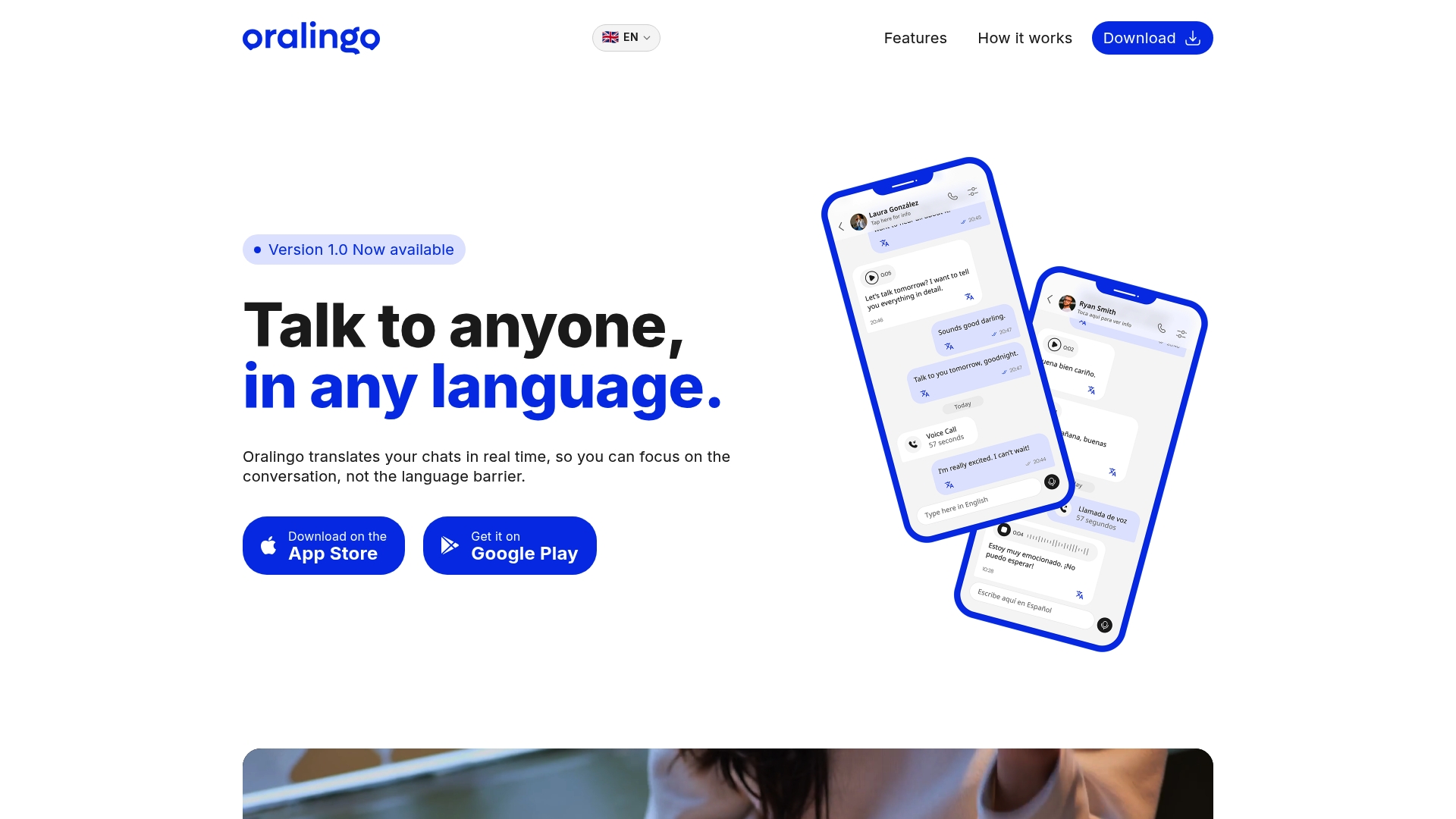
Oralingo translates messages before they are displayed, so conversations stay natural and uninterrupted. It supports over 100 languages with a 99% accuracy rate, covers both text and hands-free voice mode, and keeps every conversation end-to-end encrypted. Whether you are chatting with international colleagues, connecting with family abroad, or navigating a new country, Oralingo handles the language so you can focus on the conversation. Try Oralingo and see how fast cross-language communication can feel.
FAQ
What is instant message translation?
Instant message translation is AI-powered automatic text conversion between languages built directly into a messaging platform. It uses Neural Machine Translation to convert your message and deliver the translated version to the recipient in real time.
How fast is real-time message translation?
Leading platforms achieve translation latency of around 100ms. Roblox hits roughly 100ms per translation using caching and GPU batching, while iRoom reports a p50 latency of 95ms.
Can instant chat translation work offline?
Yes. Apps like Sokuji use WASM and WebGPU to run ASR, NMT, and TTS models entirely on-device. Offline translation covers fewer languages than cloud-based systems but requires no internet and keeps all data on your device.
What is instant messaging translation for students?
For students, instant messaging translation means AI-assisted multilingual communication that preserves academic context. Context-aware AI agents translate learning materials and chat messages while keeping the original meaning intact for international students.
Why is translation accuracy sometimes imperfect?
Short messages lack context, and idioms or slang do not translate literally. NMT models handle common phrases well but struggle with regional expressions, newly coined terms, and ambiguous words that depend on surrounding context to interpret correctly.