
Language challenges while traveling are defined as the verbal, written, nonverbal, and cultural communication obstacles that prevent travelers from exchanging meaning accurately with local people. Language barriers impact tourist satisfaction in 18–25% of cases overall, rising to 40–50% in non-resort areas. That gap matters because it means the further you go off the beaten path, the more likely a communication breakdown will shape your entire experience.
1. What are the main types of language challenges while traveling?
The core types of language challenges while traveling fall into four categories: verbal, written, nonverbal, and cultural. Each one creates a different kind of friction. Verbal barriers hit you in real-time conversation. Written barriers slow you down at signs, menus, and transport hubs. Nonverbal barriers trip you up when gestures mean something different than you expect. Cultural barriers are the most invisible and often the most damaging.
60% of travelers used translation apps to cope with language obstacles, while 35% relied on gestures. Both strategies work, but neither alone covers all four categories. You need a layered approach.
2. Verbal communication barriers: accents, dialects, and vocabulary
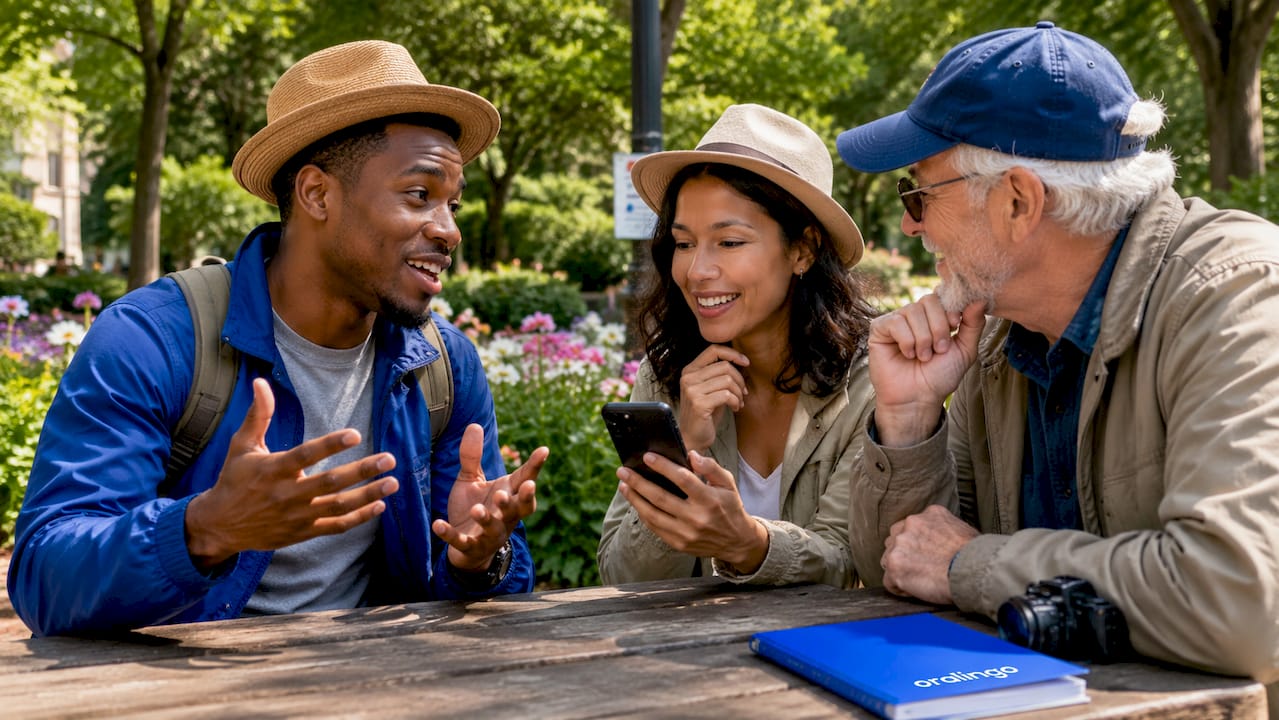
Verbal communication is where most travelers feel the pressure first. Speaking and listening skills are the primary barriers for tourism professionals and travelers alike, with accent variation and lack of specialized vocabulary topping the list of problems.
The challenge is not just knowing a language. It is understanding the local version of it. Spanish in Mexico sounds different from Spanish in Andalusia. Mandarin in Beijing differs from Cantonese in Hong Kong. Even English speakers struggle when a Scottish or Jamaican accent is thick.
Common verbal travel language difficulties include:
- Accent and dialect variation that makes familiar words unrecognizable
- Lack of emergency vocabulary for situations like illness, theft, or transport delays
- Speed of speech from locals who do not realize you are struggling
- False cognates that sound like words you know but mean something different
Stacking multiple ideas in one sentence reduces translation accuracy. Speak one idea at a time, pause, and let the listener or app process it before continuing.
Pro Tip: Use ride-hailing apps like Uber or Grab instead of street taxis. The destination is already entered, the price is fixed, and you never need to negotiate or explain where you are going. This removes the most common verbal friction point in urban travel.
3. Written language barriers and how travelers can prepare
Written communication barriers hit hardest when you cannot read the local script at all. Arabic, Cyrillic, Thai, and Chinese characters give most Western travelers zero visual footholds. Even when the alphabet is familiar, handwritten signs and informal shorthand can be impossible to decode.
The practical impact is real. You miss your bus stop because you cannot read the destination board. You order the wrong dish because the menu has no pictures. You walk past your hotel because the street sign uses a script you have never seen.
Key written barriers travelers face:
- Non-Latin alphabets like Arabic, Cyrillic, Devanagari, or Hangul
- Handwritten numbers that differ from printed versions in some regions
- Informal signage using local abbreviations or slang
- Payment terminals with instructions only in the local language
Having written addresses in local script is one of the most effective backup strategies, especially when digital devices fail or lose signal. Print a card with your hotel address, the nearest landmark, and the local emergency number before you leave your accommodation each day.
Pro Tip: Pre-program common phrases into a notes app or a translation tool before you arrive. Screenshots of key phrases work even without a data connection, making them reliable in subways, rural areas, or places with poor signal.
4. Nonverbal communication challenges and body literacy
Approximately 55% of total communication is nonverbal, which means your body is always talking even when your mouth is not. That is a significant advantage for travelers, but only if you understand how to read and send the right signals.
Two gestures work almost universally: the eyebrow flash (a quick raise of both eyebrows as a greeting) and the open palm facing up (signaling a request or openness). Both cross cultural lines reliably. Most other gestures do not.
The thumbs-up sign is positive in the United States but offensive in parts of the Middle East and West Africa. The "OK" circle gesture is vulgar in Brazil and Turkey. Pointing directly at a person is rude across much of Asia. These are not minor misunderstandings. They can end a conversation or cause genuine offense.
Pro Tip: When you are unsure, mirror the body language of the local person you are speaking with. Matching their posture and energy signals respect and attentiveness, even when words fail completely.
Positive body language habits that help across most cultures include:
- Smiling with eye contact when greeting
- Keeping a respectful physical distance (arm's length as a default)
- Nodding slowly to show you are listening
- Avoiding crossed arms, which reads as defensive in most cultures
5. Cultural and contextual barriers affecting communication
Cultural barriers cause misunderstandings that go deeper than vocabulary gaps. High-context cultures rely on implicit meaning, shared history, and tone. Low-context cultures expect explicit, direct statements. Travelers from the United States or Germany (low-context) often misread signals from Japanese, Thai, or Arab communicators (high-context).
The most common mistake is taking a polite "yes" at face value. In many Asian and Middle Eastern cultures, "yes" can mean "I hear you" rather than "I agree." Travelers commonly misinterpret polite agreement as actual confirmation. The fix is to rephrase and confirm: "So we will meet at 3pm at the hotel entrance?" forces a specific response rather than a social one.
Practical strategies for cultural communication barriers:
- Rephrase to confirm: restate what you understood and ask for a nod or written confirmation
- Watch for hesitation: a pause before "yes" often signals discomfort or disagreement
- Avoid direct refusals yourself: in high-context cultures, saying "no" bluntly can cause embarrassment
- Learn the local etiquette around negotiation: in some markets, bargaining is expected; in others, it is offensive
Cultural reading skills are often more valuable than vocabulary knowledge. A traveler who reads social cues well will navigate a conversation in an unfamiliar language better than one who memorized 500 words but misses every implied signal.
6. Situational language challenges during emergencies and complex logistics
Situational language struggles during trips are the hardest to prepare for because they hit when you are already stressed. Stress narrows cognitive focus during crises, making language barriers feel insurmountable even when you normally manage fine. Your brain is busy processing the emergency, leaving fewer resources for language retrieval.
The most common high-stakes situations where language breaks down:
- Medical emergencies: describing symptoms to a doctor or pharmacist without shared vocabulary
- Theft or loss: reporting to police when neither party speaks the other's language
- Transport disruptions: understanding rerouting announcements at airports or train stations
- Accommodation disputes: resolving billing or booking errors at check-in
- Noisy environments: markets, festivals, and busy streets where even clear speech gets lost
Seeking authority figures like tourist police or hotel concierges is the most effective strategy during emergencies. These people are trained to deal with foreign visitors and often speak at least basic English. They also carry institutional weight that helps move things forward faster.
Physical paper address cards remain critical backups. When your phone dies or loses signal, a printed card with your hotel name, address, and a local emergency contact number can be handed directly to a taxi driver, police officer, or passerby.
Pro Tip: Save the local emergency number, your hotel's direct line, and your country's embassy contact in your phone before you land. Screenshot them so they are accessible without a data connection.
Key takeaways
Overcoming language challenges while traveling requires recognizing all four barrier types: verbal, written, nonverbal, and cultural, then applying a specific strategy to each.
| Point | Details |
|---|---|
| Four barrier types exist | Verbal, written, nonverbal, and cultural barriers each require a different response strategy. |
| Nonverbal communication dominates | 55% of communication is nonverbal, so body language skills matter as much as vocabulary. |
| Cultural context beats vocabulary | Reading social cues and confirming understanding prevents more mistakes than memorizing words. |
| Prepare written backups | Carry printed address cards in local script for emergencies when digital tools fail. |
| Stress worsens language barriers | Identify authority anchors like tourist police before a crisis, not during one. |
What I have learned from years of traveling with language barriers
The most surprising lesson I took from years of traveling across high-context cultures is that confidence reads louder than vocabulary. I have had full conversations in countries where I spoke zero words of the local language, simply by staying calm, using open body language, and confirming understanding through gestures and written notes. The moment I looked panicked, the conversation collapsed.
Technology changed the game significantly. Real-time translation tools removed the friction from dozens of interactions I would have otherwise fumbled. But the travelers I watched struggle most were those who relied entirely on their phones and had no backup plan when the signal dropped or the battery died.
My honest advice: treat language preparation the same way you treat packing. You bring a rain jacket even when the forecast looks clear. Carry a printed address card, learn five local phrases, and know where the nearest tourist police station is. That preparation costs you 20 minutes before the trip and saves you hours of stress during it.
The other thing nobody tells you: locals respond to effort. Attempting even a single word in the local language before switching to English or a translation app shifts the entire tone of the interaction. It signals respect. That signal travels further than any vocabulary list.
— Poul
Talk to anyone, anywhere with Oralingo
Handling language struggles during trips gets easier when you have the right tool in your pocket.
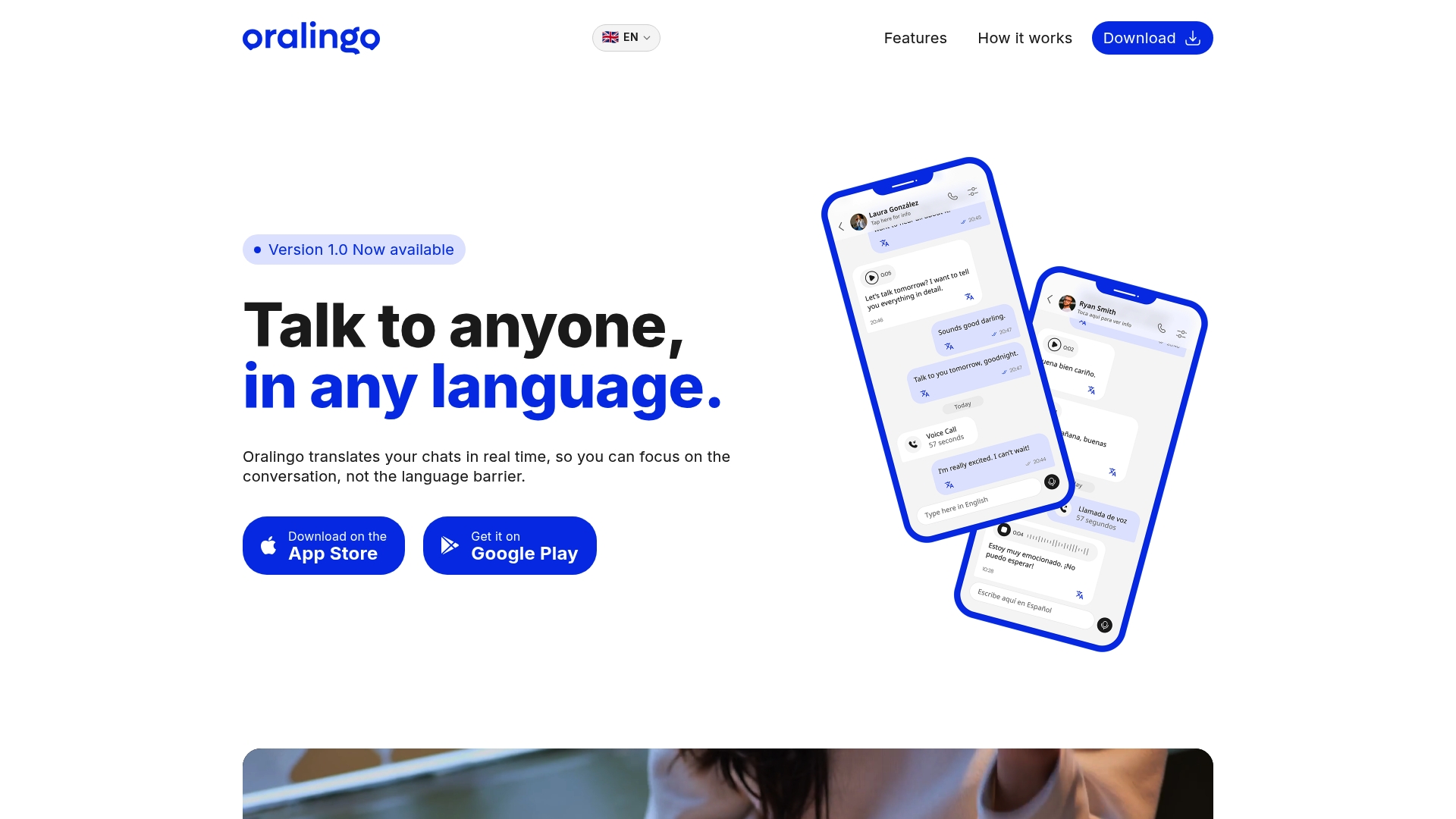
Oralingo translates messages instantly before they appear on screen, so your conversations flow without interruption. The hands-free voice mode means you can talk naturally without stopping to type. With support for over 100 languages and a 99% accuracy rate, Oralingo covers verbal and written communication barriers in one app. Every conversation is end-to-end encrypted, so your exchanges stay private. Download Oralingo and focus on the experience, not the language gap.
FAQ
What are the most common language challenges travelers face?
The most common travel language difficulties are verbal barriers (accents and vocabulary), written barriers (unfamiliar scripts), nonverbal misreads, and cultural misunderstandings. Language barriers affect tourist satisfaction in 18–25% of cases, rising sharply in non-resort areas.
How do I handle language barriers in a travel emergency?
Seek out authority figures like tourist police or hotel concierges, who are trained to assist foreign visitors. Carry a printed card with your hotel address and local emergency numbers as a backup when digital tools are unavailable.
Why do cultural barriers cause more damage than vocabulary gaps?
High-context cultures communicate through implication and tone rather than direct words. A traveler who misreads a polite "yes" as genuine agreement can make costly logistical mistakes that no amount of vocabulary knowledge would have prevented.
Are translation apps reliable for overcoming language issues abroad?
Translation apps work best when you speak or type one idea at a time. Stacking multiple ideas in a single sentence reduces accuracy. Apps like Oralingo, which translate in real time before the message displays, reduce this error significantly.
What nonverbal strategies work across most cultures?
The eyebrow flash and open-palm-up gesture are recognized across most cultures as friendly and non-threatening. Mirroring the other person's posture and maintaining a respectful distance also signals respect without requiring a shared language.