
Facilitating cross-language brainstorming sessions is the practice of structuring real-time idea generation across teams who speak different languages, using AI translation tools and inclusive facilitation methods to ensure every voice contributes fully. Also called multilingual ideation facilitation, this approach is now a core competency for global teams. AI-powered tools like Oralingo and Qordenate now make it possible to run live multilingual conversations with sub-second translation latency. Structured methods like the "1-2-4-All" technique give every participant equal time to think and speak, regardless of language background.
How to facilitate cross-language brainstorming sessions: what you need first
Success starts before the session opens. You need the right technology, clear communication norms, and a shared digital workspace set up in advance.
Choosing the right AI translation tool
Modern AI translation tools support 60–70+ languages with sub-second latency. That speed matters because it eliminates the cognitive pause that breaks conversational flow. Oralingo supports over 100 languages with a 99% accuracy rate and translates messages instantly before they appear on screen. Qordenate lets each participant hear the meeting in their own native language independently, which eliminates cognitive tax and allows full idea depth without requiring anyone to adjust their language for others.
Here is a quick comparison of key features to consider when selecting a tool:
| Feature | What to look for |
|---|---|
| Language support | 60+ languages minimum for global teams |
| Latency | Sub-second for live conversation flow |
| Voice mode | Hands-free option for verbal brainstorming |
| Chat translation | Instant in-line translation before display |
| Encryption | End-to-end for confidential sessions |
| Platform integration | Works with Slack, Jira, Mural, or Trello |
Setting communication norms before the session
A written-first protocol is the single most effective pre-session norm you can set. Teams that document all decisions and actions in writing reduce interpretation variance by 60–80% and create clear ownership of next steps. Set up shared digital spaces in tools like Mural, Trello, or Slack before the session starts. Define which channel serves which purpose: Slack for quick questions, email for formal agreements, and video calls for complex discussions. Clear channel definitions prevent information overload and reduce miscommunication across time zones.

Reducing cognitive load before the session starts
Non-native speakers experience "cognitive compression," a state where complex ideas get simplified prematurely because of the mental effort of operating in a second language. Asynchronous warm-up prompts sent through Slack or Microsoft Teams before the live session allow participants to develop ideas fully in their own language and time. This produces richer contributions during the live session. Ask participants to post one idea or question in writing 24 hours before the meeting.
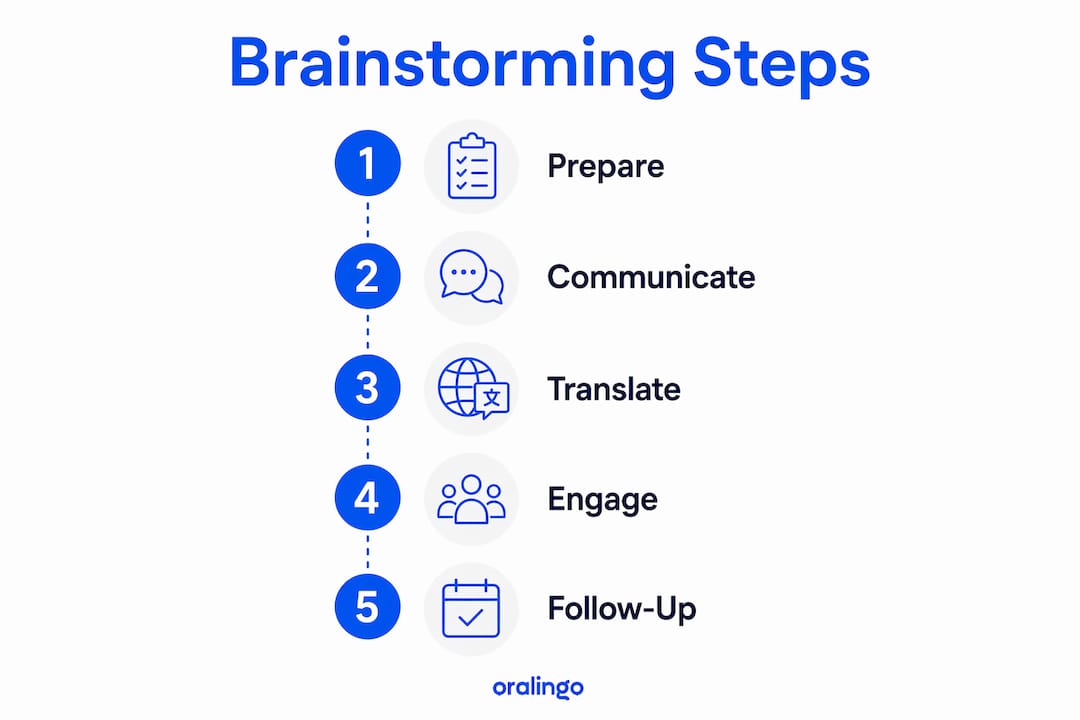
Pro Tip: Send warm-up prompts in each participant's native language using a tool like Oralingo. You get deeper, more confident contributions when people start thinking in the language they know best.
How to run the session step by step for full participation
Structure is the most powerful tool you have in a multilingual session. Without it, fluent speakers dominate and quieter voices disappear.
-
Open with a clarification norm. State clearly at the start that asking for clarification is expected and welcomed. Language is a structural disadvantage in global teams, and the SPLIT framework from Harvard professor Tsedal Neeley shows that normalizing clarification transforms language differences from a source of shame into a shared challenge.
-
Run the "1-2-4-All" technique. This method allocates time for individual thought, paired discussion, small group conversation, and full plenary sharing. Core ideation lasts 6–10 minutes before results are shared with the whole group. The individual and paired phases give non-native speakers time to form and refine ideas before speaking to a larger audience.
-
Document in real time on a shared board. Use Mural or Trello to capture every idea as it is spoken. Live documentation on shared digital platforms circumvents linguistic nuance loss that is inherent in verbal-only communication. It also gives participants a visual anchor to reference when translation creates any ambiguity.
-
Model vulnerability as the facilitator. Ask for clarification yourself, even when you understand. Effective facilitation shifts the leader's role from subject matter expert to learner. When the facilitator says "Can you say that another way?" it signals to the whole group that asking is safe.
-
Use AI transcription and chat translation throughout. Run Oralingo or a similar tool in parallel with your video call. Chat translation captures ideas from participants who prefer to type rather than speak, which is common among non-native speakers in high-stakes settings.
Pro Tip: Assign a dedicated note-taker whose only job is to log decisions and open questions on the shared board in real time. This frees the facilitator to focus on participation and flow.
Key behaviors to reinforce during the session:
- Pause after each idea to allow translation to complete before responses begin.
- Avoid idioms, slang, and culturally specific references entirely.
- Summarize decisions out loud and in writing before moving to the next topic.
- Invite quieter participants by name during the "4-All" plenary phase.
What challenges come up in multilingual brainstorming and how to fix them
The most common failure point in cross-cultural collaboration is assuming shared understanding when none exists.
Cognitive load and decision-making speed
Replacing manual translation with AI reduces decision-making times by 30–50%. That gap is significant. Without real-time translation, non-native speakers spend mental energy on language processing instead of idea generation. The result is slower decisions and shallower contributions. AI tools like Oralingo remove that processing burden by translating before the message appears, so participants read in their own language without delay.
Culturally loaded language
Culturally loaded idioms create 20–30% more ambiguity in cross-cultural team communication. Phrases like "let's circle back," "hit the ground running," or "boil the ocean" carry no clear meaning for many non-native English speakers. Replace them with direct, explicit language. Say "we will return to this topic at 3 p.m." instead of "let's circle back." This is not about dumbing down the conversation. It is about making your meaning land correctly the first time.
Cultural hierarchy and participation bias
Anonymous feedback methods like the Delphi method bypass cultural hierarchy bias and increase participation equity. In many cultures, disagreeing with a senior colleague in public is uncomfortable or even taboo. Anonymous idea submission through a shared board or polling tool removes that pressure. Every idea gets evaluated on its merit, not its source.
Making implicit assumptions explicit by summarizing decisions and checking mutual understanding is more effective than trying to interpret communication styles in international teams.
Asynchronous follow-up for comprehension
Send a written summary of all decisions and next steps after every session, translated into each participant's language. This is not just courtesy. It closes the gap between what was said and what was understood. Use Oralingo's chat translation or a tool like Grammarly to check that your summary is clear and free of ambiguous phrasing before you send it.
Which communication technologies work best for multilingual sessions?
The right technology stack depends on the type of communication happening, not just the number of languages involved.
Matching tools to communication types
Different channels serve different purposes in a multilingual team. Defining those purposes in advance prevents the confusion that comes from using video calls for everything.
| Channel | Best use case | Key benefit |
|---|---|---|
| Video call with AI translation | Complex discussions, live brainstorming | Real-time comprehension for all participants |
| Chat with instant translation | Quick questions, idea capture | Written record, no speaking pressure |
| Email with AI drafting | Formal agreements, summaries | Clarity, documentation, translation review |
| Shared digital whiteboard | Visual ideation, decision tracking | Reduces nuance loss from verbal-only sessions |
| Asynchronous voice notes | Warm-up prompts, follow-ups | Allows native-language idea development |
How AI meeting summaries improve post-session clarity
AI tools that generate meeting summaries in each participant's native language close the comprehension gap that often appears after a session ends. Qordenate delivers this natively. Oralingo handles the live translation layer. Together, these tools mean participants leave a session with a clear record of what was decided, in the language they think in. That clarity speeds up execution and reduces the need for follow-up clarification calls.
Visual anchors on shared whiteboards like Mural serve a parallel function. When a translated phrase is ambiguous, the visual representation of the idea on the board gives participants a second reference point. Teams that combine real-time chat translation with live visual documentation report fewer post-session misunderstandings.
Pro Tip: Use Oralingo's voice mode during the live session and its chat translation for the written follow-up. You cover both the verbal and written communication channels with one tool.
Key takeaways
Effective multilingual brainstorming requires AI translation tools, structured facilitation methods, and explicit communication norms working together from preparation through follow-up.
| Point | Details |
|---|---|
| Use AI translation from the start | Tools like Oralingo and Qordenate eliminate cognitive load and reduce decision delays by 30–50%. |
| Apply the "1-2-4-All" technique | This structure gives non-native speakers time to form ideas before speaking to the full group. |
| Set a written-first protocol | Documenting decisions in writing reduces interpretation variance by 60–80% and clarifies ownership. |
| Normalize clarification requests | The SPLIT framework shows that treating language gaps as shared challenges improves participation equity. |
| Match tools to communication types | Video, chat, email, and shared boards each serve a distinct purpose in multilingual collaboration. |
What I have learned from facilitating multilingual teams
The biggest mistake I see facilitators make is treating language as a logistics problem. They install a translation tool, brief the team, and assume the barrier is gone. It is not. Language is also a confidence problem, a cultural problem, and sometimes a power problem.
The teams I have seen succeed are the ones where the facilitator models imperfection first. When a leader says "I am not sure I understood that correctly, can you rephrase?" it changes the entire room. Suddenly, asking for clarification is not a sign of weakness. It is what the leader does.
I have also noticed that over-reliance on verbal communication is the most common structural flaw in multilingual sessions. People assume that if something was said, it was understood. It rarely is. The teams that write everything down in real time, even during fast-moving ideation, consistently produce clearer outcomes and faster follow-through.
My practical advice: do not introduce every new tool at once. Start with one AI translation layer, get the team comfortable, then add asynchronous warm-ups, then visual documentation. Incremental adoption prevents the tool overload that causes teams to revert to old habits. And always close every session with a written summary translated into each participant's language. That single habit eliminates more post-session confusion than any other practice I have seen.
— Poul
Real-time translation for your next multilingual session with Oralingo
Your team's ideas should not get lost in translation. Oralingo delivers real-time chat and voice translation across 100+ languages with a 99% accuracy rate, so every participant follows the conversation in their own language without delay.
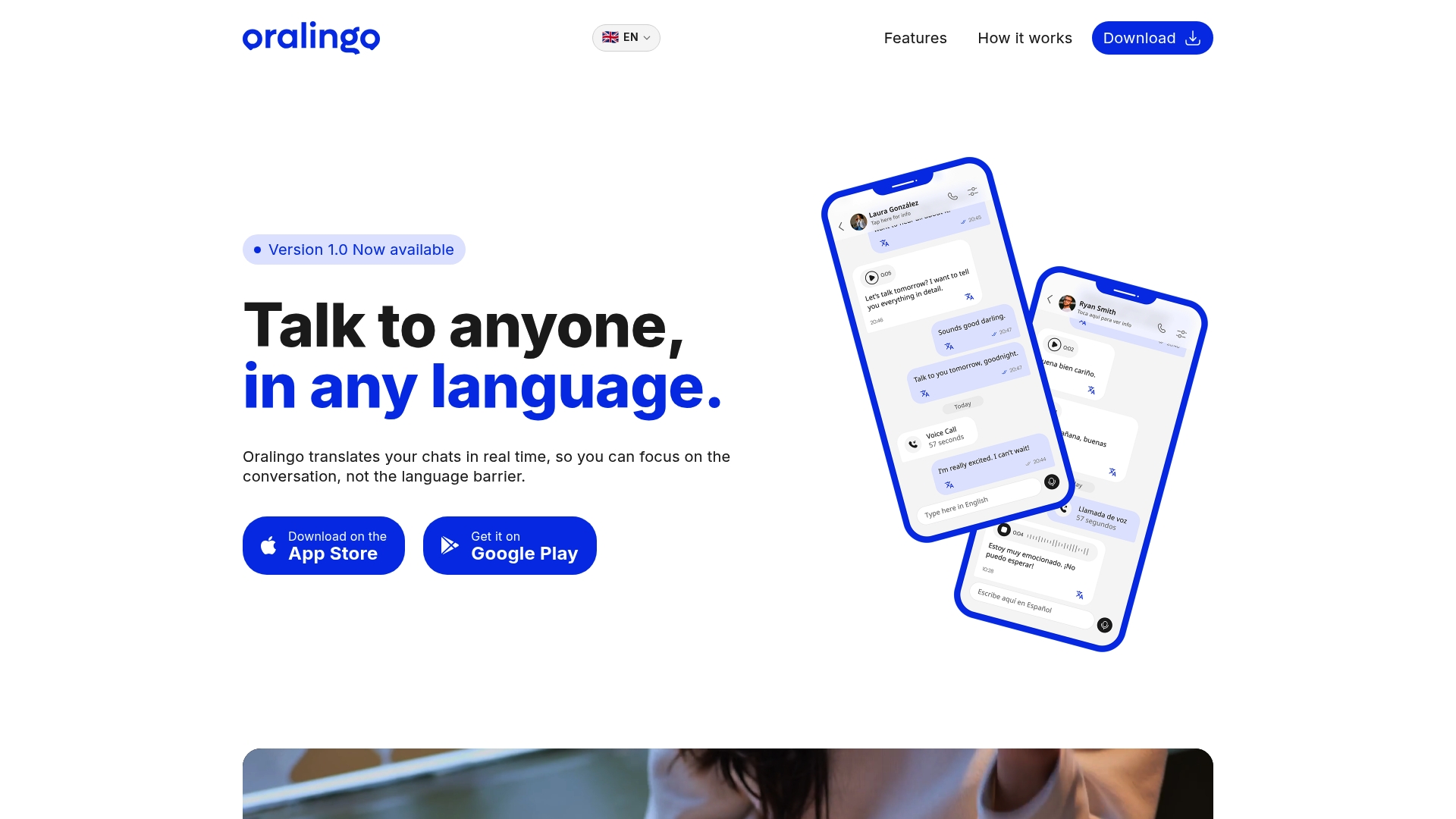
Oralingo translates messages instantly before they appear on screen, removing the processing gap that slows non-native speakers down. Its hands-free voice mode works for live verbal sessions, and end-to-end encryption keeps every conversation private. Whether you are running a structured "1-2-4-All" session or a fast-moving ideation call, Oralingo keeps everyone in the room. Try Oralingo and run your next cross-language brainstorming session with full participation from every team member.
FAQ
What is a cross-language brainstorming session?
A cross-language brainstorming session is a structured ideation meeting where participants speak different native languages and use AI translation tools or facilitation methods to contribute equally. The goal is full participation regardless of language background.
Which technique works best for multilingual brainstorming?
The "1-2-4-All" technique is the most effective structured method for multilingual teams. It gives participants individual thinking time and small-group discussion before full-group sharing, which reduces the pressure on non-native speakers to perform in real time.
How does AI translation reduce cognitive load in meetings?
AI tools like Oralingo translate messages before they are displayed, so participants read in their own language without processing delay. Replacing manual translation with AI cuts decision-making time by 30–50% by freeing mental energy for ideas rather than language.
How do you handle cultural hierarchy bias in brainstorming?
Anonymous feedback methods like the Delphi technique remove the social pressure of disagreeing with senior colleagues in public. Structured anonymous approaches increase participation equity by evaluating ideas on merit rather than source.
What should you send after a multilingual brainstorming session?
Send a written summary of all decisions and next steps, translated into each participant's native language. This closes the gap between what was said and what was understood, and it reduces the need for follow-up clarification calls.