
When you're dealing with U.S. bureaucracy as an expat, six distinct types of language barriers can block your access to benefits, visas, and services: spoken/oral barriers (you can't understand what's said or express yourself clearly in English), written/forms barriers (official documents use vocabulary you don't recognize), legal/jargon barriers (specialized terminology that even fluent speakers misread), procedural/interactional barriers (unspoken rules about how to behave in official settings), symbolic/attitudinal barriers (institutional assumptions about who "deserves" help), and digital/asynchronous barriers (online portals and email notices that strip out nuance or arrive in abridged English).
- Spoken/oral: You can't follow fast-spoken English or express your situation clearly in an interview.
- Written/forms: Official notices use vocabulary or sentence structures that don't translate directly.
- Legal/jargon: Terms like "adjudication," "prima facie," or "claimant" carry precise legal meanings that differ from everyday usage.
- Procedural/interactional: You don't know the unwritten rules — when to speak, what tone to use, what documents to volunteer.
- Symbolic/attitudinal: Staff assume you should arrive fluent or bring your own interpreter, shifting the burden onto you.
- Digital/asynchronous: Online portals and automated notices often deliver shortened English summaries that omit critical conditions.
Examples of each barrier in U.S. settings appear in the next section. The before/during/after checklist is in "What to bring and say at any bureaucratic appointment."
Pro Tip: Print this list and mark which barrier type you're most likely to face before your next appointment. That one step helps you prepare the right kind of help.
Key Takeaways
Understanding the specific types of bureaucratic language barriers you face is the first step to protecting your rights and getting the outcomes you're entitled to.
| Point | Details |
|---|---|
| Six barrier types to know | Spoken, written, legal/jargon, procedural, symbolic, and digital barriers each require a different response. |
| Manifest vs. symbolic distinction | Manifest barriers are visible communication failures; symbolic barriers are institutional assumptions that shift burden onto you. |
| Language-access rights are federal | Federally funded agencies must provide meaningful access for limited-English-proficient individuals under Title VI. |
| Match help to risk level | Use certified translators for documents, professional interpreters for appointments, and legal aid for high-stakes outcomes. |
| Document everything | Screenshot portals, note staff names, and send follow-up emails to create a record you can use if you need to escalate. |
Table of Contents
- What are 'manifest' and 'symbolic' bureaucratic barriers, and why does the difference matter?
- How each barrier type shows up in real U.S. bureaucratic settings
- Why these barriers carry real costs you can't afford to ignore
- What to bring and say at any bureaucratic appointment
- What are your language-access rights in the United States?
- When should you use a lay interpreter, certified translator, professional interpreter, or legal aid?
- What academic research says about why institutions create these barriers
- How community organizations and legal aid can help you
- The emotional cost nobody talks about
- Sources
What are 'manifest' and 'symbolic' bureaucratic barriers, and why does the difference matter?
Researchers studying street-level bureaucracy draw a clear line between two categories of language barriers, and understanding that line changes how you prepare.
Manifest barriers are direct communication failures. You can't understand what the officer says. You can't fill out a form because the vocabulary is unfamiliar. The problem is visible and, in theory, fixable with a good interpreter or a translated document.
Symbolic barriers are harder to see. They live in institutional assumptions: the idea that a "real" claimant should already speak English, or that bringing an interpreter signals something suspicious. These are expressions of what researchers call monolingual ideology, the unspoken belief that English-only service is the neutral default. Symbolic barriers affect how staff judge your credibility, not just whether they can understand you.
Beyond both categories sits a skill called legal literacy, the ability to read an official notice and understand its legal effect, not just its surface meaning. And beyond legal literacy sits bureaucratic translation, a concept developed in policy research to describe something more demanding than word-for-word translation. Bureaucratic translation means synthesizing multiple documents, cross-checking them against each other, and confirming the legal intent behind the words, not just their dictionary meaning.
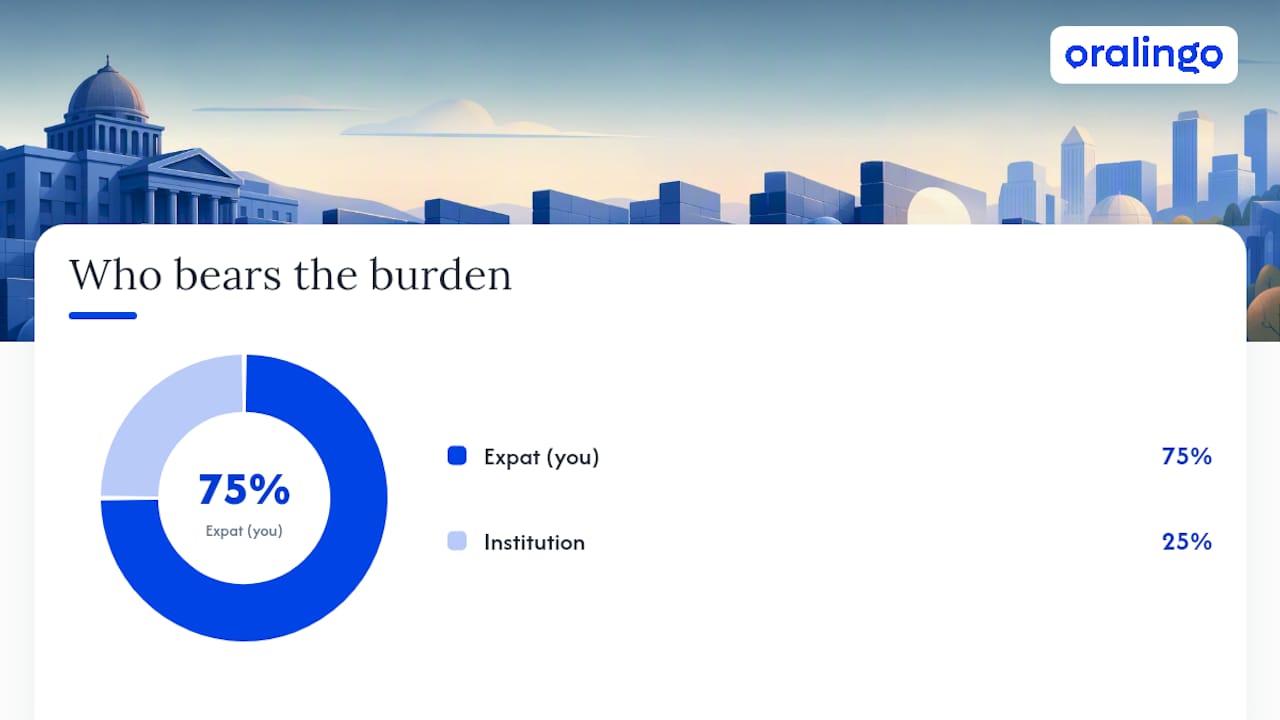
| Category | What it looks like | Who carries the burden | Short-term fix | Long-term solution |
|---|---|---|---|---|
| Manifest barrier | Can't understand spoken English at DMV | You, the expat | Professional interpreter | Language classes + legal literacy |
| Symbolic barrier | Staff assume you should arrive fluent | Institution | Document the refusal; escalate | Policy change; language-access complaints |
| Legal literacy gap | Misread "denial" as "pending" | You, the expat | Certified translator + legal aid | Build administrative vocabulary |
| Bureaucratic translation gap | Miss a cross-reference between two notices | You, the expat | Bilingual advocate or legal aid | Learn to cross-check official documents |
How each barrier type shows up in real U.S. bureaucratic settings
Knowing the category is useful. Recognizing it in the moment is what actually protects you.
Spoken/oral barriers
- At a Social Security Administration interview, a staff member speaks quickly and uses contractions and regional idioms. You nod along but miss a key eligibility question, and your answer is recorded incorrectly.
- At a USCIS naturalization interview, the officer asks you to repeat a phrase from the Oath of Allegiance. Your pronunciation is flagged, and the officer asks follow-up questions you don't fully understand.
Written/forms barriers
- A housing authority notice uses the phrase "Notice to Cure or Quit." You read "quit" as "leave" and miss the option to fix the problem and stay.
- A Medicaid renewal form asks for "household gross income." You report net income instead, triggering a discrepancy review.
Legal/jargon barriers
- An immigration denial letter says your petition is "not approvable as submitted." You think it means rejected permanently. It means you can resubmit with corrections.
- A DMV form asks for "proof of domicile." You bring a hotel receipt. The clerk needs a utility bill or lease.
Procedural/interactional barriers
- At a benefits office, you wait to be called by name. The system calls a number. You miss your turn and are marked as a no-show.
- You answer every question fully and volunteer extra context. The officer interprets this as evasiveness rather than thoroughness.
Symbolic/attitudinal barriers
- A frontline worker tells you to "bring someone who speaks English next time" rather than arranging an interpreter, a pattern documented in public employment services research.
- Your accent triggers shorter, simpler responses from staff, reducing the information you receive.
Digital/asynchronous barriers
- An agency portal sends an automated email in English only. The Spanish-language version of the same notice, available on the website, omits a deadline that appears in the English version. Research on virtual spaces documents exactly this kind of abridged translation in digital channels.
- An online form times out after 20 minutes. You lose your partially completed application and receive no error message in your language.
Why these barriers carry real costs you can't afford to ignore
The stakes go well beyond inconvenience. Missed deadlines, denied benefits, and legal exposure are all documented outcomes of unaddressed administrative language issues.
Common consequences include:
- Benefit denial: A misunderstood eligibility question or incorrectly completed form can result in an outright denial, sometimes without a clear explanation of why.
- Missed appeal windows: Most U.S. agencies set strict appeal deadlines (often 30–90 days). If you don't understand the denial notice, you may miss the window entirely.
- Legal exposure: Signing a document you don't fully understand can create binding obligations. This is especially acute in immigration, housing, and tax contexts.
- Privacy risk from lay interpreters: Using a family member as your interpreter in a medical or legal setting can expose sensitive personal information to someone who may not maintain confidentiality, and their translation errors carry no professional accountability.
- Mental health and isolation: Research on expat language experience links limited language ability to social isolation and measurable mental health impacts, both of which make it harder to navigate bureaucracy over time.
A survey-based study of 281 expatriates found that host-language proficiency positively predicts adjustment through increased local social support, and the effect is stronger when the host language is more difficult. That finding matters practically: the harder English feels, the more you need structured support, not just goodwill.
What to bring and say at any bureaucratic appointment
Use this checklist before, during, and after every official interaction.
Before the appointment
- Call or email the agency at least five business days ahead and request a professional interpreter in your language. Ask them to confirm in writing.
- Prepare a one-page bilingual summary of your case: dates, names, reference numbers, and the specific question you need answered.
- Bring certified translations of any foreign-language documents. A certified translation carries a signed statement of accuracy; a Google Translate printout does not.
- Identify a backup: a community organization or legal-aid clinic that can join by phone if the agency's interpreter doesn't show.
- Pre-read the relevant form in both languages. Note any terms you don't recognize and write your questions down.
During the appointment
- Say clearly at the start: "I have limited English proficiency. I am requesting a qualified interpreter under federal language-access requirements."
- Ask the officer to speak slowly and confirm each point before moving on: "Can you repeat that? I want to make sure I understand correctly."
- Do not sign anything you haven't had translated. Ask for a copy to review with an interpreter before signing.
- Avoid using a family member as your interpreter for legal or medical matters. Their translation errors are unverifiable and can create a record that works against you.
- Note the officer's name, badge number, and the time of the interaction.
After the appointment
- Request written confirmation of any decision or next step before you leave.
- Screenshot every page of any online portal submission. Save confirmation numbers.
- If you used an online form, send a follow-up email to the agency summarizing what you submitted and requesting acknowledgment. This creates a documented trail if you need to escalate.
- Store all documents in a single folder (physical or digital) with dates labeled.
Pro Tip: Translation apps like Google Translate or DeepL are useful for getting the gist of a notice, but practitioners warn they routinely fail on legal and administrative wording where a single word changes your rights. Use them to prepare questions, not to replace a certified translation. For real-time conversation clarification, a tool like Oralingo can help you follow a spoken exchange instantly, but always confirm critical decisions in writing with a qualified interpreter.
What are your language-access rights in the United States?
Federal law requires agencies that receive federal funding to provide meaningful access to people with limited English proficiency (LEP). This requirement is based on longstanding civil rights protections under federal statutes and executive orders. In plain terms: if an agency takes federal money, it cannot deny you service because you don't speak English.
Here's what you can ask for and how to escalate if you're refused:
- Ask directly: "I need an interpreter. I have limited English proficiency and I'm requesting language assistance under federal requirements."
- Ask in writing: If the agency says no verbally, send an email or submit a written request. This creates a record.
- Request a supervisor: If a frontline worker refuses, ask to speak with their supervisor and repeat the request.
- File a complaint: Most federal agencies have an Office for Civil Rights (OCR). You can file a language-access complaint directly. The Department of Justice Civil Rights Division also accepts complaints at justice.gov/crt.
- Document everything: Write down the date, the name of the staff member, their exact words, and the outcome. This documentation supports any appeal or complaint.
The policy research on inclusive communication is clear: the obligation sits with the institution, not with you. Knowing that changes how you frame your request.
This section is general information, not legal advice. Confirm current requirements with the relevant agency or a qualified immigration attorney.
When should you use a lay interpreter, certified translator, professional interpreter, or legal aid?
Not every situation needs the same kind of help. Using the wrong type can cost you time, money, or worse.
The four types
- Lay interpreter (friend or family member): Useful for low-stakes, informal conversations. Not appropriate for legal submissions, medical disclosures, or any interaction where accuracy is binding.
- Certified translator: Translates written documents. Required for official submissions (immigration petitions, court documents, academic records). The certification is a signed statement that the translation is accurate and complete.
- Professional interpreter: Handles spoken interactions in real time. Use for appointments at USCIS, Social Security, healthcare providers, or housing authorities. Community organizations and legal-aid clinics often provide these at no cost.
- Legal aid: Handles complex legal issues where the outcome has lasting consequences (deportation, benefit termination, housing eviction). Many legal-aid organizations serve LEP clients specifically and offer free or sliding-scale services.
How to choose
- Assess the risk level. Will the outcome of this interaction affect your immigration status, housing, or health? If yes, skip lay interpreters entirely.
- Identify the format. Written document? You need a certified translator. Spoken appointment? You need a professional interpreter.
- Check cost and availability. Legal-aid clinics, immigrant advocacy organizations, and community health centers often provide free interpretation. Call 211 (the national social services helpline) to find local resources.
- Ask these questions before relying on any interpreter: Are you certified? Have you interpreted in this specific context (immigration, medical, legal) before? Can you maintain confidentiality?
Practical questions to ask
- "Are you a certified interpreter or translator?"
- "Have you worked with [agency name] before?"
- "Can you explain what you'll do if you're unsure of a term?"
For multilingual messaging apps that help with day-to-day communication, the standard is different from a legal appointment. Tech tools work well for informal exchanges and preparation. For anything binding, certified human expertise is the standard.
What academic research says about why institutions create these barriers
The barriers you face aren't random. They're built into how institutions operate.
The concept of street-level bureaucracy describes how frontline workers, not policy documents, shape what migrants actually experience. Staff make real-time decisions about how much help to offer, whether to arrange an interpreter, and how to interpret ambiguous answers. Those decisions are influenced by workload, training, and institutional culture, not just official policy.
Research on monolingual ideology in public employment services shows that some staff actively support multilingual approaches while others operate under the assumption that English-only service is the default. The result is inconsistent access: two expats with identical needs may receive completely different levels of help depending on which staff member they encounter.
What this means for you practically: don't assume a refusal reflects official policy. Ask for a supervisor. Ask for the agency's language-access plan in writing. The inconsistency documented in research is also your leverage, because it means the policy often supports you even when the frontline worker doesn't.
| Barrier type | Recognition cue | Best immediate action |
|---|---|---|
| Manifest (oral/written) | Can't follow speech or read the form | Request a professional interpreter before the appointment |
| Symbolic/attitudinal | Staff suggest you "bring someone" | Document the refusal; request a supervisor |
| Legal/jargon | A term changes your rights but you're unsure how | Get a certified translation and a legal-aid consult |
| Digital/asynchronous | Online notice differs from what you were told verbally | Screenshot everything; send a follow-up email |
How community organizations and legal aid can help you
You don't have to face these barriers alone. A network of organizations specifically exists to help expats and LEP individuals navigate U.S. bureaucracy.
Community organizations often provide free interpretation at appointments, help you fill out forms correctly, and connect you with bilingual advocates who know the local agency landscape. Immigrant resource centers, ethnic community associations, and faith-based social service organizations are common starting points. Many operate in specific languages and can match you with someone who understands both your language and the specific agency you're dealing with.
Legal-aid clinics go further when the stakes are high. They can review denial letters, identify procedural errors, and represent you in appeals. Organizations like the National Immigration Law Center, local legal-aid societies, and law school immigration clinics serve LEP clients at no cost or reduced cost. The policy guidance on inclusive communication recommends prioritizing these community-based resources precisely because they combine language access with subject-matter knowledge.
To find help near you: call 211, search the Legal Services Corporation's directory at lsc.gov, or contact your nearest immigrant services organization. If you're dealing with a language barrier in a professional or business context, the same organizations often have resources tailored to work-related bureaucratic challenges.
The emotional cost nobody talks about
The hardest part of a bureaucratic language barrier isn't always the paperwork. It's the moment you realize you've nodded along to something you didn't fully understand, and now you're not sure what you agreed to.
That experience is more common than most guides acknowledge. The anxiety of not knowing whether you said the right thing, or whether the form you submitted was correct, sits with you long after the appointment ends. Research on expat language experience connects this kind of uncertainty directly to social isolation and reduced confidence in navigating future interactions.
One habit that genuinely helps: always send a follow-up email after any significant appointment, summarizing what you understood to be the outcome and asking the agency to confirm. It takes three minutes. It creates a paper trail. And it gives you something concrete to hold onto while you wait, which matters more than it sounds.
Sources
- ‘We don’t worry that much about language’: street-level bureaucracy in the context of linguistic diversity
- Making Sense of Bureaucratic Information: Conceptualising Bureaucratic Translation
- Breaking Barriers: Inclusive communication to ensure rights
- Navigating linguistic barriers: exploring the expatriate experience (ERIC full text)
- Linguistic Diversity as a Challenge for Street-Level Bureaucrats in a Monolingually-Oriented Organisation | Article | Social Inclusion
- Language-based discrimination and virtual spaces (ScienceDirect article)
- Host country language ability and expatriate adjustment (Springer)
This article is general information, not a substitute for advice from a qualified lawyer. Consult a qualified legal professional about your own circumstances before acting on anything here.