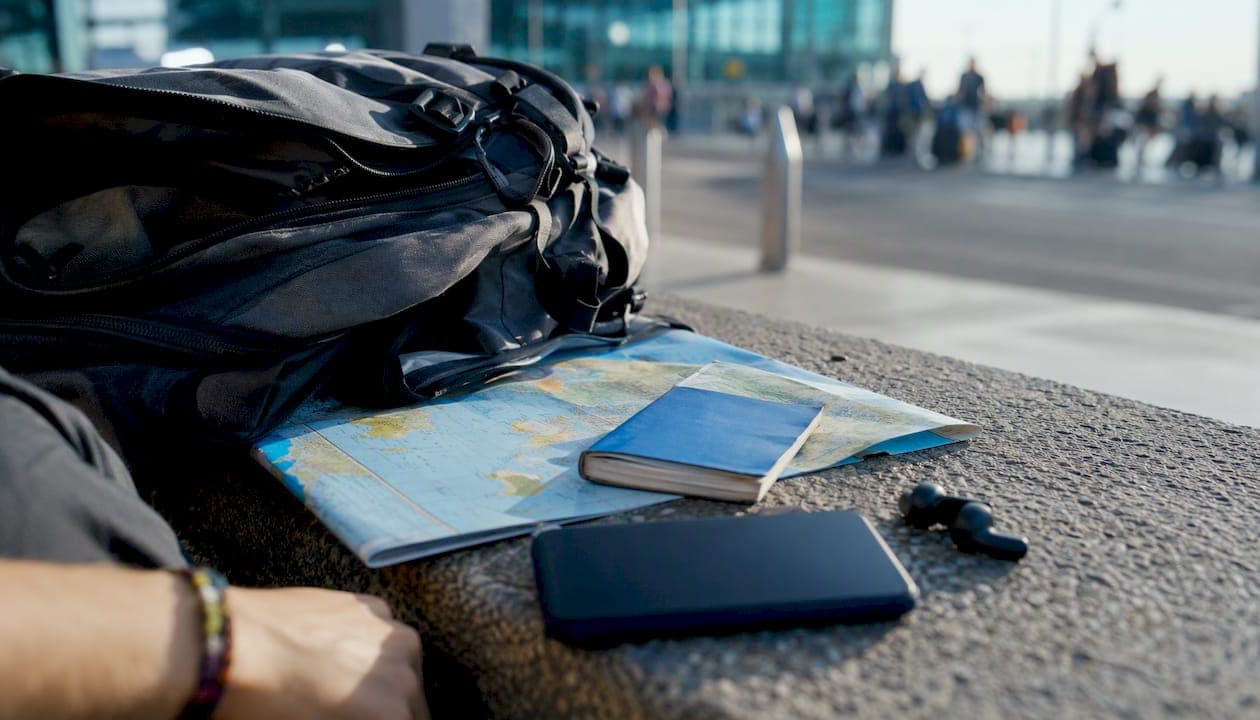
English is the single most useful language for international travel. It dominates aviation, hotels, tourism signage, and international hospitality worldwide, making it the closest thing to a universal travel language. If you speak English, you already hold the strongest card in your deck.
That said, English alone leaves real gaps. Here are the next three languages that give travelers the broadest return:
- Spanish — 20+ countries across Latin America and Spain
- French — spoken in parts of Europe, West Africa, and the Caribbean
- Mandarin — important for mainland China and major Chinese-speaking cities
Read on for the full ranked list, a decision checklist, and a practical phrasebank you can learn in a week.
Key Takeaways
English gives you the broadest global travel coverage, but Spanish, French, and Mandarin each unlock regions where English alone falls short — and learning 50–300 phrases in any of them takes as little as one to four weeks.
| Point | Details |
|---|---|
| English is the baseline | It covers aviation, hotels, and major tourist hubs globally, but fades fast outside tourist corridors. |
| Spanish has the highest geographic return | Official in roughly 20–22 countries across the Americas and Spain — the best single investment for most US travelers. |
| Phrases beat full fluency for short trips | Learning 50–300 core phrases in 1–4 weeks gives you practical travel competence for most destinations. |
| Script difficulty changes the math | Latin-script languages (Spanish, French, Italian) reach usable competence faster than Arabic, Mandarin, or Japanese for English speakers. |
| Oralingo fills the gaps | For conversations beyond your phrase list, Oralingo's real-time translation across 100+ languages keeps communication moving. |
Table of Contents
- 1. What are the most useful languages for world travel?
- How travel utility is measured — the criteria behind the ranking
- How to pick the right language before your trip
- Practical shortcuts when you don't have time to study
- What the ranking actually looks like on a real trip
- Oralingo covers the gaps your phrasebook can't
- Sources
1. What are the most useful languages for world travel?
The ten languages below are ranked by practical travel utility: geographic coverage, tourism infrastructure, how fast you can reach basic competence, and how much English already exists in that travel corridor.
1. English
- Where spoken: Global — airports, hotels, and tourist attractions on every continent
- Why it helps: English is the de facto tourism lingua franca in international hubs; flight crew, hotel staff, and tour operators almost universally use it
- Traveler tip: Don't assume English works everywhere outside tourist corridors. Rural Southeast Asia, rural China, and rural Latin America often have very limited English coverage
2. Spanish
- Where spoken: Roughly 20–22 countries, including Mexico, Colombia, Argentina, Peru, and Spain
- Why it helps: No other language gives you this many countries for this little learning effort; Latin script, phonetic spelling, and shared vocabulary with English make it fast to pick up
- Traveler tip: Learn "¿Dónde está...?" (Where is...?) and "La cuenta, por favor" (The bill, please) — two phrases that cover a surprising number of daily situations
Spanish is the highest-return language for travelers planning any Western Hemisphere itinerary. Its geographic coverage across the Americas is unmatched by any other single language.
3. French
- Where spoken: France, Belgium, Switzerland, and a wide spread of countries in West and Central Africa and the Caribbean
- Why it helps: French is the language that makes a Europe-plus-Africa itinerary possible with one investment; it is also an official UN language and widely used in international diplomacy
- Traveler tip: Even a basic "Bonjour" and "S'il vous plaît" shifts the tone of interactions in France dramatically — locals respond warmly to any attempt
4. Mandarin
- Where spoken: Mainland China, Taiwan, Singapore, and large diaspora communities across Southeast Asia
- Why it helps: Mandarin has a very large number of native speakers, and China's tourism infrastructure is increasingly built around it rather than English
- Traveler tip: Tones matter enormously. Learn to say "Nǐ hǎo" (Hello) and "Xièxiè" (Thank you) correctly — mispronounced tones can change meaning entirely
Mandarin's geographic utility is concentrated in Greater China, which limits its global travel payoff compared to Spanish or French. But for any China-focused trip, it is non-negotiable.
5. Arabic
- Where spoken: The Middle East and North Africa — an official language across roughly 22 countries, including Egypt, Morocco, UAE, and Saudi Arabia
- Why it helps: Arabic opens access to some of the world's fastest-growing tourism destinations; it is also one of the UN's six official languages
- Traveler tip: Modern Standard Arabic (MSA) is understood broadly, but spoken dialects vary widely. Egyptian Arabic is the most widely understood dialect across the region
6. Portuguese
- Where spoken: Brazil, Portugal, Angola, Mozambique, and several other countries in Africa and Asia
- Why it helps: Brazil alone is a continent-sized destination; Portuguese also opens doors in parts of Africa that French and Spanish don't reach
- Traveler tip: Brazilian Portuguese and European Portuguese sound quite different. If your trip is Brazil-focused, learn Brazilian pronunciation from the start
7. German
- Where spoken: Germany, Austria, Switzerland, and parts of northern Italy and Luxembourg
- Why it helps: Germany and Austria have strong tourism infrastructure, and German speakers often appreciate any effort — even though English coverage in these countries is high
- Traveler tip: German is most valuable if you plan to travel beyond major cities into rural Bavaria, the Austrian Alps, or smaller Swiss towns where English is less common
8. Japanese
- Where spoken: Japan, with some use in Japanese diaspora communities
- Why it helps: Japan's tourism industry is booming, and while signage in major cities is often bilingual, speaking even basic Japanese creates noticeably warmer interactions
- Traveler tip: Learn "Sumimasen" (Excuse me/Sorry) — it is the single most useful word in Japan, covering everything from getting attention to apologizing for bumping into someone
9. Russian
- Where spoken: Russia, and widely used as a regional lingua franca across Eastern Europe and Central Asia, including Kazakhstan, Uzbekistan, and Georgia
- Why it helps: In many post-Soviet states, Russian functions as a shared second language even where it is not official; it opens up a vast and underexplored travel region
- Traveler tip: The Cyrillic script looks intimidating but takes most learners only a few days to read phonetically — worth the effort before any Central Asia trip
10. Italian
- Where spoken: Italy, parts of Switzerland, and San Marino
- Why it helps: Italy is one of the world's top tourism destinations, and Italians genuinely appreciate visitors who try the language; even a few phrases improve restaurant and market experiences significantly
- Traveler tip: "Vorrei..." (I would like...) is your most useful construction — pair it with any food or item name and you're ordering like a local
How travel utility is measured — the criteria behind the ranking
Not all language rankings are built for travelers. Raw speaker counts, for example, put Hindi near the top globally, but Hindi's travel utility is largely limited to India. The criteria below are the ones that actually matter when you're choosing what to study before a trip.
- Geographic coverage: How many countries and regions does the language open up? Spanish's 20+ official countries across two continents score far higher than a language spoken by more people in one country.
- Tourism infrastructure: Is the language used in hotels, airports, restaurants, and attractions? A language embedded in tourism signage and staff training has immediate practical value.
- English overlap: In destinations where most tourism staff already speak English, learning the local language is a bonus rather than a necessity. This shifts the priority toward destinations with lower English coverage.
- Script and difficulty: Latin-script languages (Spanish, French, Italian, Portuguese) are faster to reach basic competence in for English speakers than languages with new scripts (Arabic, Mandarin, Japanese). Learning 50–300 core phrases in 1–4 weeks is a realistic target for Latin-script languages.
- Diglossia and regional variation: For Arabic and Chinese, the spoken language is not one uniform system — regional varieties can be mutually unintelligible. This affects which phrases you learn and whether a translation app needs to handle variants.
Quick example: For a two-week trip to Mexico and Colombia, Spanish is the obvious choice — high coverage, fast to learn at phrase level, and low English overlap outside tourist zones. For a six-month trip across Europe, West Africa, and Southeast Asia, the calculus shifts: French covers more of that itinerary than any other single language, and English fills the Southeast Asia gaps.
How to pick the right language before your trip
Work through this checklist before you commit to studying anything.
Step 1: Map your destinations. List every country on your itinerary. Which language appears most often across them? That language is your first priority.
Step 2: Check English coverage. English coverage varies widely by country and by urban vs. rural setting. If your destinations have strong English tourism infrastructure, a second language is a bonus. If not, it is closer to a necessity.
Step 3: Estimate your learning time.
- 1–2 weeks available: Learn 50 survival phrases in your target language. Focus on greetings, numbers, food, and directions.
- 3–4 weeks available: Aim for 150–300 phrases. Add transport, shopping, and emergency vocabulary.
- 3+ months available: Consider a structured course (apps like Duolingo or Babbel for basics, then a tutor for conversation practice).
Step 4: Consider return visits and career use. If you plan to visit a region repeatedly or work with people from that region, the investment in deeper fluency pays off over time.
Step 5: Think about paired-language strategies. English plus Spanish covers most of the Western Hemisphere. English plus French covers much of Europe and West Africa. You rarely need more than two languages for a well-planned multi-country trip.
10 essential travel phrases to learn in any language
These ten phrases cover the majority of daily travel interactions. Learn them in your target language before you fly.
- Hello / Good morning
- Thank you
- Please
- Excuse me / Sorry
- Where is...? (bathroom, hotel, station)
- How much does this cost?
- I would like... (used for ordering food or requesting items)
- Do you speak English?
- Help! / Call the police / I need a doctor
- One, two, three (numbers 1–10)
Pro Tip: Print these phrases on a small card and keep it in your wallet. Pulling out a card and pointing shows effort and goodwill — locals respond to that even when the pronunciation isn't perfect.
For a deeper look at building a multilingual communication strategy for complex itineraries, it helps to think about which phrases to learn versus which situations to hand off to a translation app.
Practical shortcuts when you don't have time to study
You won't always have weeks to prepare. Here's what actually works when you're short on time.
- Offline phrasebooks: A pocket phrasebook (Lonely Planet's series is reliable) works without Wi-Fi and covers the most common travel scenarios by category. Keep one per destination language.
- Two-way voice translation apps: Apps that translate spoken language in real time are the most practical tool for taxi rides, market negotiations, and hotel check-ins. Look for hands-free voice mode so you don't have to type while managing luggage.
- Photo-text recognition: Point your phone camera at a menu, sign, or document and get an instant translation. This feature alone solves a huge percentage of common language barriers travelers face with signage and written menus.
- Pre-delivery translation: Some apps translate your message before it displays, so the conversation flows naturally without awkward pauses. This matters most in fast-moving situations like ordering at a busy restaurant or asking for directions at a crowded station.
- End-to-end encrypted messaging: If you're sharing sensitive information (hotel addresses, payment details, medical needs) through a translation app, privacy controls matter. Choose an app that encrypts conversations.
- Gestures and politeness: A smile, a slight bow, or a respectful two-handed gesture for receiving items goes a long way in cultures where these signals carry weight (Japan, South Korea, Thailand). Combine these with a single learned phrase and you've already built rapport.
For Arabic and Chinese specifically: Because regional varieties can be mutually unintelligible, generic phrases from a standard phrasebook may not land correctly in every country. Use a translation app that handles regional variants, or learn phrases specific to your destination country rather than the "standard" form of the language.
Pro Tip: Combine a few learned phrases with a translation app for the best results. Open the app, show the screen to a local, and say your one learned phrase first. That small effort signals respect and usually produces a much warmer response than leading with the phone alone. This combination approach consistently produces smoother interactions than relying on either method alone.
What the ranking actually looks like on a real trip
Most travel language advice treats every destination as equal. It isn't. The ranking above reflects where languages actually show up in the moments that matter: the taxi driver who doesn't speak English, the market vendor who quotes a price you can't parse, the pharmacist you need at 10 PM.
Spanish is ranked second not because of speaker counts but because it covers the most countries with the least learning effort for English speakers. That ratio is what makes it the right first investment for most American travelers, who are statistically most likely to visit Latin America or Spain before anywhere else.

The harder truth is that Mandarin and Arabic, despite their enormous global importance, require a much longer runway to reach even basic travel competence. For a two-week trip to Japan or Morocco, you're better off learning 50 targeted phrases and using a reliable translation app for everything else than attempting a crash course in a new script.
One thing that consistently gets overlooked: the emotional payoff of even a single correct phrase. Saying "Arigatou gozaimasu" to a shopkeeper in Kyoto or "Shukran" to a guide in Marrakech changes the interaction in a way no app can fully replicate. The phrase signals that you showed up with some respect for the place. That matters.
Oralingo covers the gaps your phrasebook can't
No matter how well you prepare, some conversations will go beyond your phrase list. That's where Oralingo fits in. It translates your chat messages and voice in real time, before the message is displayed, so the conversation keeps moving naturally. You stay focused on the person in front of you, not on typing or waiting.
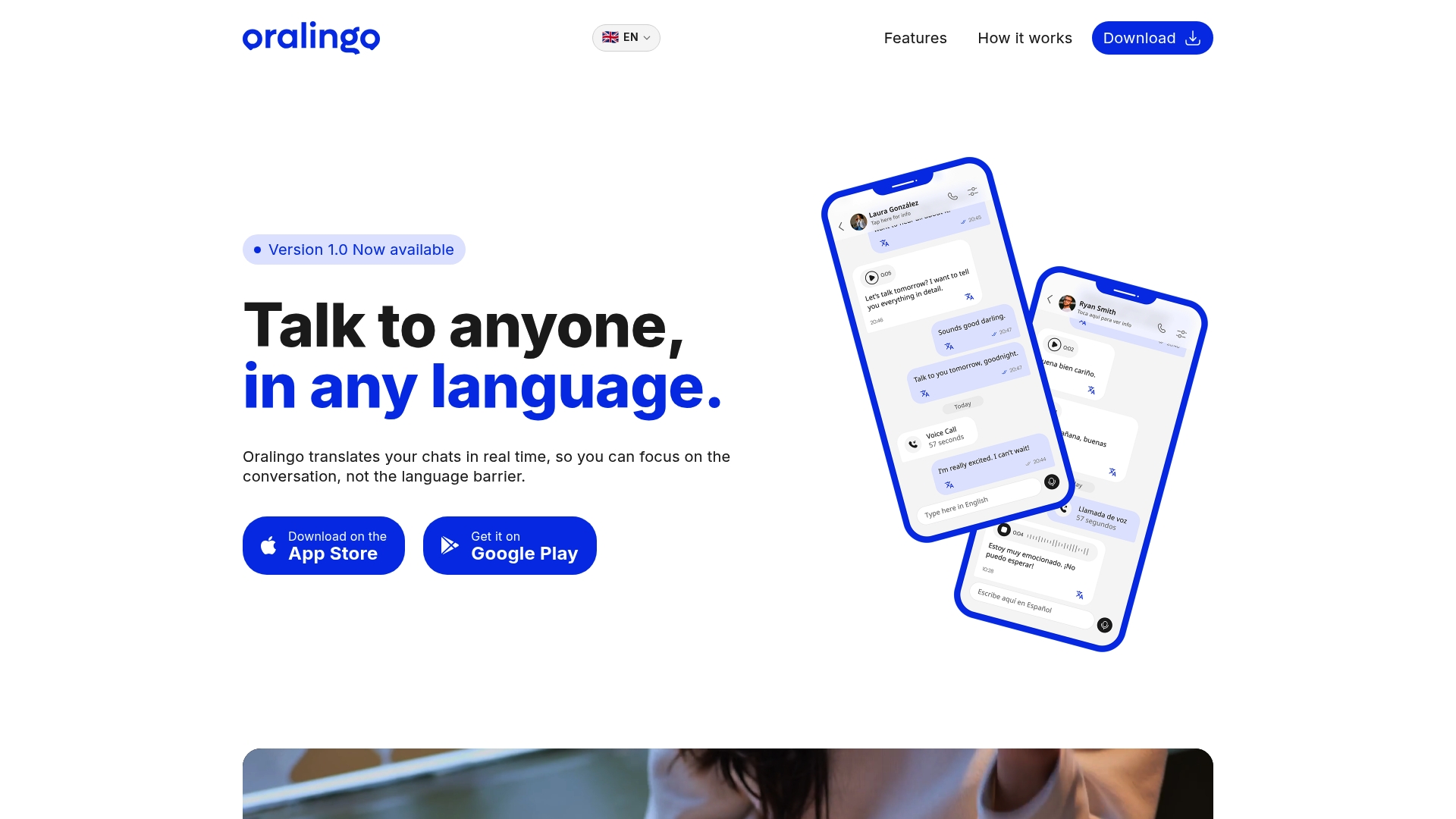
Oralingo supports 100+ languages with hands-free voice mode, pre-delivery translation, and end-to-end encrypted messaging. Whether you're negotiating at a market in Morocco, checking into a guesthouse in rural Japan, or asking for directions in São Paulo, you get a clear, accurate translation without breaking the flow. Download Oralingo and keep it ready for the moments your phrasebook runs out.
Sources
- Airguide
- Best languages to learn for travel in 2026
- The 10 Most Spoken Languages In The World In 2026
- Britannica — languages by total number of speakers
- En
- Do They Speak English? Traveler's Guide by Country (2026)