Multilingual traveler communication is the practice of using translation tools, bilingual services, and prepared language strategies to interact effectively across language barriers during travel. Whether you are ordering food in Tokyo, asking for directions in Lisbon, or explaining symptoms to a doctor in Istanbul, the ability to communicate clearly shapes your entire experience. Apps like Google Translate and Oralingo have made real-time cross-language conversation far more accessible. Still, technology alone is not enough. The most effective approach combines digital tools, cultural awareness, and preparation before you ever leave home.
What is multilingual traveler communication and how does it work?
Multilingual traveler communication is not a single-step translation process. It involves multiple communication layers tailored to the type of interaction and its stakes. A hotel menu translation is a low-risk, passive resource. A medical emergency requires trained interpreters and real-time escalation pathways. Understanding this difference is the foundation of effective communication for travelers.
The layers break down into two broad categories:
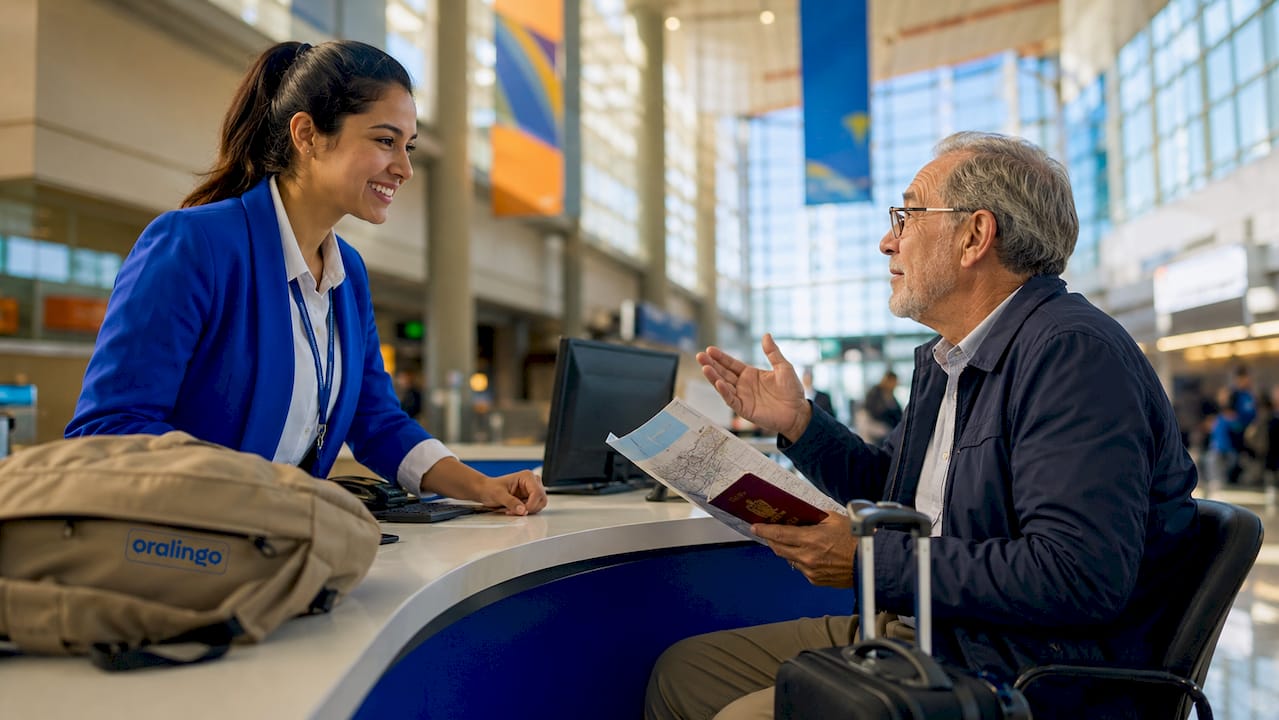
Passive communication includes translated PDFs, multilingual signage, and pre-written phrase cards. These work well for routine, predictable interactions like checking in, ordering meals, or reading transport schedules.
Active communication involves bilingual staff, video remote interpretation (VRI), and real-time translation apps. These are necessary when conversations are unpredictable, urgent, or emotionally loaded.
| Communication type | Best for | Examples |
|---|---|---|
| Passive (translated materials) | Routine, low-stakes queries | Menus, maps, signage, PDFs |
| Active (bilingual staff, VRI) | Complex or urgent interactions | Medical care, legal issues, complaints |
| Digital tools (apps) | On-the-go, everyday conversations | Google Translate, Oralingo |
Most travelers rely heavily on digital tools. Translation apps like Google Translate and Oralingo cover the middle ground between passive materials and professional interpretation. They handle spontaneous conversations without requiring bilingual staff nearby.
Pro Tip: Download your destination's language pack for offline use before you travel. Airport Wi-Fi is unreliable, and you will need translation the moment you land.
How do language barriers affect traveler satisfaction and safety?
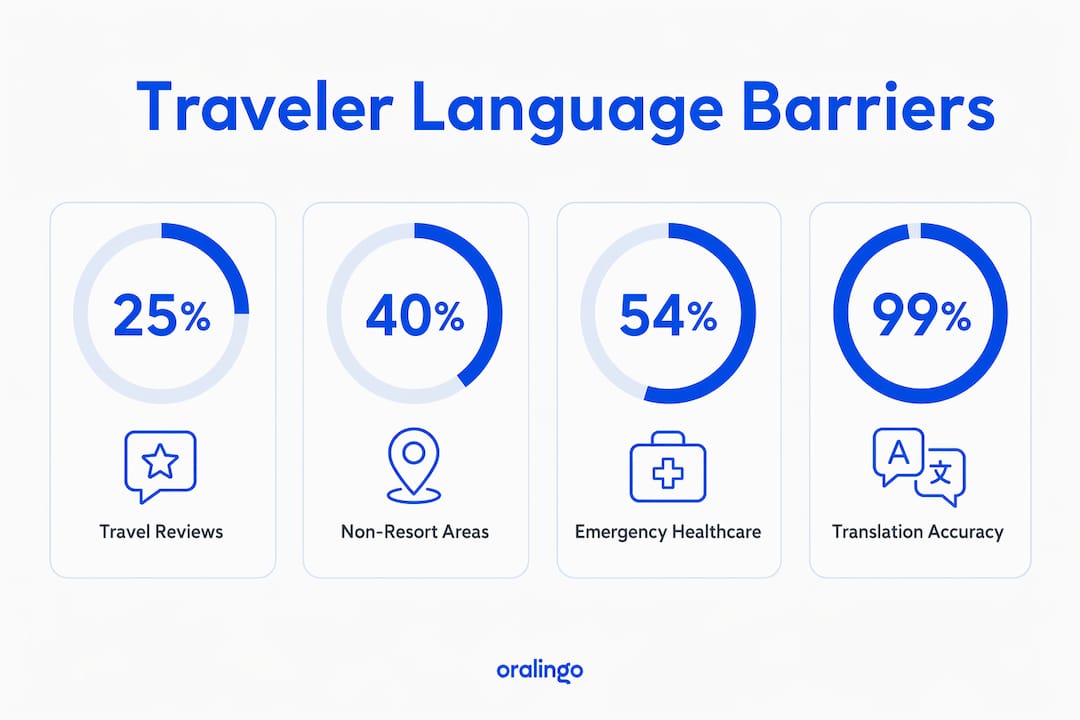
Language barriers show up more often than most travelers expect. Language barriers appear in 18–25% of TripAdvisor travel reviews, with the rate climbing to 40–50% in non-resort regions. That gap matters. Resort areas typically staff multilingual employees and invest in translated materials. Remote or non-resort destinations often do not.
The effect on satisfaction is direct. When travelers cannot communicate clearly, frustration builds fast. Trust in local services drops. Booking platforms that fail to provide support in a traveler's preferred language see higher abandonment rates. Multilingual platform policies reduce confusion and increase traveler confidence, which directly affects whether someone completes a booking or walks away.
The safety stakes are even higher. Up to 54% of travelers in emergency healthcare situations need professional interpretation. Language barriers in emergency departments increase the length of stay by around 50 minutes. That delay is not just inconvenient. It can affect clinical outcomes and create financial misunderstandings that result in unpaid medical bills.
"Language and cultural differences are among the most frequently reported difficulties in emergency care for tourists." — MDPI Systematic Literature Review on Tourist Emergency Healthcare Access
Cross-cultural communication for tourists is not just about comfort. It is a safety issue with measurable consequences. Travelers who treat language preparation as optional are taking a real risk, especially in destinations where English is not widely spoken in healthcare settings.
What practical multilingual communication strategies can travelers use?
Preparation is the highest-leverage action you can take before any international trip. Pre-saving key phrases for emergencies and common requests reduces stress and improves communication speed when it matters most. The key is to prepare before you are stressed, not while you are lost or scared.
Here is a practical framework for effective communication for travelers:
- Build a phrase card for your destination. Write down 10–15 phrases covering greetings, directions, food allergies, and medical needs. Keep them short. Review them the night before you fly.
- Use Google Translate's conversation mode. Google Translate supports nearly 250 languages and is used by over 1 billion people monthly. Its face-to-face translation mode lets two people speak into one phone and read each other's words in real time.
- Download Oralingo for live chat translation. Oralingo translates messages instantly before they are displayed, so conversations feel natural rather than stop-and-start. Its hands-free voice mode is especially useful when you cannot type, such as when carrying luggage or navigating a busy market.
- Learn basic cultural cues. Tone, eye contact, and gestures carry meaning that words alone cannot. In Japan, a slight bow signals respect. In many Middle Eastern countries, accepting offered food or tea before discussing business is a social norm. Ignoring these cues can create friction even when your words are correct.
- Prepare for stress-narrowed attention. Language barriers compound stress, and stress narrows your ability to recall even basic phrases. Pre-loading a small set of emergency phrases into a notes app or printed card gives you a reliable fallback when your mind goes blank.
Pro Tip: Save your hotel address, the nearest hospital, and the local emergency number in your phone's notes app in the local language. You may need to show this to a taxi driver or first responder without any internet connection.
Combining these strategies covers most situations you will encounter. Technology handles spontaneous conversations. Prepared phrases handle emergencies. Cultural awareness handles the gaps that neither can fill.
How do multilingual communication needs vary by travel context?
Not every destination presents the same communication challenge. Resort areas tend to have more language support built in, with multilingual staff, translated materials, and tourist-facing services designed for international visitors. Non-resort and rural areas often lack these resources entirely.
The type of interaction also changes what you need:
- Low-stakes interactions (ordering food, buying tickets, asking for directions) work well with translation apps and basic phrase knowledge.
- Medium-stakes interactions (negotiating prices, understanding tour terms, reporting a theft) benefit from a combination of apps and written communication to avoid misunderstandings.
- High-stakes interactions (medical emergencies, legal issues, safety incidents) require professional interpretation or at minimum a bilingual contact you can call.
Misunderstanding allergen disclosures or safety information due to poor language access is a documented liability in hospitality. Hotels and restaurants that conflate menu translation with full multilingual communication are taking a risk with guest wellbeing. As a traveler, you should not assume that a multilingual menu means the staff can handle a medical allergy conversation in your language.
| Travel context | Language support level | Recommended approach |
|---|---|---|
| Resort areas | High | Apps plus basic phrases |
| Urban non-resort | Medium | Apps plus bilingual contact |
| Rural or remote | Low | Pre-prepared phrases plus offline apps |
| Medical or legal | Critical | Professional interpreter required |
Staff training and digital platforms together create the most reliable multilingual environment. When you are choosing accommodation or tour operators, checking whether they offer multilingual support is a practical part of trip planning, not an afterthought. You can learn more about the types of language challenges travelers face by destination type before you book.
Key takeaways
Multilingual traveler communication requires layered strategies combining prepared phrases, real-time translation tools, and cultural awareness to stay safe and confident across language barriers.
| Point | Details |
|---|---|
| Layers matter | Match your communication method to the stakes: apps for daily use, interpreters for emergencies. |
| Barriers affect safety | Language gaps in emergency healthcare can add around 50 minutes to department stays. |
| Prepare before you go | Pre-save emergency phrases and key contacts in the local language before you travel. |
| Location changes the challenge | Non-resort regions report language barriers in 40–50% of travel reviews versus 18–25% overall. |
| Tech fills the gap | Google Translate and Oralingo cover spontaneous conversations where bilingual staff are unavailable. |
What I have learned about communicating across languages as a traveler
Most travel advice focuses on which app to download. That misses the bigger picture. The travelers who communicate best abroad are not the ones with the best tools. They are the ones who show up emotionally prepared to be misunderstood and to keep trying anyway.
I have seen travelers freeze completely in a pharmacy in rural Portugal because they expected their translation app to handle everything and it did not. The app worked fine. The problem was they had never practiced using it under pressure. Stress changes how you think. When you are tired, lost, or scared, even a simple app interface feels complicated.
The combination that actually works is this: prepare a small set of written phrases for your highest-risk scenarios, use a real-time tool like Oralingo or Google Translate for everything else, and give yourself permission to use gestures, drawings, and patience when technology falls short. Cultural humility is not a soft skill. It is a practical one.
One thing most travelers overlook is the trust dimension. When you attempt even a few words in the local language, people respond differently. You are no longer a tourist demanding service. You are a person making an effort. That shift changes the entire interaction, often more than any translation tool can.
The goal is not perfect language. The goal is clear enough communication to stay safe, get what you need, and connect with the people around you. Technology gets you most of the way there. Preparation and attitude cover the rest.
— Poul
Real-time translation for your next trip with Oralingo
You do not need to be fluent to have real conversations abroad. Oralingo translates your chats instantly, before the message even appears on screen, so the conversation flows naturally in both directions.
Oralingo supports over 100 languages with a 99% accuracy rate and includes a hands-free voice mode for situations where typing is not practical. Every conversation is end-to-end encrypted, so your private exchanges stay private. Whether you are chatting with a local guide, coordinating with a hotel, or staying in touch with family back home, Oralingo keeps the conversation going. Talk to anyone in any language, right from your phone.
FAQ
What is multilingual traveler communication?
Multilingual traveler communication is the use of translation tools, bilingual services, and prepared language strategies to interact across language barriers during travel. It covers everything from reading a menu to communicating in a medical emergency.
How common are language barriers for travelers?
Language barriers appear in 18–25% of travel reviews overall, rising to 40–50% in non-resort regions. Translation apps are the most common coping strategy, used by around 60% of affected travelers.
What is the best app for communicating abroad?
Google Translate covers nearly 250 languages and works well for quick lookups and conversation mode. Oralingo adds real-time chat translation with instant message display and a hands-free voice mode, making it strong for ongoing conversations.
How do language barriers affect safety during travel?
Professional interpretation is needed by up to 54% of travelers in emergency healthcare situations. Language gaps can extend emergency department stays by around 50 minutes and lead to financial misunderstandings over medical bills.
What is multilingual couple communication while traveling?
Multilingual couple communication refers to partners who speak different native languages using shared tools, like real-time translation apps or a common third language, to communicate clearly and maintain connection while traveling together or across different regions.