
Yes, you can turn a plain message into a polite, culturally appropriate one, and you don't need a linguistics degree to do it. Name your audience and the level of formality you want, run an instruction-driven AI prompt built around that, then back-translate the result to check nothing got lost. Oralingo builds this same logic into real-time chat, so tone survives the trip between languages.
TL;DR:
- Machine translation often struggles to accurately convey tone, register, and respect signals, especially in languages with grammatical honorific systems.
- Properly translating politeness requires understanding language-specific grammar rules, such as Japanese keigo and T-V pronoun systems in European languages, which simple word swaps cannot capture.
- To ensure correct tone, specify audience, formality level, dialect, and key terms in prompts, then verify through back-translation and native review when possible.
- Over-politeness or stiff phrasing from AI is common; rephrasing prompts to mimic native speech and avoiding excessive hedging improves naturalness.
- Real-time, live translation tools like Oralingo maintain tone through voice mode and encryption, making them suitable for casual or professional conversations where preserving politeness matters.
Table of Contents
- Why Tone and Formality Change the Outcome of a Translation
- What Trips Up Formality Across Languages
- How Do You Convert Text Into a Polite Tone Step by Step?
- The Mistakes That Sneak Into Almost Every Polite Translation
- Copy-and-Paste Templates for Any Register
- How Oralingo Keeps Tone Intact in Live Conversations
- When Should You Trust AI Over a Human Translator?
- Try Polite Tone Translation Without the Guesswork
- Where to Go for More on Politeness and Translation
- Sources
Why Tone and Formality Change the Outcome of a Translation
Register is the level of formality a message carries. Directness is how bluntly it says what it means. Honorifics are the words and grammar that signal respect toward the person you're addressing. Get any of the three wrong and you've made what linguists call a face-threatening act, a phrase that essentially means "you made someone feel disrespected without meaning to."
Standard machine translation is bad at this. It swaps words fine but misses the pragmatics behind honorific systems, especially in languages where respect is baked into grammar, not just word choice. That gap costs you in ways spellcheck won't catch:
- A blunt reply reads as rude even when the words are technically correct.
- Business credibility drops fast when a message sounds curt to a formal client.
- Persuasion weakens because tone carries as much weight as content in negotiation and sales.
Word-for-word accuracy doesn't guarantee the message lands the way you meant it.
What Trips Up Formality Across Languages
Japanese has a full grammatical system for respect called keigo, and it splits into honorific forms (raising the other person) and humble forms (lowering yourself). Translate "I will do it" literally and you get a flat, almost blunt statement. The polite adaptation swaps in a humble verb form that signals you're doing this for the listener, not just informing them of a fact. That distinction lives in grammar, not vocabulary, so word-swap translation misses it every time.
French, German, and Spanish work differently, through T-V pronoun systems: tu versus vous, du versus Sie, tú versus usted. Pick the informal pronoun with a client and you sound presumptuous; pick the formal one with a close friend and you sound cold. Verb conjugations shift with the pronoun, so the choice ripples through the entire sentence.
Then there are languages where "please" doesn't map cleanly at all. Russian politeness often leans on verb aspect and phrasing rather than a single equivalent word. Thai politeness particles change based on the speaker's gender and the listener's status, something no dictionary entry captures.
A few practical notes:
- When unsure, choose the more formal register plus a soft hedge ("I was hoping you might...") over blunt phrasing.
- Verify honorific-heavy languages with a native speaker whenever the stakes are real.
- Don't assume "polite" maps to one universal set of word choices. It doesn't.
For a deeper look at Japanese conventions specifically, this explainer on Japanese honorifics walks through when each form applies, and Korean honorific rules follow a comparably layered structure.
How Do You Convert Text Into a Polite Tone Step by Step?
Before you write a single prompt, nail down five things: who's reading this, your relationship to them, the register you want, the dialect (Mexican Spanish is not Castilian Spanish), and any terms that must stay untouched, like a product name or someone's title. Jot these into a short glossary if you're translating more than a message or two.
- Write the prompt with structure. Tell the model its role ("You are a professional translator"), the audience, the target register, the dialect, a list of terms to keep unchanged, and an instruction to output only the translation plus a short note on any adaptations made. Research on side-constraint methods in neural MT confirms that explicit tags for formality steer output more reliably than vague instructions like "make this polite."
- Verify before you send anything that matters. Run the result back through the same model into your source language, a step called back-translation, and compare it to your original intent. For anything high-stakes, ask a second model to describe the tone of the output in a sentence, or get a one-line check from a native speaker.
- Finalize against your glossary. Confirm names, titles, and kept terms landed correctly, then tighten any hedging that crept in unnecessarily. Reach for a certified human translator for legal documents, contracts, or anything with regulatory weight.
Pro Tip: Ask the model to flag anything it wasn't confident about instead of just handing you a clean-looking result. Confidence in tone is exactly where AI tends to overstate itself.
The Mistakes That Sneak Into Almost Every Polite Translation
Translationese is the giveaway that a sentence went through a machine: stiff phrasing, odd word order, a formality that no native speaker would actually use. The fix is simple. Add "write like a native speaker, not a literal translation" to your prompt, then run a back-translation to catch what still sounds off.
Over-politeness is its own problem. Piling on hedges like "perhaps, if it's not too much trouble, I was wondering if maybe" buries the actual request under six layers of caution. Tighten it. One respectful hedge does the job better than four.
- Translationese: reads stiff or unnatural — reprompt with "write like a native speaker."
- Over-hedging: buries the request — cut to one clear hedge, not several.
- Ambiguous source text: causes most tone failures, since a terse or unclear original gives the model nothing to calibrate against. Add a bracketed note clarifying intent, then rerun the prompt.
Copy-and-Paste Templates for Any Register
Use these as starting points and adjust the bracketed sections for your situation.
- Formal: "You are a professional translator. Translate the following into [target language, dialect] for a [boss/client/official] audience. Register: formal and respectful. Keep unchanged: [names, titles, product terms]. Output only the translation, followed by a short note on any adaptations made. Text: [your message]"
- Neutral: Same structure, register changed to "neutral and clear, appropriate for a coworker you don't know well."
- Informal: Same structure, register changed to "warm and casual, appropriate for a close friend or family member."
Quick checklist before you hit send: audience named, register specified, glossary terms locked, back-translation run, native check done if the message matters.
How Oralingo Keeps Tone Intact in Live Conversations
Templates work well for emails and documents, where you have time to draft, check, and revise. Live conversation doesn't give you that luxury, which is exactly the gap Oralingo is built to close.
Two features matter most for staying polite in real time:
- Hands-free voice mode lets you speak naturally without breaking the flow to type, which keeps the tone of a spoken conversation intact.
- End-to-end encryption keeps every exchange private, which matters when the conversation is personal or professional and not meant for anyone else.
For more on how conversational translation differs from document translation, see how translation apps handle real conversations, and for formatting quirks that trip people up in chat, check preserving formatting in chat and voice translation.
When Should You Trust AI Over a Human Translator?

Everyday messages and quick replies are a fine fit for AI-first translation. It's fast, and the stakes of a slightly off hedge are low. Legal, contractual, or official documents deserve a human, certified translator instead. No prompt template replaces that kind of accountability.
My advice: test the workflow on three low-stakes messages first. See how the model handles register shifts before you trust it with anything that matters. For live, tone-sensitive conversations, whether with family abroad or a business contact overseas, that's where Oralingo earns its place, since privacy and natural tone both matter in the moment.
— Poul
Try Polite Tone Translation Without the Guesswork
Oralingo is built around the exact checklist covered above: name your audience, pick your register, keep tone intact, and verify it works in the moment. It applies that logic automatically, translating your message before it even hits the screen, so the formality you meant to send is the formality that arrives, whether you're typing to a client or speaking hands-free with family overseas.
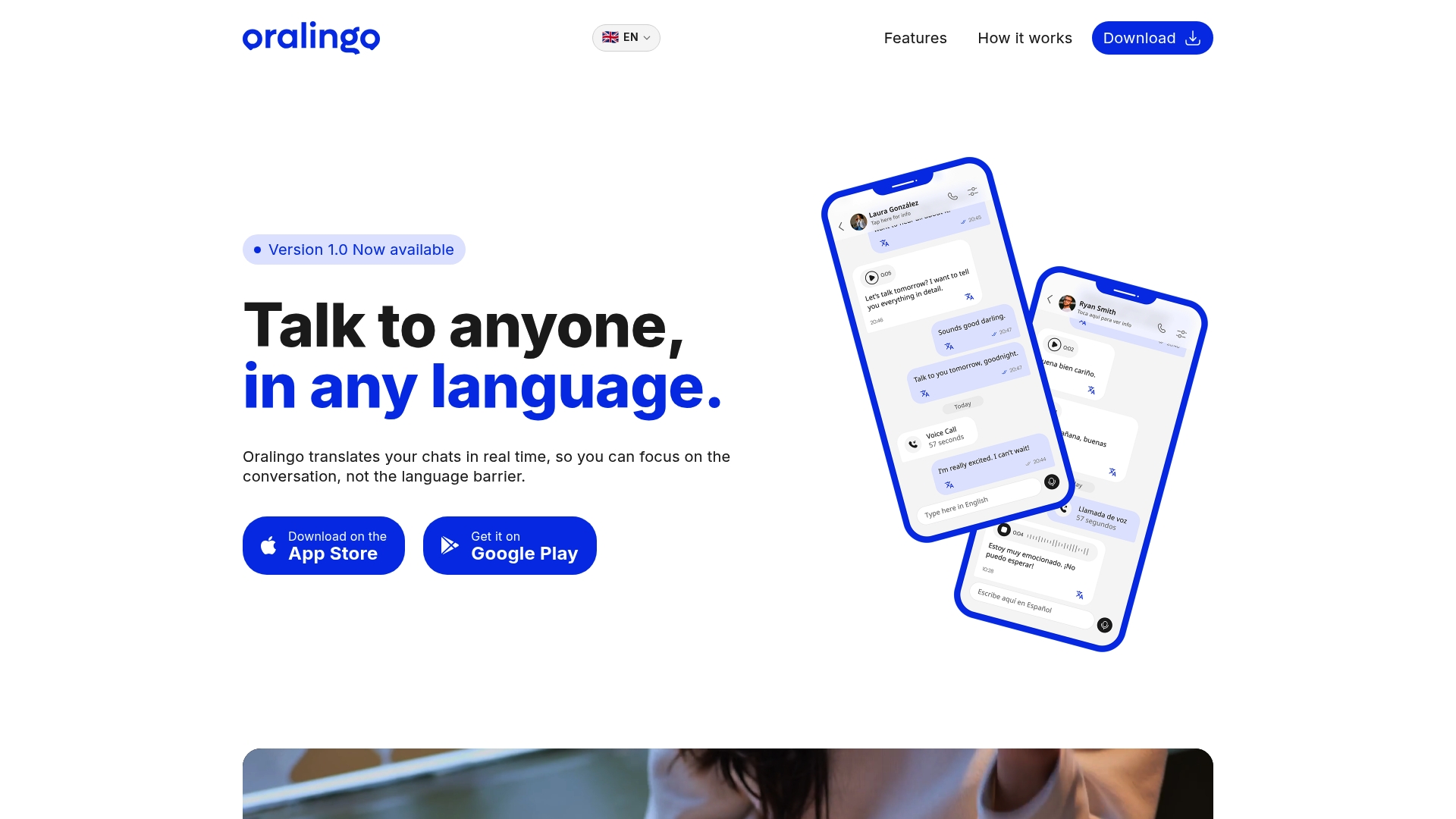
The free tier lets you test this on a real conversation today, and the subscription unlocks unlimited use plus expanded voice features for frequent business or long-distance use. If you want to see how a formal message holds up across languages, try a live translation with Oralingo and send your first polite message in under a minute.
Where to Go for More on Politeness and Translation
For readers who want the research behind these techniques, the ACL tag-and-generate politeness study covers how automated systems learn to shift register. The side-constraints paper on NMT explains the technical side of steering formality during generation. For a broader look at how honorific grammar challenges automated systems, the qualitative research on Japanese communication norms is worth a read, alongside the practical AI translation guide referenced throughout this piece.
Sources
- Honorific language, Japanese and its effects on translator systems
- Controlling politeness in NMT via side constraints (ACL proceedings example)
- Politeness transfer task and tag-and-generate pipeline (ACL 2020)
- How to use AI to translate: tone, documents, accuracy (practical guide)