
Instant translation preserves relationship intimacy by keeping emotional signals, turn-taking, and private context intact — but only when you use the right features and habits together. The technology works best when it slows the conversation just enough for both partners to stay present, keeps your shared nicknames and inside jokes intact, and lets you preview a message before it lands.
TL;DR:
- Tone-aware, pre-delivery translation lets you edit a message before your partner reads it, so the emotional weight arrives as intended.
- Memory features store your shared references, pet names, and context so the app never flattens them into stiff, generic alternatives.
- Slowing down to read a translated message out loud or check its meaning creates a moment of focused attention that actually deepens presence.
This approach works best for everyday affection, light check-ins, and low-stakes banter. For high-stakes conversations like serious conflict, medical decisions, or legal matters, automated translation alone is not enough. Always have a plan for when to pause and bring in a bilingual friend or professional.
Three things you can do in your next conversation:
- Ask your partner's consent before saving any nicknames or personal context in the app's memory.
- Try a "slow-turn ritual": read the translated message fully before replying, rather than responding the moment it arrives.
- After any message that feels off, use a quick check-meaning prompt: "Did you mean [your interpretation]? Just want to make sure I got it."
Table of Contents
- Why generic translation tools often lose the emotional meaning that matters
- How instant translation preserves relationship intimacy through tone, memory, and presence
- Which relationship moments does instant translation help most?
- How do you keep sensitive romantic conversations private?
- How do you choose and use a translation tool that builds closeness?
- What are the real risks of relying on instant translation in your relationship?
- How Oralingo applies these principles in practice
- Key Takeaways
- The part most couples miss about translation and closeness
- Oralingo: a privacy-first option built for couples who want to stay close
- Useful sources for further reading
Why generic translation tools often lose the emotional meaning that matters
Most translation apps are built for accuracy, not for intimacy. They optimize for correct words, not for the right emotional register. That gap matters more than most couples expect.
Language carries cultural scripts for expressing apology, affection, and repair. Syntax, timing, and register all carry culturally specific emotional meaning that a literal word-for-word output simply cannot capture. When a Spanish speaker says "te extraño" and a generic app renders it as "I miss you," the translation is technically correct. But the warmth, the specific ache in that phrase, often doesn't survive the crossing.
Pet names are an even sharper example. A term of endearment that sounds tender in Portuguese can come out clinical or even absurd in English. Humor is worse. A playful tease that lands perfectly in one language can read as cold criticism in another, because the tonal cues that signal "I'm joking" don't translate word-for-word.
"Speaking in a second language often reduces emotional intensity — what therapists call 'emotional disembodiment' — and literal translation compounds this effect by stripping away the register and warmth that make repair and affection feel real."
— Daniel Dashnaw, couples therapist, Love in the Time of Translation
This emotional disembodiment is a real risk. When your partner receives a message that was warm in your language but reads as flat in theirs, they don't always know the warmth was there. They just feel the flatness. Over time, that can quietly erode closeness in ways neither partner can easily name.
Generic paste-and-translate tools also have no memory of your relationship. They don't know that "our song" refers to a specific moment, or that your partner's nickname has a story behind it. Every message starts from zero. That context-blindness is what separates a generic tool from one built for cross-cultural relationship communication.
How instant translation preserves relationship intimacy through tone, memory, and presence
The features that actually protect closeness are specific. Not every translation app has them, and knowing what to look for helps you choose and use tools with intention.
Features that preserve intimacy:
- Pre-delivery translation: the message is translated before your partner sees it, giving you a chance to review and adjust tone before it lands.
- Nickname and context memory: the app stores your shared references, pet names, and relationship-specific language so they stay intact rather than being flattened.
- Tone and style controls: settings that let you choose a warmer, more casual register rather than a formal or neutral default.
- Speaker-separated transcripts: in voice mode, each partner's words appear on their own line, keeping the conversation readable and turn-taking clear.
- Minimal latency: fast enough that the conversation doesn't feel like a formal exchange of letters.
- On-device or end-to-end encrypted processing: your most personal messages don't pass through a third-party server in plain text.
Purpose-built apps with private memory avoid translating pet names into stiff, neutral alternatives and keep inside jokes intact. That's a meaningful difference from a generic tool.
The interaction mechanics matter just as much as the features. Couples using translation apps often report that the technology forces greater attention and slows conversation, which can increase emotional presence. Reading a translated message requires focus. You can't skim it the way you might skim a text in your native language. That slight friction is actually useful: it reduces distracted multitasking and raises active attention during the exchange.
"Hands-free voice modes and subtitle-style displays let partners maintain eye contact and natural gestures more easily, reducing the need to stare at a phone while preserving conversational flow."
— New York Times
Voice mode with subtitles is worth highlighting separately. When you can listen to your partner's voice while reading the translation on screen, you get both the emotional tone of their delivery and the semantic content of the words. That combination is closer to a real conversation than text alone. For deeper emotional moments, like a vulnerable confession or an apology, hearing the voice while reading the meaning can make the message land with far more weight than text ever could. You can learn more about how these real-time translation features support romantic communication in practice.

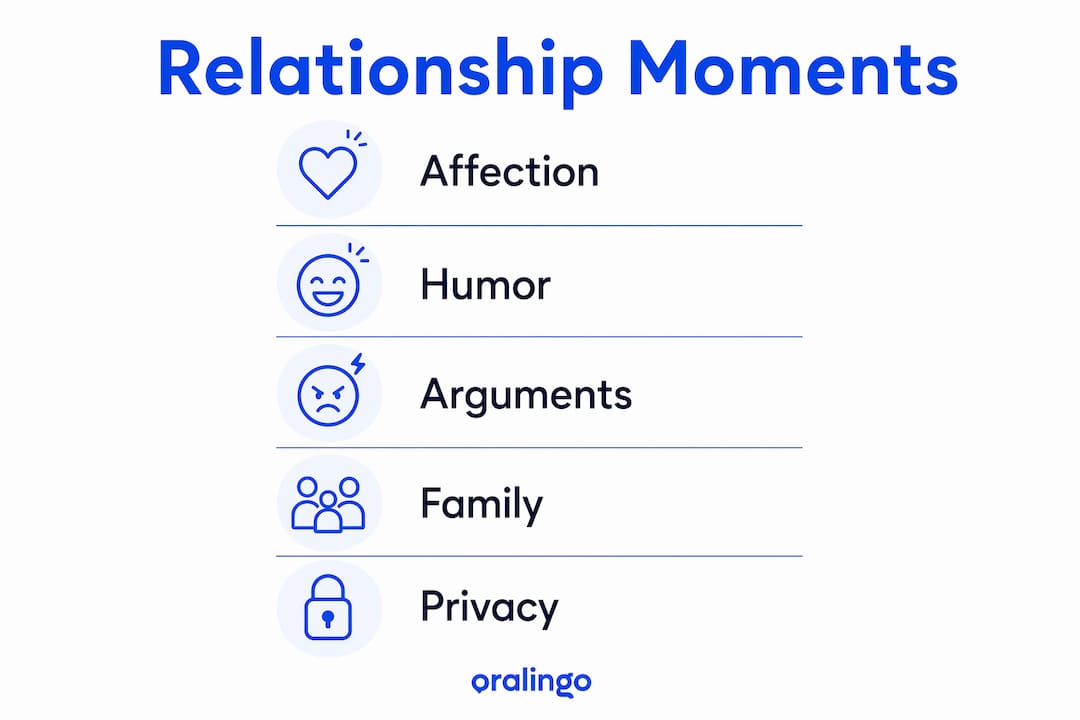
Which relationship moments does instant translation help most?
Translation technology isn't equally useful in every situation. Knowing where it helps and where it falls short lets you use it with intention.
1. Intimate confessions and everyday affection
This is where instant translation shines. A short "I love you" or a longer message about how your partner made your day is low-stakes enough that a small translation error won't cause lasting damage. Pre-delivery preview is especially valuable here: you can read the translated version of your message before sending and adjust if the tone feels off. The emotional disembodiment risk is real, but it's manageable when the message is warm and the stakes are low.
2. Light humor and teasing
Humor is the hardest thing to translate well. A playful tease depends on tone, timing, and shared history. If your app has a casual or playful register setting, use it. If not, add a short note: "That was a joke, by the way." A check-meaning prompt after a funny message ("Did that land okay?") takes two seconds and prevents a lot of unnecessary hurt.
3. Arguments and repair
This is where translation can genuinely help and genuinely hurt. On the helpful side, mediated exchange can reduce immediate escalation in conflicts. When you have to type or speak a message and wait for it to be translated, you can't fire off rapid-fire barbs the way you might in a live argument. That forced pause is a real de-escalation tool. On the risky side, a mistranslation during a fight can make a bad moment worse. If a message lands wrong, use a repair script immediately: "I think the translation missed something. What I meant was [restate clearly]. Are you okay?"
4. Family introductions and group settings
Meeting a partner's family across a language barrier is one of the most emotionally loaded situations a couple faces. Translation helps, but it also creates a visible dynamic: someone is always waiting, always a step behind. Intergenerational translation dynamics are worth thinking through in advance. Agree on who translates what, and give family members a heads-up that there may be short pauses. A bilingual family member stepping in for key moments, like a toast or a serious conversation, is often the right call.
When to switch modes entirely: if a conversation is escalating, if the topic involves legal or medical decisions, or if either partner feels persistently misunderstood, stop relying on automated translation. Pause, find a bilingual friend or professional interpreter, and have the conversation with human support.
How do you keep sensitive romantic conversations private?
Privacy in intimate conversations isn't just a technical question. It's a relationship one. Before you use any translation tool for personal messages, you and your partner should agree on what gets stored and for how long.
Privacy checklist for translation tools:
- End-to-end encryption: confirm that messages are encrypted in transit and at rest, not just during transmission.
- On-device processing vs. cloud processing: on-device processing means your message is translated locally and never sent to a remote server. Cloud processing is faster but exposes your message to a third party. For highly sensitive content, on-device is the safer choice.
- Opt-in memory: the app should ask your explicit consent before storing nicknames, context, or conversation history. Default-on memory is a red flag.
- Export and delete controls: you should be able to delete stored memory at any time, individually or in bulk.
- Clear privacy policy language: look for plain-language statements about whether your data is used to train models. If the policy is vague, treat it as a no.
Consent between partners matters too. Agree on what the app can remember: which nicknames are okay to store, whether conversation summaries are saved, and how long that data persists. This is especially worth discussing if one partner is more privacy-conscious than the other.
Pro Tip: Never paste highly sensitive messages, like financial details, medical information, or anything you'd consider legally sensitive, into a cloud-based translation tool. Use a tool with confirmed on-device processing or end-to-end encryption for those conversations, or handle them in person.
You can find a more detailed breakdown of how instant message translation handles privacy and what to look for in a tool's settings.
How do you choose and use a translation tool that builds closeness?
The right tool is only half the equation. How you use it matters just as much.
What to look for in a tool: pre-delivery previews, nickname and context memory, tone and style settings, minimal latency, on-device or encrypted processing, opt-in memory, and a clear privacy policy. If a tool is missing more than two of these, it's probably not built for intimate use.
Usage habits that build closeness. In affectionate messages, always preview the translation before sending. In arguments, use the forced pause as a feature, not a frustration: take a breath while the message processes, and read the translation carefully before you reply. During family calls, brief everyone in advance that there will be short pauses, and designate one person to handle translation for key moments rather than everyone talking over each other.
As a learning aid, translation tools work best when you treat them as a scaffold, not a permanent solution. Pick one phrase your partner uses often and learn it in their language. Over time, small vocabulary gains reduce your reliance on the app for the most emotionally loaded words, which is exactly where you want to be fluent.
"Intimacy in multilingual relationships depends less on perfect fluency than on a shared willingness to clarify and translate silences into safety."
— Daniel Dashnaw, couples therapist
A sample app-use agreement you can adapt: "We agree to save each other's nicknames in the app's memory with mutual consent. We won't use auto-translation during serious arguments without pausing to check meaning first. If either of us feels persistently misunderstood, we'll pause the app and find a bilingual friend or interpreter. We'll review and update our stored memory together every few months." This kind of agreement, even a casual verbal one, makes the technology feel like a shared tool rather than a crutch one partner controls.
What are the real risks of relying on instant translation in your relationship?
Translation tools can make communication better. They can also make it worse if you lean on them too heavily or use them without awareness.
Red flags to watch for:
- Repeated misattunement: if your partner consistently seems hurt or confused by your messages, the translation may be missing emotional cues that matter.
- Avoidance of deep topics: if you find yourself steering away from vulnerable conversations because they're "too hard to translate," that's a sign the tool is limiting rather than helping.
- Overdependence during conflict: using translation as a shield in arguments, rather than a communication aid, can prevent real repair.
- Memory used without consent: if the app is storing personal context you didn't agree to share, that's both a privacy issue and a trust issue.
- Reliance for legal, financial, or medical conversations: automated translation is not reliable enough for high-stakes decisions. Always use a certified human interpreter for those.
A concrete example: a partner sends a message that was meant as gentle teasing, but the translation renders it as a flat criticism. The receiving partner feels hurt and withdraws. The sending partner doesn't understand why. Neither brings it up. That small mistranslation, unaddressed, can compound over days. The repair script is simple: "I think the translation missed the tone there. I was teasing, not criticizing. Can we try that again?" Naming the mistranslation directly removes the ambiguity and keeps the repair clean.
Technology dependency is a real risk too. Couples who rely heavily on translation apps report anxiety when devices fail or battery dies. Keep a short list of key phrases in your partner's language written down somewhere, and agree on a backup plan for when the app isn't available.
How Oralingo applies these principles in practice
Oralingo is built specifically for the kind of intimate, one-to-one conversation this article describes. Its core design reflects the features that matter most for couples.
Key features:
- Pre-delivery translation: messages are translated before they appear to the recipient, giving the sender a chance to review tone and adjust before sending.
- Hands-free voice mode: lets partners speak naturally without typing, with translated output displayed in real time, so eye contact and natural conversation flow stay intact.
- Message memory for nicknames and context: the app can store shared references and pet names so they translate naturally rather than being flattened into generic alternatives.
- End-to-end encryption: every conversation is encrypted, keeping intimate content private.
- Support for 100+ languages with a 99% accuracy rate, as stated by Oralingo.
| Feature | How it supports intimacy |
|---|---|
| Pre-delivery translation | Lets you review and adjust tone before your partner reads the message |
| Hands-free voice mode | Keeps eye contact and natural pacing; reduces phone-staring |
| Nickname and context memory | Preserves pet names and inside jokes across every conversation |
| End-to-end encryption | Keeps sensitive romantic content private and secure |
| 100+ language support | Covers most couples’ language combinations, including less common pairings |
A quick usage walkthrough. In text chat: you type a message in English, Oralingo translates it before it displays to your partner in their language. You see the translated version first and can edit if the tone feels off. In voice mode: you speak naturally, the app transcribes and translates in real time, and your partner reads the translation on screen while hearing your voice. That combination, voice plus text, is as close to a natural bilingual conversation as current technology allows.
For the app-use agreement from the previous section, Oralingo fits naturally: set up shared nickname memory together, confirm encryption is active, and agree on when to use voice mode versus text. The app's privacy-first design means you're not trading intimacy for convenience.
Key Takeaways
Instant translation preserves relationship intimacy when it keeps tone intact, stores shared context, and slows the conversation just enough for both partners to stay fully present.
| Point | Details |
|---|---|
| Tone-aware translation matters | Pre-delivery previews let you adjust emotional register before a message reaches your partner. |
| Memory features protect shared context | Apps that store nicknames and inside jokes prevent generic translation from flattening what makes your relationship unique. |
| Forced slowing builds presence | Reading a translated message carefully reduces distracted multitasking and raises active attention. |
| Privacy requires explicit consent | Confirm end-to-end encryption and opt-in memory before using any tool for sensitive conversations. |
| Oralingo for couples | Oralingo combines pre-delivery translation, hands-free voice mode, nickname memory, and end-to-end encryption in one privacy-first app. |
The part most couples miss about translation and closeness
Most conversations about translation tools focus on accuracy. Does it get the words right? That's the wrong question for couples. The right question is: does it get the relationship right?
What I find most striking about how multilingual couples actually use these tools is that the friction itself, the slight pause, the need to read carefully, the habit of checking meaning, often becomes the intimacy practice. Couples who build small rituals around translation, reading a message twice before replying, saying "did I get that right?" as a regular check-in, tend to report feeling more heard, not less. The technology forces a kind of deliberate attention that fast, fluent communication can actually skip.
The risk isn't the tool. The risk is using it passively, as if it were a perfect invisible interpreter, rather than actively, as a shared practice you and your partner maintain together. A translation app used with awareness is a relationship tool. Used without it, it's just an app.
Oralingo: a privacy-first option built for couples who want to stay close
Multilingual couples deserve a translation tool that treats their conversations as private and personal, not as data to process. Oralingo was built for exactly that. Every message is end-to-end encrypted. Pre-delivery translation means you review the tone before your partner reads it. Hands-free voice mode keeps the conversation feeling natural, not mechanical. And nickname memory means the app learns your relationship's language, not just your languages.
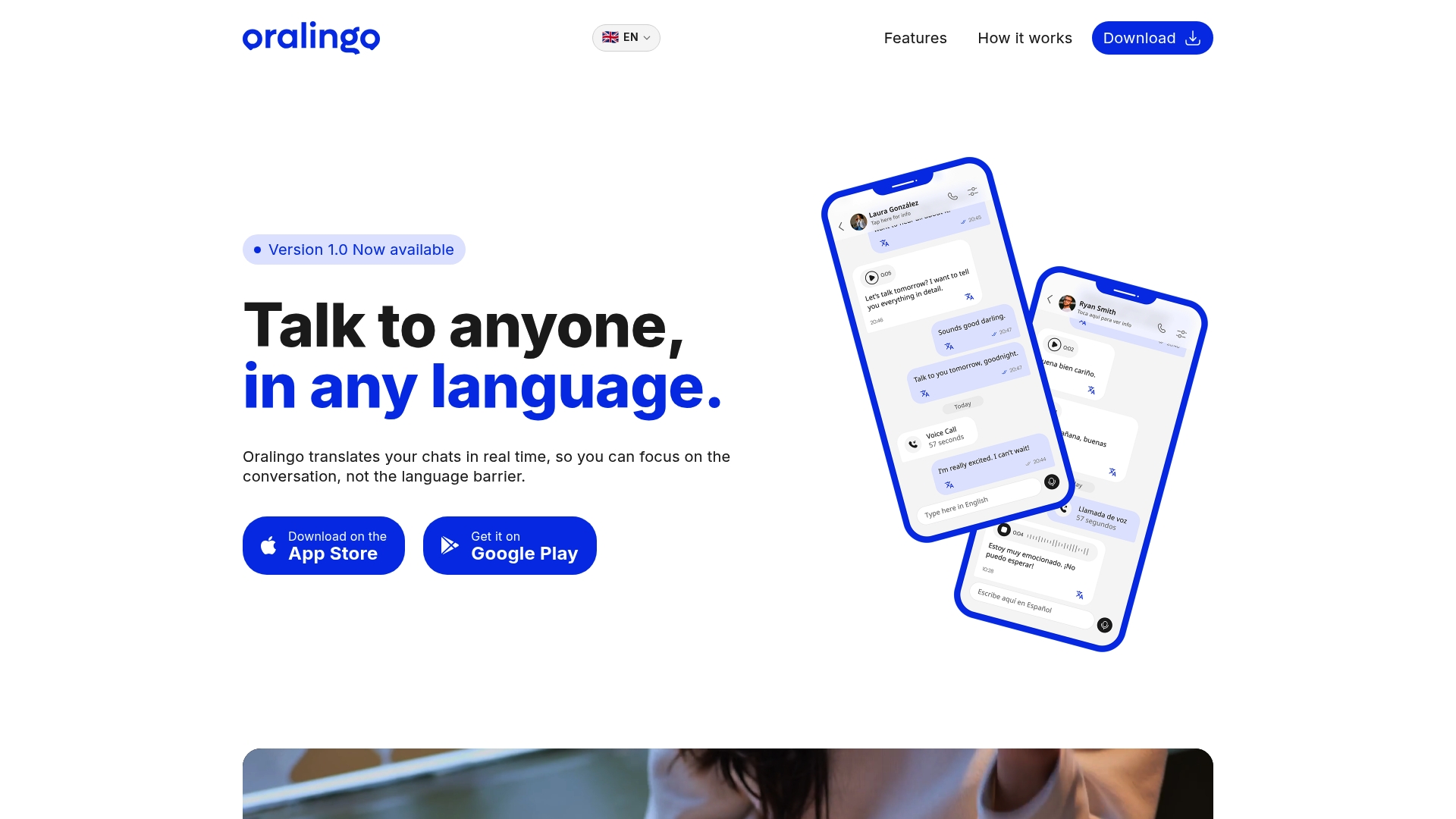
It supports a wide range of languages with high accuracy, so most couples are covered. The free version gives you a solid starting point, and the premium tier unlocks higher usage and full feature access. For moments where the stakes are high, like a serious conversation about the future or a family introduction, Oralingo works best alongside the habits this article describes: slow turns, check-meaning prompts, and a clear agreement between you and your partner about what gets stored. Try Oralingo free and see how it fits your conversations.
Useful sources for further reading
-
When love speaks more than one language — WellDoing: A therapist-written piece on how cultural scripts shape emotional meaning in bilingual relationships. Credible because it draws on clinical family-systems research and couples therapy practice.
-
Love in the Time of Translation — Daniel Dashnaw: A couples therapist's analysis of emotional disembodiment and how language barriers can both reveal and heal relationship wounds. Useful for understanding the psychological mechanisms behind translation and intimacy.
-
Their secret to a happy marriage? A translation app — New York Times (archived): Reported profiles of real couples using translation apps daily, including observations on forced presence, dependency risks, and hands-free voice modes. Strong on real-world behavior.
-
How AI translators help a New Haven couple communicate — NH Register: A ground-level look at how one English-Mandarin couple uses AI translation in daily life, including the emotional moments where it works and where it falls short.
-
Love in Translation — Vogue: A personal essay on navigating a bilingual relationship that captures the emotional texture of self-translation and the limits of language in love. Useful for the human dimension of what the technology is trying to support.