
The most effective types of translation tools for romantic partners are specialized apps that combine broad language support, emotional nuance, and privacy features. Most couples default to a single general-purpose translator and wonder why misunderstandings still happen. The real answer is a multi-tool strategy. Multi-app translation stacks reduce miscommunication by 34% compared to relying on one tool alone. That gap matters when you are trying to say "I miss you" and not accidentally say something cold or confusing. The three primary categories worth knowing are built-in dating platform translators, AI-powered neural machine translators, and language-learning apps.
1. Types of translation tools for romantic partners: an overview
Three distinct tool categories serve different communication needs for couples. Built-in platform translators handle quick, casual exchanges. AI-powered neural machine translators handle emotional depth and complex phrasing. Language-learning apps build shared vocabulary over time. Successful couples use all three in combination, with research showing that 91% of couples who report strong cross-language communication rely on language-learning apps alongside translation tools. Each category fills a gap the others leave open.

2. Built-in dating platform translators
Built-in translators are the first tool most couples encounter. They sit inside messaging apps or dating platforms and translate text automatically, with no copy-paste required. That convenience makes them ideal for early-stage conversations and daily logistics like scheduling a video call or confirming plans.
The strengths of built-in translators include:
- Speed. Translation appears instantly inside the chat window.
- Zero friction. No switching between apps mid-conversation.
- Broad coverage. Most major platforms support 30 or more languages.
- Good enough for simple messages. Logistics, greetings, and short questions translate cleanly.
The limitations show up fast in romantic communication. Built-in translators often produce flat, literal phrasing that strips emotional warmth from a message. A tender sentence can arrive sounding blunt. Cultural expressions rarely survive intact. For cross-cultural couple communication, built-in tools work best as a starting point, not a complete solution.
Pro Tip: When using a built-in translator for anything emotionally important, write your message in short, simple sentences first. Shorter input produces cleaner, more natural output.
3. AI-powered neural machine translation tools
Neural machine translation (NMT) is the technical standard behind the best standalone translation apps today. Unlike older word-for-word systems, NMT models process full sentences and paragraphs as context, which means they capture tone, intent, and cultural meaning far better. This matters enormously when you are writing an apology, a love letter, or a message after an argument.
Key features to look for in an NMT tool for romantic use:
- Tone detection. Some tools let you select formal, casual, or affectionate registers.
- Custom glossaries. You can save pet names, inside jokes, and personal phrases so they translate consistently.
- Offline capability. Offline AI translation tools process everything locally, meaning your intimate messages never touch an external server.
- Long-form support. NMT tools handle paragraphs without losing coherence, unlike basic translators that stumble on anything longer than two sentences.
Privacy is the most overlooked factor in this category. Cloud-based NMT tools send your text to remote servers for processing. Locally processing offline translators preserve privacy and emotional tone with no data transmitted externally. For couples sharing sensitive conversations, that distinction is not minor. Offline NMT tools now support 50 or more languages with context-aware engines that preserve emotional nuance.
DeepL is widely recognized for emotional nuance in European languages. Google Translate leads in language range with support for 133 or more languages and strong offline access. For East Asian languages, regional specialists like Papago outperform general tools on cultural accuracy. A three-app combination of these tools covers 97% of real-world dating scenarios.
4. Language-learning apps as communication tools for relationships
Language learning is not a substitute for translation tools. It is a powerful complement that builds trust and reduces psychological distance in international relationships. Learning even ten phrases in your partner's language signals effort and respect in a way that no app can replicate for you.
Benefits of adding a language-learning app to your communication toolkit:
- Cultural context. You learn not just words but the meaning behind them.
- Shared vocabulary. Couples who practice together develop private phrases that feel genuinely theirs.
- Reduced dependence. Basic fluency in greetings, emotions, and daily phrases means fewer moments where you need to reach for a translator.
- Stronger connection. Language learning decreases psychological distance in international relationships by demonstrating sustained effort.
Apps like Duolingo, Babbel, and Pimsleur each take a different approach. Duolingo works well for gamified daily practice. Babbel focuses on conversational phrases faster. Pimsleur builds listening and speaking skills through audio. None of them replace translation tools for complex messages, but all of them make you a better communicator with your partner over time.
Pro Tip: Ask your partner to teach you five phrases that matter to them personally. Those phrases will mean more than anything a language app teaches you, and the conversation itself builds connection.
5. How to build a multi-app stack for romantic communication
The most effective communication tools for relationships work as a system, not in isolation. Couples using multiple specialized tools report significantly fewer communication mishaps than those relying on one app alone. The key is matching the right tool to the right situation.
Here is how to think about your stack by context:
| Communication context | Best tool type | Why it works |
|---|---|---|
| Daily casual chat | Built-in platform translator | Fast, frictionless, good enough for logistics |
| Emotional messages, apologies | NMT app with tone control | Captures nuance and cultural meaning |
| Love letters, long messages | Offline NMT tool | Privacy protection and coherent long-form output |
| Video calls and travel | Real-time voice translation | Handles spoken language without typing |
| Building connection over time | Language-learning app | Builds shared vocabulary and cultural respect |
Practical tips for running a multi-app stack well:
- Keep input short. Short, simple sentences produce cleaner translations in general-purpose tools. Long, complex sentences introduce errors.
- Verify emotional tone. After translating a sensitive message, read it back in your native language using a second tool to check the tone lands correctly.
- Use offline tools for private messages. Any message you would not want stored on a server should go through a locally processing translator.
- Sync your glossaries. If your NMT tool supports custom glossaries, add your partner's pet names and shared phrases so they stay consistent.
The multilingual relationship communication checklist from Oralingo covers seven practical steps for couples building this kind of system from scratch.
6. Choosing tools based on language pair, privacy, and style
Not every tool performs equally across all language pairs. Choosing the right communication tool for your specific relationship means knowing where each tool is strongest.
| Language pair | Recommended tool type | Strength |
|---|---|---|
| European languages (French, Spanish, German) | DeepL | Emotional nuance, natural phrasing |
| East Asian languages (Korean, Japanese, Chinese) | Papago or regional NMT | Cultural accuracy, idiomatic expressions |
| Wide coverage or less common languages | Google Translate | 133+ languages, offline mode available |
| High-privacy needs, any language | Offline NMT tool | No cloud storage, local processing |
Voice translation matters more than most couples realize. AI-powered keyboard solutions embedded in messaging apps enable real-time natural phrasing translation, which means you can communicate directly with your partner's family without relying on your partner as a go-between. That independence reduces pressure on the relationship and builds genuine connection with the people who matter to your partner.
For couples with less common language pairs, regional NMT tools often outperform global platforms. A tool trained heavily on Korean-English or Vietnamese-English data will produce more natural output than a general-purpose translator stretched thin across 100 languages. Privacy-focused couples should prioritize offline tools regardless of language pair. The real-time translation approach that Oralingo uses translates messages before they are displayed, keeping the conversation natural and uninterrupted.
Key takeaways
The most effective strategy for multilingual couples is a three-tool combination: a built-in platform translator for daily chat, an AI-powered NMT app for emotional messages, and a language-learning app for long-term connection.
| Point | Details |
|---|---|
| Multi-app stacks work best | Three-tool combinations cover 97% of real-world scenarios and cut miscommunications by 34%. |
| NMT tools capture emotional tone | Neural machine translation handles apologies, love letters, and sensitive messages better than basic translators. |
| Offline tools protect privacy | Locally processing translators keep intimate messages off external servers entirely. |
| Language learning builds trust | Learning your partner's language signals effort and reduces psychological distance over time. |
| Match the tool to the context | Use built-in translators for logistics, NMT for emotion, and voice tools for calls and travel. |
Why I think most couples underestimate their translation setup
Most couples I have seen treat translation as a last resort. They type a message, feel something is off, paste it into a translator, and hope for the best. That reactive approach is exactly why misunderstandings pile up.
The couples who communicate well across languages treat their tools like a deliberate system. They know which app handles emotional tone best for their specific language pair. They have already saved their pet names in a custom glossary. They use an offline tool for anything sensitive. That level of intentionality is not complicated. It just requires thinking about the problem once, setting things up, and sticking with it.
The part that surprises people is how much the language-learning piece matters. You do not need to become fluent. You need to show your partner that you tried. Sending a voice message in broken but genuine Korean or Spanish communicates something no translation app ever will. Technology handles the gap. Effort closes it.
My honest advice: pick one NMT tool that works well for your language pair, add an offline option for private messages, and spend 10 minutes a day on a language app. That combination, used consistently, will do more for your relationship than any single "best" translator ever could.
— Poul
Oralingo makes cross-language communication feel natural
Long-distance couples need a tool that keeps up with real conversation, not one that interrupts it. Oralingo translates messages instantly before they are displayed, so the conversation flows without pauses or copy-paste breaks.
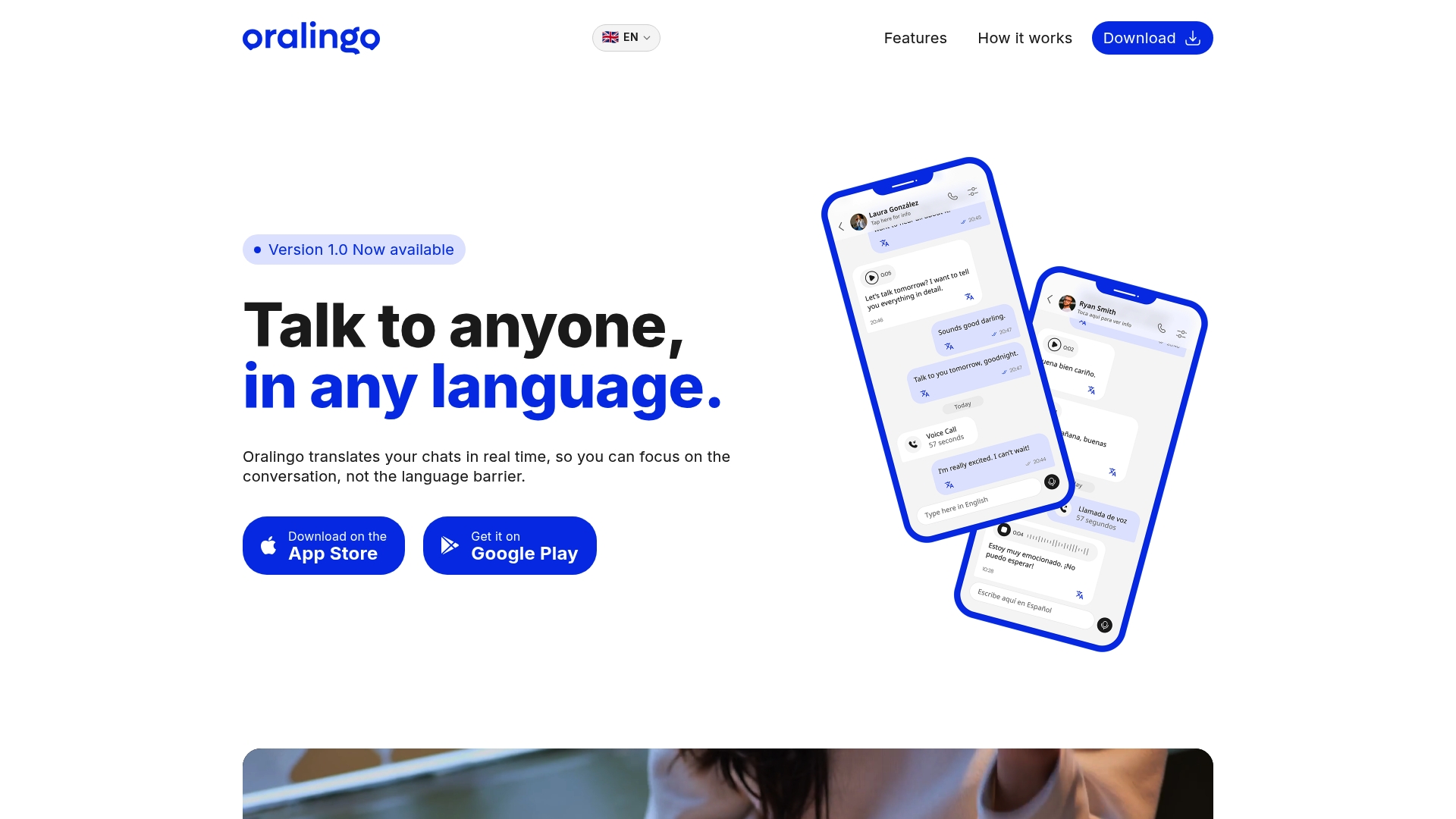
Oralingo supports over 100 languages with a 99% accuracy rate and end-to-end encryption on every conversation. Its hands-free voice mode means you can talk naturally without typing, which makes a real difference on long calls. For couples building the kind of multi-tool communication system described in this article, Oralingo handles the real-time layer that built-in platform translators cannot. Download the app and focus on the conversation, not the language barrier.
FAQ
What are the main types of translation tools for couples?
The three main types are built-in dating platform translators, AI-powered neural machine translation apps, and language-learning apps. Each serves a different communication need, and combining all three produces the best results.
Which translation tool is best for emotional messages?
AI-powered neural machine translation tools like DeepL are best for emotional messages because they capture tone and cultural nuance. Offline NMT tools add privacy protection for sensitive conversations.
Do I need more than one translation app in a relationship?
Yes. Multi-app stacks reduce miscommunications by 34% compared to single-tool use, and a three-app combination covers 97% of real-world dating scenarios.
How do I keep my private messages safe when using translation tools?
Use an offline, locally processing NMT tool for intimate conversations. Offline translation tools store no data externally and process everything on your device, keeping your messages private.
Does learning my partner's language really help?
Learning even basic phrases builds trust and reduces psychological distance. Language learning complements translation tools by adding cultural context and demonstrating genuine effort, which no app can do on your behalf.