
A multilingual relationship communication checklist is a structured set of daily habits and practices that helps couples communicate clearly across different languages and cultural backgrounds. Intercultural communication research calls this kind of framework "cross-cultural communication strategy," and it covers everything from word choice to emotional safety routines. Language barriers in relationships do not disappear on their own. Without a clear system, small misunderstandings grow into recurring conflicts. This checklist gives you and your partner a practical, repeatable way to stay connected, honest, and understood, no matter which languages you speak at home.
1. What makes a multilingual relationship communication checklist work?
The single most important criterion for effective communication in multilingual relationships is shared language habits. That means both partners agree on how they will talk, not just what language they will use.
The foundation starts with plain, direct language. Avoid idioms and sarcasm in everyday conversation, because these are the first things to get lost across languages. Phrases like "it's not a big deal" or "I was just kidding" carry cultural weight that does not always translate. Replace them with literal, specific statements.

The "one topic, one message" approach reduces misunderstandings by limiting each conversation to a single clear question or concern at a time. After a difficult exchange, one partner writes a short summary in plain sentences. This gives both people a chance to confirm they understood the same thing.
Meta-communication is the practice of talking about how you communicate, not just what you said. Successful bilingual couples use meta-communication to separate personality differences from cultural patterns. When you say "I felt confused by that phrasing, can we try again?" you are practicing meta-communication. It turns friction into a shared problem to solve together.
- Use plain, literal language. Skip idioms, slang, and sarcasm.
- Stick to one topic per conversation when discussing something sensitive.
- Write a short summary after any difficult talk to confirm shared understanding.
- Name the communication pattern, not just the feeling. "That phrase doesn't translate well for me" works better than "you always confuse me."
Pro Tip: Keep a shared notes document where both partners write down phrases that caused confusion. Review it monthly and agree on clearer alternatives.
2. Build a daily connection habit
Daily connection is the first step in any checklist for multilingual couples. Short, low-stakes conversations build the emotional warmth that makes harder talks feel safer. Spend five to ten minutes each day checking in with no agenda. Ask simple questions: "How are you feeling right now?" or "What was the best part of your day?" These micro-conversations train both partners to stay present and attentive.
Structured daily actions as brief as five to ten minutes improve emotional safety and connection over time. Consistency matters more than duration.
3. Establish emotional safety routines
Emotional safety means your partner feels free to be honest without fear of judgment or ridicule. This is especially important when one partner speaks the shared language less fluently. Agree on a signal word or phrase that either partner can use to pause a conversation when they feel overwhelmed or misunderstood.
A consent-first approach means checking whether your partner has the energy for a serious conversation before starting one. Pushing a difficult topic when someone is tired or stressed causes more harm than the original issue. Ask first: "Is now a good time to talk about something important?"
4. Practice structured conflict repair
Conflict in multilingual relationships often comes from everyday friction, not dramatic cultural clashes. Meta-communication aids resolution more reliably than trying to win an argument in a second language. After a disagreement, use a simple repair checklist: name what happened, say how you felt, ask what your partner heard, and confirm what you both want next time.
Write the repair steps down if needed. A written record removes the pressure of remembering every word and gives both partners equal footing, regardless of language skill.
5. Listen without trying to fix
Effective listening in a multilingual relationship means staying quiet long enough for your partner to find the right words. Resist the urge to finish their sentences or suggest vocabulary. That habit, however well-intentioned, signals impatience and can shut down honest expression.
Friendship and trust are foundational to overcoming language barriers. Gottman therapy research identifies emotional connection as the key factor in effective intercultural communication. Listening without judgment builds exactly that kind of connection.
6. Coordinate logistics clearly
Practical logistics, such as schedules, finances, and household decisions, are where language gaps cause the most daily stress. Use written messages for any plan that involves dates, times, or money. A quick follow-up text after a verbal agreement removes ambiguity. Both partners can re-read it, translate it if needed, and confirm they understood the same thing.
This is not a lack of trust. It is a practical habit that protects both partners from the frustration of acting on different assumptions.
7. Express appreciation in both languages
Positive sentiment is not a luxury in a multilingual relationship. It is a communication tool. Emotional intimacy grows not from perfect communication but from the willingness to stay emotionally present despite imperfect language. Saying "I appreciate you" in your partner's native language, even imperfectly, signals effort and respect.
Build a short list of appreciation phrases in each other's languages. Use them daily. The effort matters more than the accent.
What digital tools support multilingual couples?
Digital tools help with words, but they do not replace emotional attunement. Real-time translation apps assist with vocabulary but commonly fail to capture emotional nuance, sarcasm, or cultural context. That limitation matters most during sensitive conversations.
Use technology for logistics and low-stakes chats. For emotional or high-stakes discussions, rely on simple language and follow up with written summaries. Here is how to use digital tools well:
- Use real-time chat translation for everyday messages, scheduling, and practical coordination.
- Write a plain-language summary after any difficult conversation and share it with your partner.
- Build a shared glossary of phrases that work well for your relationship and phrases to avoid.
- Use voice translation for casual verbal exchanges, not for arguments or emotional disclosures.
Oralingo supports over 100 languages with a 99% accuracy rate and translates messages instantly before they are displayed. Its hands-free voice mode lets you speak naturally without typing. For couples managing daily logistics across languages, that kind of instant message translation removes friction from routine communication and keeps the focus on connection.
Pro Tip: After any conversation that felt confusing, send your partner a two-sentence written summary of what you understood. Ask them to confirm or correct it. This single habit prevents most recurring misunderstandings.
How cultural nuances affect your communication
High-context cultures communicate meaning through tone, silence, and shared assumptions. Low-context cultures state meaning directly and explicitly. Most communication problems in intercultural relationships come from this gap, not from vocabulary.
The partner using their stronger language has a natural advantage in humor, nuance, and emotional precision. That imbalance requires active sensitivity. The stronger-language speaker should slow down, simplify, and check for understanding regularly.
Couples who build a shared "Third Culture" navigate this well. A Third Culture is a set of shared communication norms and bridge phrases that both partners co-create. It does not erase either background. It adds a layer that belongs to both of you.
Practical ways to build your Third Culture:
- Identify three to five "bridge phrases" that both partners understand clearly and use them consistently.
- Agree on which language to use for which topics, such as English for logistics, Spanish for emotional conversations.
- Name cultural patterns when they appear. "In my culture, silence means agreement. Does it mean that for you?"
- Use multilingual negotiation techniques to work through disagreements without the conversation becoming a language competition.
Strong emotional foundations like friendship and trust help multilingual couples handle misunderstandings with empathy rather than defensiveness. That foundation does not happen automatically. You build it through consistent, small acts of care and patience.
Key takeaways
A multilingual relationship communication checklist works because it replaces guesswork with shared habits, giving both partners equal footing regardless of language skill.
| Point | Details |
|---|---|
| Use plain, direct language | Avoid idioms and sarcasm; use literal statements that translate clearly across languages. |
| Apply the one-topic rule | Limit sensitive conversations to one issue at a time and follow up with a written summary. |
| Build a Third Culture together | Co-create shared bridge phrases and communication norms that honor both backgrounds. |
| Check consent before hard talks | Ask if your partner has the energy for a serious conversation before starting one. |
| Use technology for logistics only | Reserve real-time translation tools for practical coordination, not emotional discussions. |
What I've learned from watching couples build their own language
The couples who communicate best across languages are not the ones who speak the most languages. They are the ones who take the smallest, most consistent actions every day.
What strikes me most is how quickly partners develop their own shorthand. A phrase that started as a workaround for a translation gap becomes a term of endearment. A written summary habit becomes a ritual. These micro-habits accumulate into something that feels like a shared identity.
The checklist approach works because it removes the pressure of performing perfect communication. You are not trying to be fluent. You are trying to be present. That shift in expectation changes everything. Couples stop measuring success by whether they said it perfectly and start measuring it by whether they tried again.
The hardest part is not the language gap. It is the willingness to stay in the conversation when it gets uncomfortable. Consent and emotional safety are not soft extras. They are the structure that makes everything else possible. A partner who feels safe to say "I don't understand, can we try again?" is a partner who stays in the relationship long-term.
Imperfection is not a problem to fix. It is the condition under which real intimacy grows.
— Poul
Oralingo and multilingual couples: a practical fit
Couples who communicate across languages need tools that keep up with real conversation, not tools that interrupt it.
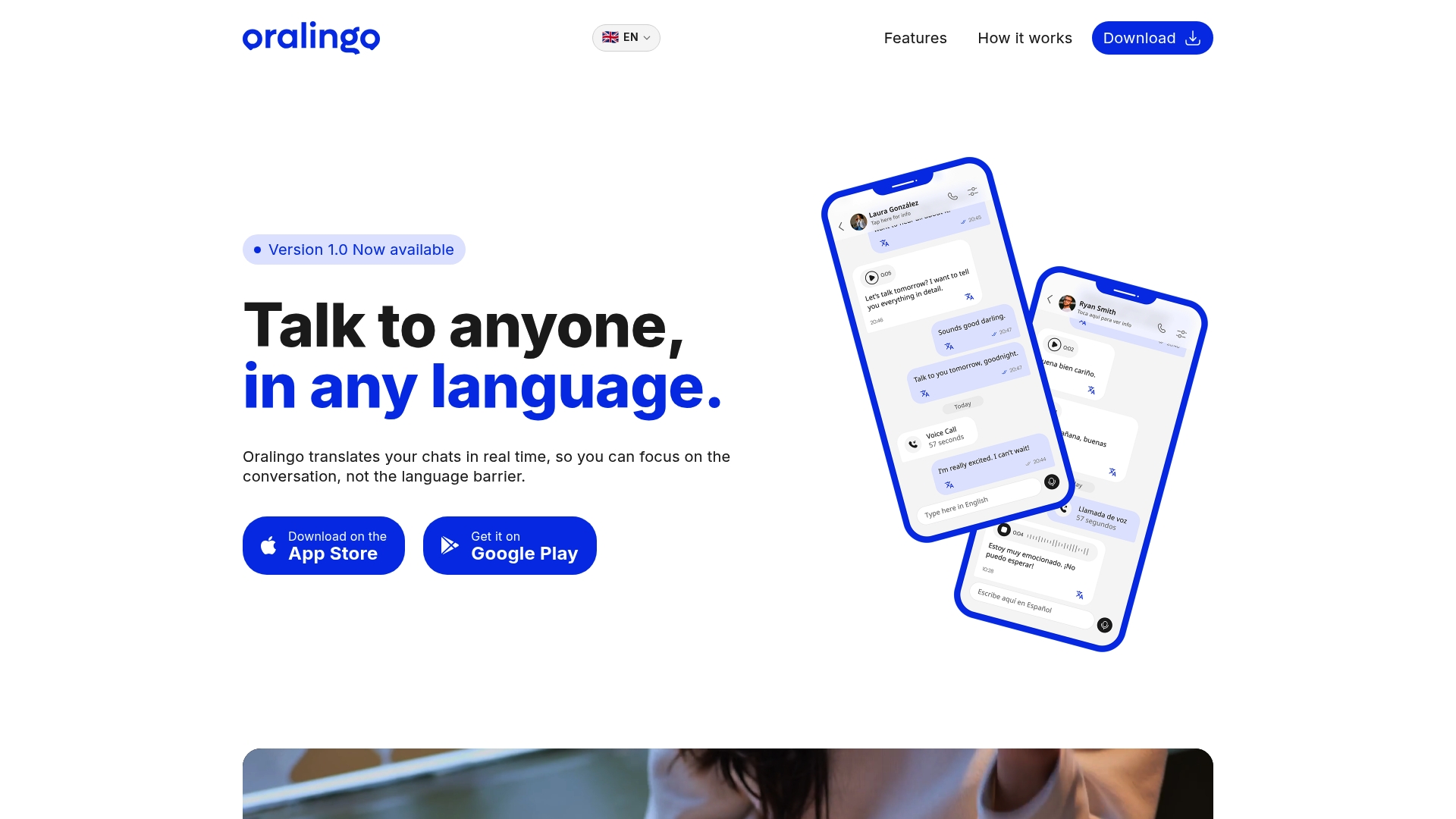
Oralingo translates messages instantly before they appear on screen, so the conversation flows without pauses or copy-paste interruptions. Its hands-free voice mode lets you speak naturally and hear your partner's words in your language right away. With support for over 100 languages and end-to-end encryption on every chat, it handles both the practical and the private. Whether you are coordinating weekend plans or catching up after a long day, Oralingo keeps the focus on what you are saying, not on the language you are saying it in.
FAQ
What is a multilingual relationship communication checklist?
A multilingual relationship communication checklist is a structured set of daily habits that helps couples communicate clearly across different languages. It covers language habits, emotional safety routines, conflict repair steps, and digital tool use.
How do you handle language barriers in a relationship?
Use plain, literal language, stick to one topic at a time, and follow up difficult conversations with a short written summary. Real-time translation tools like Oralingo help with everyday logistics, while emotional talks benefit most from simple, direct language.
What is meta-communication in a bilingual relationship?
Meta-communication means talking about how you communicate, not just what you said. Bilingual couples use it to separate cultural patterns from personal traits and to negotiate communication styles that work for both partners.
How does a Third Culture help intercultural couples?
A Third Culture is a set of shared phrases and communication norms that both partners co-create together. It acknowledges both backgrounds without erasing either one, and couples who build it navigate conflicts more effectively.
When should multilingual couples use translation apps?
Translation apps work best for practical, low-stakes communication like scheduling and logistics. For emotional or high-stakes conversations, simple language and written summaries are more reliable than automated translation alone.