
Real-time translation is defined as the instant, automated conversion of spoken or written language into another language during a live conversation. This technology directly shapes how families stay close across language gaps, and the stakes are real: heritage language loss affects over 40% of immigrant families by the third generation, creating communication gaps that widen with every passing year. Understanding how real-time translation connects generations means understanding what happens when a grandmother in Guadalajara and her teenage grandchild in Chicago can finally talk without a family member stuck in the middle translating. The industry term for this technology is neural machine translation, or NMT, and it now powers the apps families use every day.
How real-time translation improves conversational intimacy
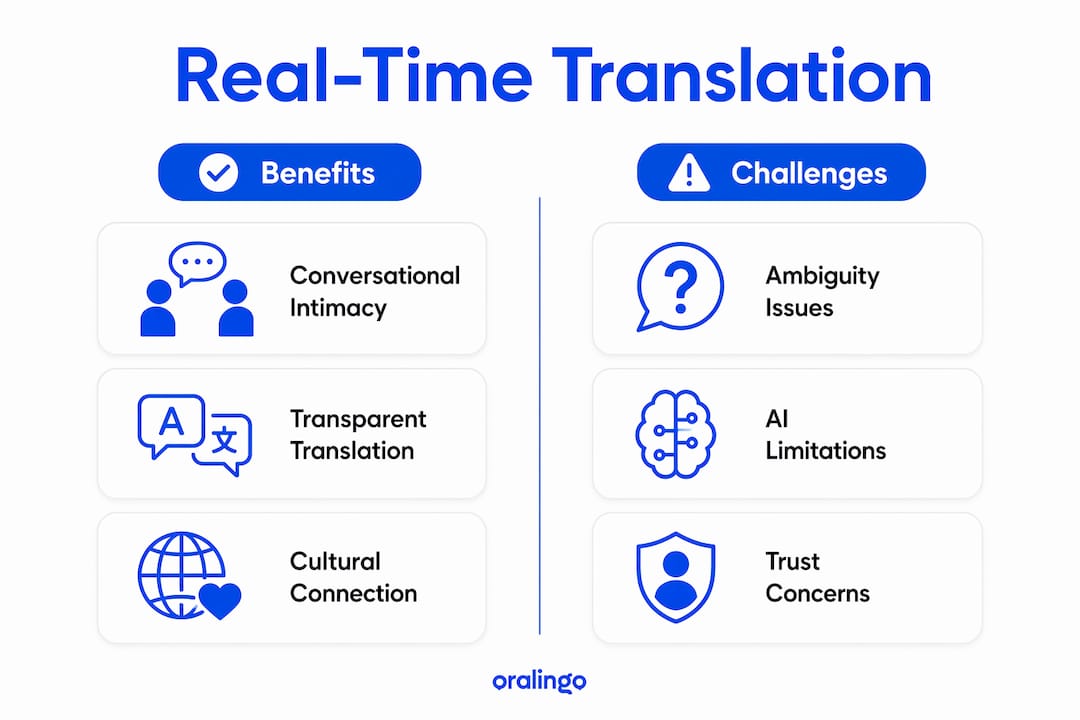
Conversational intimacy is the feeling that you are truly understood, not just heard. A 2026 study with 16 family pairs found that transparent real-time translation improved both conversational intimacy and usability compared to black-box translation or no translation at all. That result matters because it shows the design of a translation tool is as important as its accuracy.
Transparent translation means both the original message and the translated version appear on screen at the same time. This approach lets participants verify meaning, catch tone, and feel included in the full exchange. Black-box translation, by contrast, hides the original and forces complete trust in the output. Families using transparent tools reported longer, more emotionally engaged conversations.
Interpreter fatigue is a real and underappreciated problem in multilingual family calls. When one bilingual family member carries all the translation work, they stop being a participant and become a service. Real-time automated translation removes that burden, restoring the bilingual family member to their natural role in the conversation.
The practical difference shows up fast. On a weekly video call, a bilingual adult child might spend 40% of the call relaying messages instead of sharing their own stories. With live translation running, that same person can laugh, argue, and reminisce like everyone else. The call becomes a conversation, not a relay race.
- Transparent translation shows both original and translated text, reducing misunderstandings.
- Hands-free voice mode lets older adults participate without typing, lowering the tech barrier.
- Instant delivery keeps the natural rhythm of conversation intact, so pauses feel human, not mechanical.
- Support for 100+ languages means the tool works for extended families spread across multiple countries.
Pro Tip: When setting up a multilingual family call, choose a translation tool that displays both the original and translated message. This one setting dramatically reduces the "did they really say that?" moments that derail conversations.
What challenges come with AI-mediated translation?
AI translation is not a perfect substitute for a skilled human interpreter, and pretending otherwise causes real problems. Real-time AI translation excels in high-volume, routine communication but needs human support for sensitive or nuanced topics. That distinction matters most in family conversations, where the stakes are emotional, not just informational.
Neural machine translation struggles with ambiguity. A phrase like "I'm fine" carries completely different weight depending on tone, context, and family history. An AI system translating that phrase during a tense family discussion may miss the subtext entirely. The words come through; the meaning does not.
Carnegie Mellon University research highlights that AI systems improve trust and effectiveness when they adapt to a user's conversational style and ask clarifying questions rather than forcing a translation. This is a significant design principle. An AI that says "I'm not certain of the tone here, did you mean this warmly or seriously?" serves the conversation far better than one that guesses and moves on.
Cultural communication also carries implicit meaning that translation cannot always surface. A nod, a proverb, or a silence means something specific within a cultural context. Making implicit communication explicit is a skill that technology supports but cannot replace. Families benefit most when they combine translation tools with direct conversations about communication preferences.
Here is a practical framework for knowing when to rely on AI translation and when to bring in human judgment:
- Routine updates and daily check-ins. AI translation handles these well. The language is predictable and the emotional stakes are low.
- Celebrations and storytelling. AI works here with some attention. Humor and idioms may need a quick human clarification.
- Conflict resolution or sensitive news. Use AI as a starting point, but have a bilingual family member available to step in when tone matters most.
- Medical or legal discussions. Always involve a professional human interpreter. Errors here carry real consequences.
Pro Tip: Before a big family call, spend two minutes agreeing on a signal, like a raised hand or a specific word, that anyone can use to pause and ask for clarification. This simple habit prevents misunderstandings from snowballing.
How families can use real-time translation every day
The most effective use of cross-generational communication technology is not in grand gestures. It shows up in the small, repeated moments: the Sunday call, the birthday message, the shared photo with a caption in two languages. Seventy percent of people engage better with content in their native language. That statistic applies directly to family conversations, where emotional resonance depends on language comfort.
Weekly multilingual family calls become richer when translation runs in the background. A grandparent can tell a story in Spanish while their grandchild reads it in English in real time, then responds naturally. The story lands. The connection holds. For a deeper look at how this works technically, real-time chat translation has changed significantly in 2026, with AI models now handling conversational context far better than earlier versions.

Choosing the right setup matters. Older family members often prefer voice-based interaction over typing. Younger family members tend to prefer text. A good translation tool supports both in the same conversation, so no one has to adapt to an uncomfortable format.
| Communication scenario | Without real-time translation | With real-time translation |
|---|---|---|
| Weekly family video call | Bilingual member translates; others wait | Everyone participates at the same time |
| Holiday storytelling | Stories get shortened or skipped | Full stories shared in each person's language |
| Sharing daily updates | Messages sent in one language, some excluded | All family members receive updates they can read |
| Discussing family decisions | Misunderstandings delay decisions | Clearer exchanges lead to faster alignment |
A few practical habits make translation technology work better in family settings:
- Set expectations before the call. Let everyone know translation is running so no one feels monitored.
- Use a tool with end-to-end encryption. Family conversations are private. The technology should respect that.
- Check in on comprehension. Ask "did that make sense?" more often than you think you need to. Translation is good; confirmation is better.
- Keep sentences shorter than usual. Long, complex sentences challenge even strong AI translation. Short sentences translate more accurately.
For families building a longer-term communication practice, the multilingual relationship communication checklist offers a structured starting point.
What does the future of cross-generational translation look like?
The next phase of real-time translation technology focuses on conversational intelligence, not just word-for-word accuracy. AI systems are being trained to recognize emotional tone, adapt to individual speaking styles, and flag moments of potential misunderstanding before they cause friction. This shift moves translation from a utility into something closer to a communication partner.
AI storytelling tools already help grandparents connect emotionally with grandchildren despite physical or communication barriers. That capability will expand. Future tools will likely preserve voice tone and pacing during translation, so a grandmother's warmth comes through in the translated audio, not just the words.
Heritage language preservation is a direct beneficiary of these advances. When families can communicate across languages without friction, younger generations stay exposed to their heritage language longer. That exposure slows the language loss that affects over 40% of immigrant families by the third generation.
Key trends shaping the next generation of cross-generational translation tools:
- Adaptive AI models that learn individual speech patterns and adjust translation style accordingly.
- Emotion-aware translation that flags tone shifts and preserves emotional nuance across languages.
- Platform integration that brings translation directly into mainstream video call and messaging apps.
- Human-AI hybrid models where AI handles routine exchanges and human interpreters step in for complex moments.
- Multilingual group conversations where three or more languages run simultaneously without degrading quality.
The human element remains central. AI systems that adapt to conversational styles build more trust and produce better outcomes than rigid, one-size-fits-all translation engines. The goal is not to replace the human in the conversation. The goal is to make sure the human can show up fully, in their own language.
Key Takeaways
Real-time translation technology most effectively connects generations when it uses transparent AI mediation, reduces interpreter fatigue, and adapts to individual conversational styles.
| Point | Details |
|---|---|
| Transparent translation wins | Showing both original and translated text improves intimacy and reduces misunderstandings in family calls. |
| Interpreter fatigue is real | Automated translation frees bilingual family members to participate fully instead of relaying messages. |
| AI has clear limits | Use AI for routine conversations and human support for sensitive, nuanced, or high-stakes discussions. |
| Small habits matter most | Short sentences, encryption, and pre-call expectations make translation tools work better in practice. |
| Heritage language loss is preventable | Regular multilingual family contact, supported by real-time translation, slows language loss across generations. |
Why I think translation technology is a cultural lifeline, not just a convenience
I've watched families navigate multilingual calls for years, and the pattern is always the same. One person carries the weight of translation, the conversation slows to a crawl, and the emotional energy drains out of the room. The grandparent stops telling the long version of the story. The teenager stops asking follow-up questions. Everyone settles for less.
What strikes me most about the 2026 research on transparent AI translation is not the technology itself. It's the confirmation that how you translate matters as much as whether you translate. Showing the original message alongside the translation is not a minor design choice. It's an act of respect. It says: your words matter, and we want everyone to see them.
The deeper opportunity here is cultural continuity. A language carries humor, history, and ways of seeing the world that do not survive a simple word-for-word conversion. But a grandmother who can tell her full story, in her own language, to a grandchild who reads it in theirs, passes something real across that gap. The translation is the vehicle. The story is the point.
My honest view is that families who use these tools deliberately, with clear communication about preferences and a willingness to pause and clarify, will build stronger connections than those who either avoid technology or hand it complete control. The tool works best when the humans using it stay engaged. That's not a limitation. That's the design.
— Poul
Oralingo makes multilingual family conversations feel natural
Staying connected across languages should not require a bilingual family member to sacrifice their place in the conversation. Oralingo translates messages instantly, before they appear on screen, so every family member reads in their own language without any delay in the conversation's rhythm.
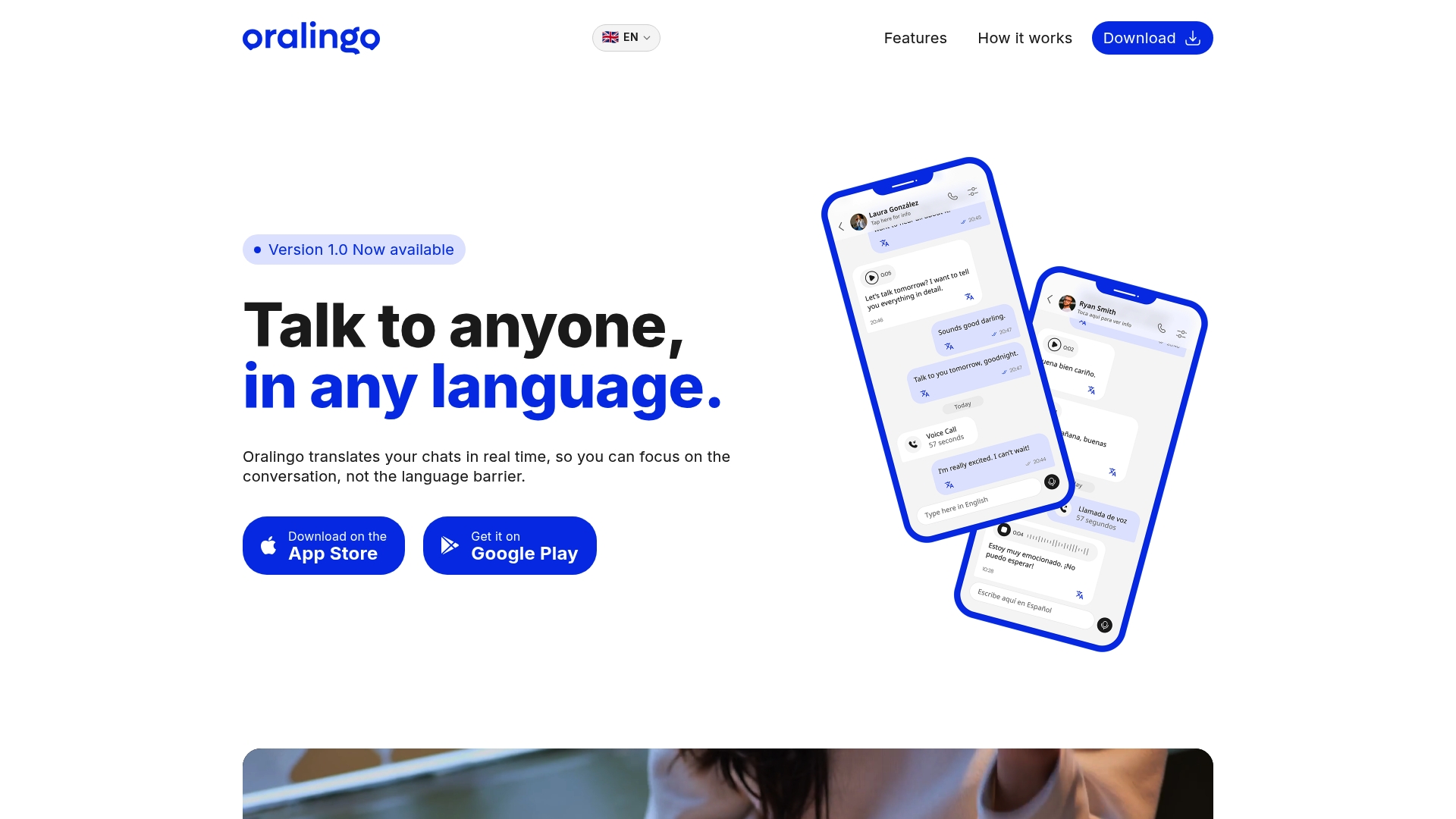
Oralingo supports over 100 languages with a 99% accuracy rate, and its hands-free voice mode means older family members can speak naturally without needing to type. Every conversation is end-to-end encrypted, so your family's stories stay private. Whether you're on a weekly call with relatives abroad or sharing daily updates across time zones, Oralingo keeps everyone in the conversation. You can also explore how translation apps work in real family conversations to see what to expect before your first multilingual call.
FAQ
What is real-time translation in family communication?
Real-time translation is the instant, automated conversion of spoken or written language during a live conversation. It allows family members who speak different languages to communicate without delays or a human interpreter in the middle.
How does transparent translation improve family conversations?
A 2026 study found that showing both the original and translated message improves conversational intimacy and usability compared to translation that hides the source text. Participants reported more natural, emotionally connected exchanges.
When should families use a human interpreter instead of AI translation?
Real-time AI translation works well for routine, everyday conversations. For sensitive topics, medical discussions, or conflict resolution, a human interpreter provides the nuance and judgment that AI currently cannot match.
Can real-time translation help preserve heritage languages?
Regular multilingual family contact, supported by real-time translation, keeps younger generations exposed to their heritage language. Heritage language loss affects over 40% of immigrant families by the third generation, and consistent communication slows that decline.
What features should I look for in a translation app for family calls?
Look for transparent translation that shows both messages, voice mode for older family members who prefer speaking over typing, support for multiple languages, and end-to-end encryption to keep conversations private.