
To translate formal vs informal tone, match the social distance and function of the source message rather than its literal wording. Read who is speaking to whom, then pick the target language's equivalent pronouns, verb forms, and vocabulary for that relationship. If you use machine translation, switch on its formality setting when the language supports one, then post-edit for pronouns, contractions, and idioms by hand.
TL;DR:
- Machine translation tools can adjust formality with built-in toggles, but they still require human review for context accuracy.
- Correctly matching register depends on understanding social distance markers like syntax, vocabulary, pronouns, and idioms, which vary across languages.
- In languages like Spanish, pronoun choice (tú vs. usted) and verb conjugation carry formal or informal signals, unlike English's "you," which lacks distinction.
- Translators must identify the relationship in the source and adapt lexis, syntax, and idioms accordingly, avoiding literal translation of tone cues.
- A quick checklist includes verifying pronoun consistency, matching contractions to formality, and reading aloud for cultural and tonal correctness.
Table of Contents
- Translate Formal vs Informal: What Register Actually Signals
- How Formal vs Informal Markers Differ Across Languages
- How to Translate Tone: A Step-by-Step Workflow
- Can Machine Translation Handle Formal vs Informal Register?
- Common Register Mistakes and a Quick Translation Checklist
- What Testing Register in Real Conversations Taught Me
- Try Tone-Aware Translation for Real Conversations
- Sources
- FAQ
Translate Formal vs Informal: What Register Actually Signals
Formal and informal language aren't just "fancy" versus "casual" words. Register is a social tool. It tells the listener how much distance, respect, or familiarity exists between speaker and audience, and getting it wrong can make a translated message feel cold, rude, or oddly overfamiliar even when every word is technically correct.
Linguists describe register as a continuum rather than a switch, shaped by situational variation across vocabulary, sentence structure, and discourse patterns. That's why a single word swap rarely fixes a tone problem. You're really translating a relationship.
A few markers give away register almost every time:
- Syntax complexity: formal writing favors longer, subordinated sentences; informal writing favors short, direct ones.
- Contractions: "cannot" versus "can't", "will not" versus "won't".
- Vocabulary origin: Latinate words ("commence", "utilize") skew formal; Anglo-Saxon words ("start", "use") skew casual, a distinction style guides consistently flag as a formality marker.
- Pronouns and honorifics: many languages grammaticalize this choice; English mostly doesn't.
- Idioms and ellipsis: dropped words ("are you good?" instead of "are you doing well?") signal closeness.
Business emails, academic papers, and legal notices sit at the formal end. Texting, social media, and peer chat sit at the informal end, with plenty of gray area in between.
How Formal vs Informal Markers Differ Across Languages
English speakers often miss register cues because English collapsed its formal second person centuries ago. "You" now covers everyone from a stranger to a spouse. Other languages never lost that distinction, and that's exactly where literal translation gets people in trouble.
Spanish runs on pronoun choice. Tú signals familiarity, usted signals respect or distance, and vos replaces tú in much of Latin America, especially Argentina and Central America. The Real Academia Española notes that forms of address shift by region, context, and social role, and tú has crept into spaces once reserved for usted in several Spanish-speaking countries. A translator who defaults to tú for every "you" risks sounding presumptuous in a customer-service email that calls for usted.
Japanese and Korean push the distinction further into the grammar itself. Formality isn't a pronoun swap; it changes verb endings, adds honorific prefixes, and can restructure the whole sentence. A casual "thanks" and a formal "thank you" in Japanese are barely recognizable as the same phrase once honorific conjugation is applied.

German, French, and Italian sit in between. Sie versus du, vous versus tu, and Lei versus tu each carry their own verb agreement rules. Get the pronoun right but leave the verb conjugated for the wrong one, and the sentence reads as a mistake, not a style choice.
Some quick contrasts worth memorizing:
- German: "Können Sie mir helfen?" (formal) vs. "Kannst du mir helfen?" (informal).
- French: "Vous pouvez m'aider?" (formal) vs. "Tu peux m'aider?" (informal).
- Spanish: "¿Podría ayudarme?" (formal, usted) vs. "¿Puedes ayudarme?" (informal, tú).
English translators have to infer all of this from context, since the pronoun alone won't tell them anything.
How to Translate Tone: A Step-by-Step Workflow
Start by identifying the addressee and the relationship before you touch a single sentence. A message from a company to a customer, a manager to a direct report, or one friend to another all call for different registers, even if the literal content is identical.
- Build a short style brief. Note who's speaking, who's listening, and what relationship the source text implies. Two sentences is often enough.
- Mark register in the source text. Underline contractions, idioms, honorifics, or formal phrasing before you start translating so you don't lose them mid-sentence.
- Choose matching lexis and syntax in the target language. Swap Latinate verbs for Anglo-Saxon ones (or the reverse) to shift formality, and adjust sentence length to match.
- Adapt idioms rather than translating them literally. A casual English idiom rarely has a literal formal-register equivalent elsewhere.
- Read the translation aloud. Tone problems that look fine on the page often sound wrong out loud, especially with polite address formulas.
- Document your register choices for client review, particularly when the source text is ambiguous.
Pro Tip: Keep a running glossary of register-specific terms for repeat clients. A single client's "informal" might mean chatty texting style, while another's "informal" just means dropping the honorific. Standardizing this once saves rework on every future job.
For business correspondence specifically, preserving polite opening and closing formulas matters more than word-for-word accuracy. A practical business email translation workflow treats those formulas as fixed units rather than sentences to rebuild from scratch.
Can Machine Translation Handle Formal vs Informal Register?
Modern machine translation has gotten noticeably better at register, but it still needs a human check before it's client-ready. Several major services now expose formality controls directly. Amazon Translate lets developers set a formality parameter that toggles between formal and informal output for supported target languages, adjusting pronouns and verb agreement automatically. DeepL offers a similar user-facing formality toggle for languages including German, French, Italian, Japanese, and Dutch, with visible differences like "Sie" versus "du" depending on the setting.
The catch: when the relationship between speaker and addressee is unclear, MT systems tend to default to the polite form rather than guess. That's a safe fallback, but it's not always the right one for a casual chat between friends.
Research on combining large language models with neural machine translation shows promise here. One method that uses LLMs to revise NMT output for formality, paired with reinforcement learning fine-tuning, produced measurable gains in style accuracy in testing. That's meaningful progress, but it describes an improvement in controlled experiments, not a guarantee that every sentence will land correctly in production.
A dependable workflow looks like this:
- Enable the formality setting if your MT tool supports the target language.
- Run a targeted QA pass specifically on pronouns and honorifics, since that's where errors cluster.
- Use LLM-assisted revision as a second pass, with a human making the final call on ambiguous lines.
Common Register Mistakes and a Quick Translation Checklist
Four mistakes account for most register failures translators run into. Politeness bias happens when MT or an inexperienced translator defaults to formal language "to be safe," even when the source is clearly casual. Literal pronoun carryover happens when a translator picks one pronoun form and never adjusts it as the relationship shifts mid-conversation. Ignoring regional variants trips people up in Spanish especially, where vos regions need different verb forms than tú regions. Over or under formalizing happens when translators mirror the source language's default register instead of the target culture's expectations for that context.
Run through this before you deliver any register-sensitive translation:
- Does the context clearly establish the relationship between speaker and addressee?
- Are pronouns consistent with that relationship throughout the text?
- Do contractions match the intended formality level?
- Have idioms been adapted rather than translated word for word?
- Would a native speaker in that relationship actually talk this way?
- Does it sound right when read aloud?
When the source text is genuinely ambiguous, don't guess silently. Ask the client, or choose the more formal option and note why. Slang-heavy or highly casual source material deserves extra scrutiny for tone before it goes out the door.
What Testing Register in Real Conversations Taught Me
Short chat messages expose register problems faster than any other format. A single dropped contraction or an overly formal greeting in a casual thread reads as strange within seconds, while the same slip in a long business email might pass unnoticed for paragraphs. Business email translation rewards patience: you can afford to slow down and check every honorific. Live chat rewards speed, and that tension between speed and precision is real. The best fix isn't choosing one over the other. It's building habits, and tools, that handle the easy 90% automatically so you can spend your attention on the ambiguous cases. For readers who want ready-made prompts to test this themselves, Oralingo's guide to polite tone translation is a good place to start.
— Poul
Try Tone-Aware Translation for Real Conversations
Oralingo is built for exactly the tension described above: keeping tone right without slowing the conversation down. It translates messages before they're displayed, so a casual text between friends and a more careful reply to a colleague can both come through sounding like they were actually written that way, not run through a generic translator. The hands-free voice mode extends that same tone preservation to spoken conversations, which matters when you're switching between a formal client call and a relaxed chat with family in the same afternoon.
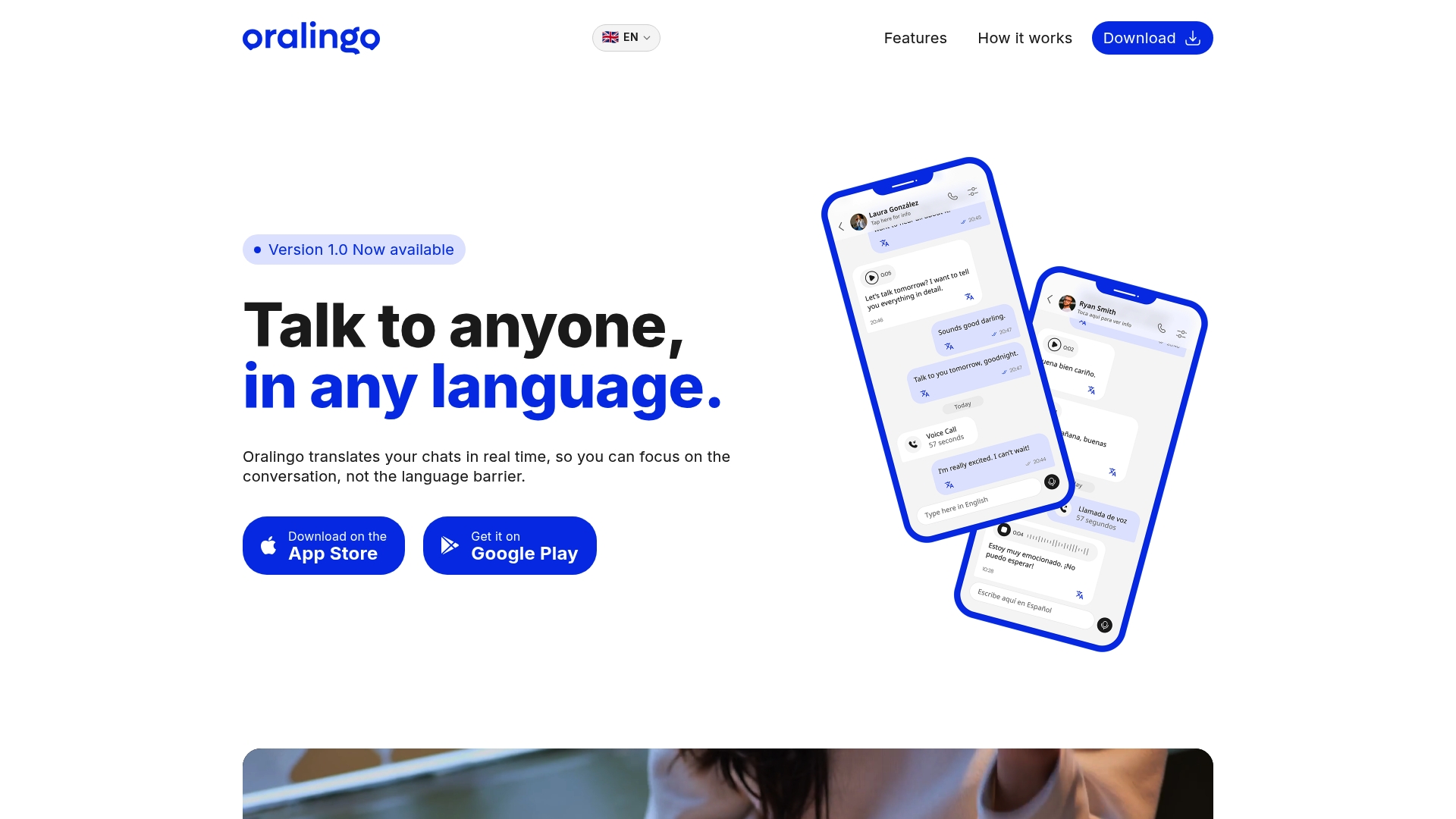
It supports a wide range of languages, keeps conversations end-to-end encrypted, and works for various kinds of chats such as family group conversations, remote team check-ins, or quick rewrites before sending. If you want to see how it handles your own conversations, visit the Oralingo product page and try it on your next cross-language chat.
Sources
- Customizing translations: formality - Amazon Translate documentation
- Formal and informal language - Cambridge Dictionary
- RAE: Las formas de tratamiento (tú y usted)
FAQ
How can you tell if a word is formal or informal?
Check for contractions, sentence length, and word origin. Contractions ("don't", "it's"), short sentences, and Anglo-Saxon vocabulary usually signal informal language, while longer sentences, no contractions, and Latinate vocabulary point to formal register.
How do you translate informal English into formal English?
Expand contractions, replace casual idioms with standard phrasing, and swap simple verbs for their more formal Latinate equivalents ("get" becomes "obtain", "find out" becomes "determine"). Lengthen short, clipped sentences slightly and remove slang entirely, since formal register in most languages has little tolerance for it.
Why doesn't English have separate formal and informal forms of "you"?
English used to distinguish "thou" (informal) from "you" (formal), but the informal form fell out of everyday use centuries ago, leaving "you" to cover every relationship. That's why English speakers have to infer formality from word choice, sentence structure, and context instead of grammar, which makes translating into languages that kept the distinction, like Spanish or German, genuinely harder.
When should you use formal versus informal Spanish?
Use usted for strangers, authority figures, customer service, and most professional writing, and tú (or vos in many Latin American countries) for friends, family, and peers. The Real Academia Española notes that these boundaries shift by region, so when in doubt with an unfamiliar audience, usted is the safer default.
Can translation apps handle formal and informal tone automatically?
Some can, to a degree. Services like Amazon Translate and DeepL offer formality toggles for select languages, and apps like Oralingo aim to preserve tone and context automatically during real-time chat translation, though targeted proofreading for pronouns and honorifics is still worth doing on anything formal or high-stakes.