AI chat translation now hits genuinely strong accuracy for everyday conversation, but the number moves a lot depending on what you're translating and between which languages. In a JMIR prospective study of 2,450 real dialogue exchanges, ChatGPT scored a median accuracy of 5.0 out of 5 in Chinese to Japanese outpatient consultations, clearly ahead of Google Translate and UD Talk. That's a clinical setting, which is about as demanding as chat translation gets. On the other end, IEEE Spectrum's analysis found GPT-family models performing close to junior or mid-level human translators overall, but still trailing senior professionals when the text requires cultural nuance.
So here's the honest verdict: for casual and moderately complex chat between common language pairs, you can expect accuracy in the range that satisfies most everyday communication. For high-stakes exchanges (legal, medical, contractual) or low-resource language pairs, treat AI output as a strong first draft, not a final answer.
Quick reality check before you rely on any chat translator:
- Accuracy is highest for high-resource language pairs (English, Spanish, Mandarin, French) and drops for less common ones.
- Conversational quirks (slang, ellipsis, code-switching) trip up even the best models more than formal writing does.
- Reproducibility matters: the same message translated twice can come back slightly different, which is a real issue for anything you need to audit later.
- New quality estimation tools like DL-TQE are closing the gap between automated scoring and actual human judgment, correlating at 0.641 (Pearson) with human ratings on English to German text.
If you're texting a friend abroad or handling routine business chat, AI-only translation is usually fine. If you're negotiating a contract or explaining a medical symptom, keep a human in the loop.
Key Takeaways
AI chat translation now reaches strong accuracy for everyday conversation but still depends heavily on language pair, domain, and how well the tool preserves context across turns.
| Point | Details |
|---|---|
| Accuracy varies by context | Clinical chat studies show median scores of 5.0/5 for ChatGPT, but dense written domains show lower fluency scores. |
| Language pair matters most | High-resource pairs like English-Spanish perform far better than low-resource combinations. |
| Test reproducibility, not just accuracy | Send the same message multiple times; inconsistent output is a red flag for auditable conversations. |
| Use hybrid workflows for high-stakes chat | Route legal, medical, or contractual conversations to human review rather than AI-only translation. |
| Oralingo addresses context loss directly | Pre-delivery translation and 100+ language support target the exact failure points the research identifies. |
Table of Contents
- How Chat Translation Accuracy Gets Measured
- What Actually Moves the Accuracy Needle
- What the Research Actually Found
- Testing AI Chat Translation Before You Trust It
- Where AI Chat Translation Belongs, and Where It Doesn't
- How a Purpose-Built Chat Translator Handles These Accuracy Challenges
- What the Research Gets Right, and What It Misses
- Talk to Anyone, Without Rehearsing the Translation First
- Sources
How Chat Translation Accuracy Gets Measured
Nobody in this field agrees on a single accuracy number, and that's by design. Translation quality has too many dimensions to compress into one score, so researchers use layered methods instead.
Multidimensional Quality Metrics (MQM) is the closest thing to an industry standard. Human evaluators read translated segments and tag specific error types, like mistranslation, omission, or wrong terminology, then weight those errors by severity. A dropped comma is not the same as a flipped negative. MQM panels typically score at the segment level (individual sentences or message turns), which matters for chat because a whole conversation can look "accurate" while one critical turn is completely wrong.
Older automated metrics like BLEU compare machine output against a reference translation by counting overlapping word sequences. BLEU works reasonably well for formal documents but performs poorly on chat, because conversational language has many equally valid ways to say the same thing. COMET, a newer neural metric, does better by scoring semantic similarity rather than exact word overlap, but it still needs a reference translation to compare against, which chat apps rarely have in real time.
That gap is exactly why Translation Quality Estimation (TQE) matters for live chat. TQE models predict quality without needing a reference translation at all. They look at the source and the output and estimate how good the match is, on the fly. This is what makes continuous, in-production scoring possible for something like a chat app translating thousands of messages a minute.
A few numbers worth knowing:
- The DL-TQE model reached a Pearson correlation of 0.641 with human judgment on English to German pairs, outperforming earlier tools like TransQuest and CometKiwi.
- The JMIR study used a 0 to 5 human rating scale in multiple full outpatient consultations, with median scores reported to reduce skewing from outlier translations.
- Human evaluation panels for MQM-style studies commonly involve multiple independent raters per segment specifically to catch disagreement between evaluators, since translation quality judgment is itself somewhat subjective.
None of these methods work alone. A trustworthy assessment usually stacks automated QE for speed with sampled human review for depth, which is exactly the model AMTA recommends for production systems.
What Actually Moves the Accuracy Needle
Two conversations in the same app, same day, can produce wildly different accuracy outcomes. The variable isn't the AI model. It's what you're asking it to translate.
Language pair and resource level drive the biggest swings. English, Spanish, French, and Mandarin have enormous volumes of training data behind them, so models translate these pairs well. Less common pairs, like Vietnamese to Finnish or Swahili to Korean, have far less data to learn from, and accuracy drops accordingly. Research comparing GPT-4 to human translators found performance was notably imbalanced across language pairs, strong on well-resourced combinations, weaker everywhere else.
Conversational phenomena are the second big factor, and they're specific to chat in a way that document translation doesn't deal with. Consider:
- Ellipsis — when someone replies "Same here" instead of a full sentence, the model has to infer the missing subject and verb from earlier turns.
- Anaphora — pronouns like "it" or "they" refer back to something mentioned messages ago, and losing that thread produces a technically correct but contextually wrong translation.
- Code-switching — mixing two languages in one message, common among bilingual speakers, confuses models that expect one source language per turn.
- Register and politeness — languages like Japanese and Korean encode formality directly into verb endings, so a translator that flattens "please" and "give me" into the same tone misses something real.
Domain compounds all of this. Casual social chat tolerates approximation. A patient describing chest pain, or two parties finalizing contract terms over chat, does not. Peer-reviewed comparisons found AI translations scoring lower on mean fluency than professional human translations in tested discharge-instruction settings, a domain where a single misread instruction has real consequences.
The specific failure modes tend to repeat across studies. Models often translate too literally when idioms or figures of speech appear, producing grammatically correct sentences that mean nothing like the original. Named entities (brand names, proper nouns, technical terms) get mangled when the model has no external reference to check against, according to IEEE's analysis. And formality mismatches are common enough that Language IO's review flags them as a quiet, easy-to-miss failure: the translation reads fine, but it's rude, or too stiff, for the relationship between speakers.
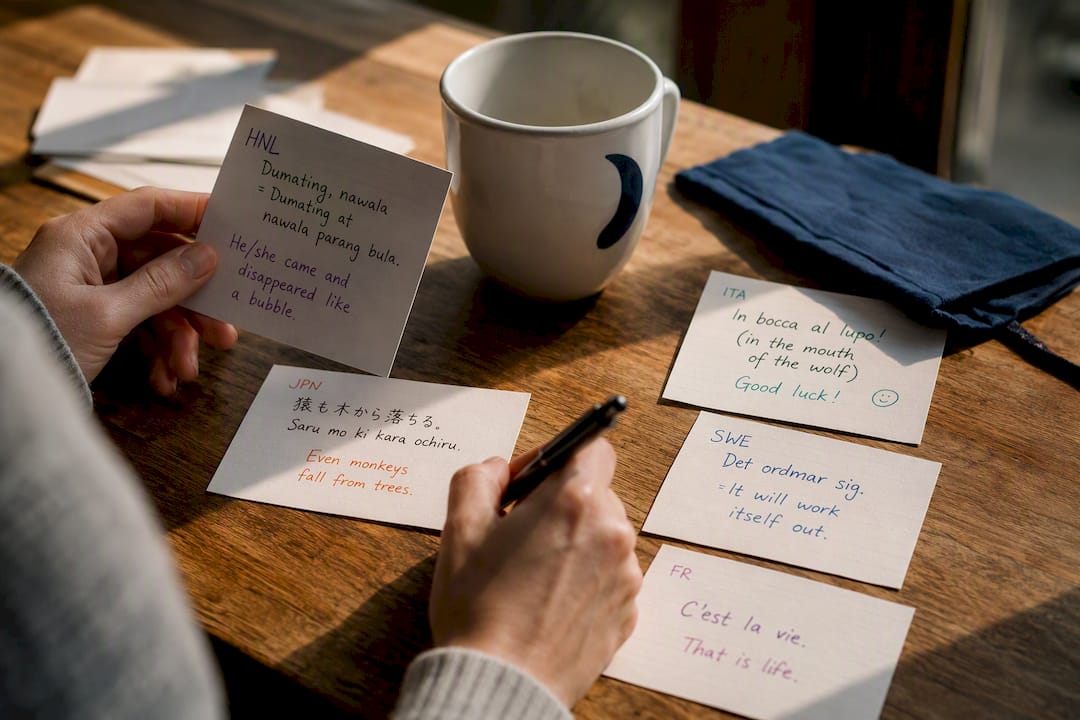
Pro Tip: Test your chat translator with a message that only makes sense in context, like "Can you grab that for me?" following an earlier message about keys. If the translation loses the reference, you've found a real weak spot, not a theoretical one.
What the Research Actually Found
The strongest evidence on chat translation accuracy comes from a handful of studies that tested real conversations rather than isolated sentences, and their results tell a more nuanced story than a single "AI translation is X% accurate" headline ever could.
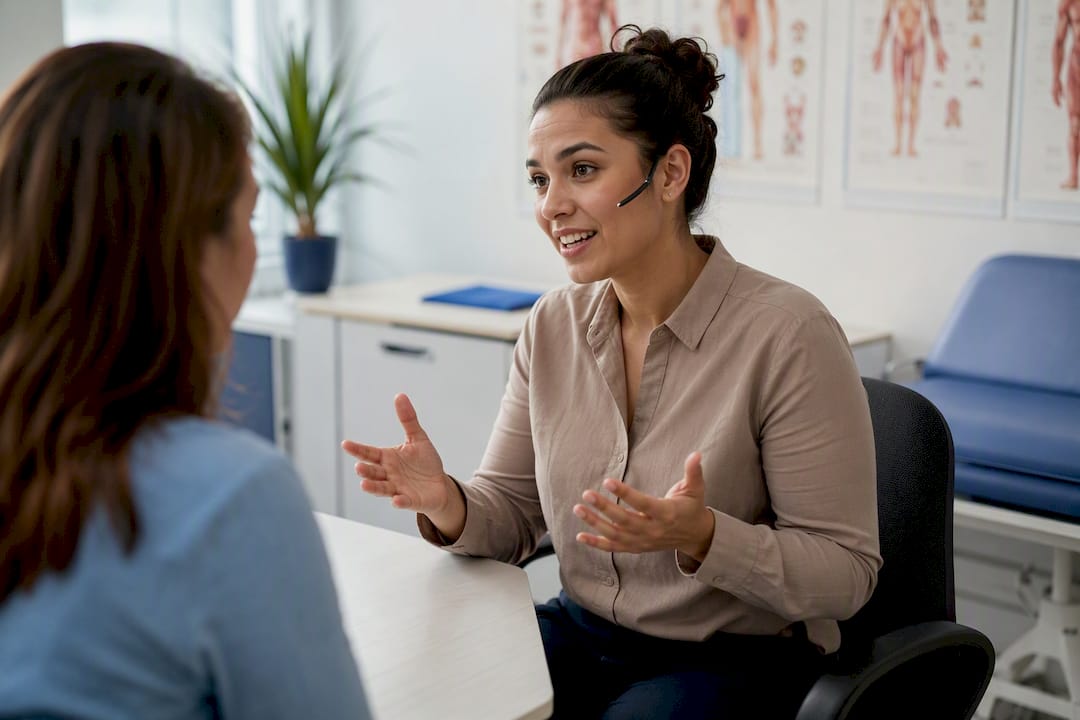
But that same strength has a boundary. A PMC-published peer-reviewed comparison of AI versus professionally translated discharge instructions found AI output scored lower on mean fluency than the human-translated version. Discharge instructions are dense, information-critical text, closer to technical writing than casual conversation, and that's precisely where the AI advantage narrows.
A broader evaluation comparing GPT-4 against human translators across multiple languages and domains adds another layer. GPT-4 came close to junior-level human translators on total error counts, but the performance was uneven. Strong on well-resourced pairs and general text, weaker on resource-poor pairs and specialized domains. IEEE's independent analysis lines up with this: GPT-style models approach human-level performance for many everyday tasks but still lose to senior professional translators when the material demands cultural judgment rather than linguistic accuracy alone.
| Study or source | Setting | Key finding |
|---|---|---|
| PMC discharge instructions study | Medical document translation | AI scored lower mean fluency than professional translation |
| ArXiv GPT-4 evaluation | Multi-language, multi-domain text | GPT-4 near junior-translator level, uneven across pairs |
| IEEE Spectrum analysis | Cross-domain comparison | Human-level on many tasks, senior translators win on nuance |
Why do these numbers differ so much? Three reasons keep surfacing. The evaluation method changes the outcome (a 0 to 5 satisfaction scale measures something different than a reference-based BLEU score). The domain changes the outcome (spoken clinical dialogue behaves nothing like written legal text). And the language pair changes the outcome, since training data volume is wildly uneven across the world's languages.
Put together, the research points to a consistent pattern rather than a contradiction: AI chat translation performs impressively on live, context-rich conversation, and less impressively on dense, high-precision written material. Your use case determines which study's results apply to you.
Testing AI Chat Translation Before You Trust It
Don't take any vendor's accuracy claim at face value, including anyone quoting a single percentage. Run your own evaluation, structured in layers, before you rely on a chat translator for anything that matters.
- Build a representative test set. AMTA's guidance recommends roughly 500 to 1,000 segments per language pair and use-case combination, not a handful of sample sentences. Include real conversational patterns, not just clean formal text.
- Load in edge cases on purpose. Add ellipsis, slang, code-switching, and formality shifts to your test set. These are where accuracy actually breaks, not in straightforward sentences.
- Score with both automated QE and human review. Run your test set through a quality estimation model like DL-TQE for a fast automated read, then sample a subset for human MQM-style scoring to catch what automated tools miss.
- Set an acceptance threshold before you start. Decide in advance what score counts as "good enough" for your use case. A casual chat app can tolerate a lower bar than a system handling medical intake forms.
- Test reproducibility. Send the identical message through the system five or ten times. If the translations vary meaningfully between runs, that's a red flag for anything you'll need to audit or reference later.
- Measure real-world latency. Translation accuracy means little if the message takes six seconds to appear. Test end-to-end latency under realistic load, not just in a quiet sandbox.
Once you're in production, testing doesn't stop. Lokalise's guidance on AI translation evaluation is blunt about this: there's no universal accuracy score, so organizations have to define their own thresholds and keep testing against them.
Build routing rules based on your threshold. If a message scores below your QE cutoff, route it to human review automatically instead of letting it through. Keep monitoring the drift over time; models and usage patterns both shift, and a system that scored well at launch can quietly degrade six months later. Watch specifically for the instability across repeated runs that AMTA flags as a known issue, sometimes called the "people-pleaser effect," where a model's output shifts slightly to sound agreeable rather than staying strictly accurate.
Where AI Chat Translation Belongs, and Where It Doesn't
Not every conversation carries the same risk, and your policy should reflect that instead of treating all chat translation as one use case.
Low-risk, AI-only is fine:
- Casual conversations with friends, family, or travel companions
- General business small talk and scheduling
- Customer service chat for non-sensitive product questions
Higher-risk, keep a human in the loop:
- Medical symptom descriptions or treatment instructions
- Legal or contractual negotiations
- HR conversations involving disciplinary or compensation matters
- Any conversation where a mistranslation creates financial or safety consequences
For the higher-risk category, a hybrid workflow works better than an all-or-nothing choice. Enforce a glossary for names, technical terms, and brand language so the model doesn't have to guess at things it can look up instead. Add a lightweight human review step for messages flagged by your QE threshold, rather than reviewing everything manually, which defeats the purpose of using chat translation at all. Set clear triggers: if a conversation shifts topic toward medical or legal content mid-chat, flag it for human oversight automatically. Guidance on preserving formatting and brand terms across translation is worth reading if your team handles a lot of technical or branded language in chat.
Privacy deserves equal attention. Store the minimum conversational context needed for the translation to work, not entire chat histories by default. End-to-end encryption should be non-negotiable for anything involving personal, medical, or financial information. Be explicit with users about retention policy: how long messages are kept, whether they're used for model improvement, and how to request deletion.
Pro Tip: Set up a recurring audit, even a small one, where you pull a random sample of translated conversations every month and score them against your original acceptance threshold. Accuracy that looked fine at launch can drift as usage patterns change.
Operationally, this means dashboards that track QE scores over time, not just at the point of testing, plus a defined cadence for revalidating your quality thresholds as the underlying model updates. Real-time chat translation architecture that translates before a message displays also reduces one subtle risk: the temptation to send a message before checking the translation, since there's no untranslated version to accidentally act on.
How a Purpose-Built Chat Translator Handles These Accuracy Challenges
Chat translation has different demands than document translation, and the accuracy research backs that up. Speed matters as much as correctness, because a translation that arrives after the conversation has moved on isn't useful even if it's technically right.
Oralingo's approach is built around that reality. It translates messages before they display, which addresses the turn-latency problem directly, since delayed translation is one of the more common reasons conversations lose context in the ways the research on ellipsis and anaphora describes. Support for over 100 languages puts real weight on the low-resource end of the spectrum, where the research consistently shows accuracy is hardest to maintain. Custom language and voice settings let you adjust for the register and tone mismatches that studies flag as a quiet, common failure point. And Oralingo reports a 99% accuracy rate, in a category where a chat window is often the only place a conversation happens, that number matters as much as any lab benchmark.
The research is consistent on one point: chat translation accuracy depends on preserving context across turns, not just translating each message in isolation. A tool built specifically for conversation, rather than adapted from document translation, has a structural advantage on exactly that problem.
End-to-end encryption on every conversation addresses the privacy expectations that any tool handling personal or business conversations should meet by default. If you're evaluating Oralingo or any chat translator for your own use, run the same tests outlined earlier: send edge-case messages with ellipsis or code-switching, check reproducibility across repeated sends, and confirm latency holds up under real conversational speed, not just in a quiet test environment. You can read more about how pre-delivery translation works in practice before you commit to a workflow around it.
What the Research Gets Right, and What It Misses
Most coverage of AI translation accuracy treats it as a single number waiting to be discovered, as if enough studies will eventually converge on "AI translation is 94% accurate" the way a nutrition label states calories. That's the wrong mental model, and the JMIR study's own design proves it: the same model scored a median of 5.0 in one clinical context and would likely score very differently translating a legal deposition. Accuracy is a property of the use case, not the model.
What gets underrated is reproducibility. Everyone asks "how accurate is this?" and almost nobody asks "does it give the same answer twice?" For a chat log you might need to reference later, in a dispute, a medical record, a business agreement, that instability matters more than a marginal accuracy gain.
Prioritize testing your own conversations, in your own domain, before trusting any published benchmark. The research gives you a map of where the terrain gets rough. It doesn't walk your specific path for you.
— Poul
Talk to Anyone, Without Rehearsing the Translation First
Oralingo is built for exactly the accuracy problem this article covers: real conversations, not documents, where context carries across turns and a delayed reply breaks the flow. 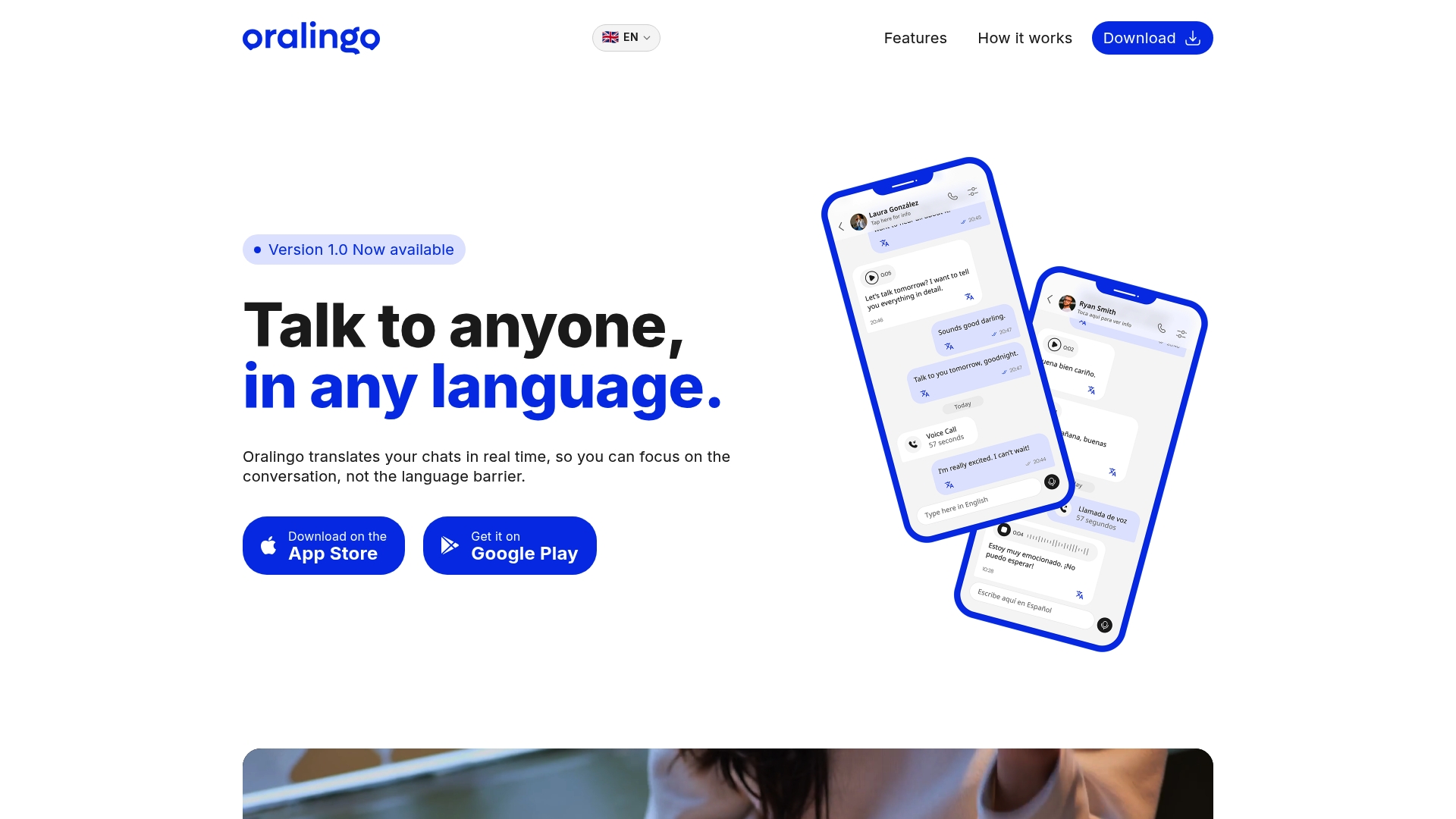
Messages translate before they ever display, so you're not waiting on a translation to catch up to a live conversation, and support for over 100 languages means the low-resource language pairs that trip up general-purpose tools get dedicated attention instead. Hands-free voice mode extends the same accuracy standard to spoken conversations, useful for anyone who'd rather talk than type. Every conversation runs end-to-end encrypted, which matters if you're discussing anything personal, medical, or business-sensitive across a language barrier. Whether you're a business professional on international calls, a student abroad, or keeping in touch with family overseas, the goal is the same: focus on the conversation, not the translation. Try Oralingo and test it against a real conversation of your own, including the tricky parts, before you decide if it fits.
Sources
For readers who want to go deeper than a single article can cover, these sources carry the actual data behind the claims above:
- Accuracy of Artificial Intelligence vs Professionally Translated Discharge Instructions
- How Well Can ChatGPT Translate? - IEEE Spectrum
- A deep learning framework for translation quality estimation using dual stream cross lingual attention and gated mixture of experts prediction