
The single quickest way to communicate well with your host family is to combine clear, respectful logistics with small daily habits that build real rapport. Do both, and the relationship almost takes care of itself. Here's what to act on right now:
- Send a short, friendly intro message before you arrive — confirm pickup details and share any dietary needs
- Ask about house rules and daily routines in your first 24 hours
- Use simple gestures every day: help with dishes, say good morning, be on time for meals
- When language gets tricky, use a real-time translation app to keep the conversation going without awkward pauses
- If a problem comes up that you can't resolve directly, contact your program representative — that's exactly what they're there for
Templates and scripts for each of these moments are coming up below. Copy them, adapt them, and send them.
Key takeaways
Connecting well with a host family abroad comes down to three things: clear pre-arrival communication, consistent small daily habits, and knowing how to handle friction calmly when it comes up.
| Point | Details |
|---|---|
| Contact before arrival | Send a warm intro message with logistics, dietary needs, and your messaging app details. |
| Build rapport daily | Punctuality, helping with chores, and small courtesies matter more than grand gestures. |
| Handle conflict directly | Use an I-statement script first; involve your program rep if a direct talk doesn't resolve it. |
| Stay connected after | Agree on a check-in rhythm before you leave — monthly calls and birthday messages sustain long-term bonds. |
| Use Oralingo for real-time help | Pre-delivery translation and voice mode keep conversations natural when language gets difficult. |
Table of Contents
- 1. How to contact your host family before you arrive
- 2. What to sort out in your first few days
- 3. Language strategies that actually work day to day
- 4. How to handle conflict, cultural friction, and homesickness
- 5. Practical ways to stay connected after your program ends
- 6. Gifts and cultural gestures: what works and what to skip
- 7. Message templates you can copy right now
- What I've seen when students actually use these steps
- Oralingo makes these communication steps easier
- Sources
1. How to contact your host family before you arrive
Reaching out before you land does more than confirm logistics. It starts the relationship. A short, warm message tells your family you're thoughtful and excited, and it gives them something to look forward to. AYUSA notes that using specific personal details rather than formal phrasing creates a genuine emotional connection from the start.
Before you arrive, cover these basics in your first message:
- Your arrival date, time, and flight number
- Whether you need a pickup or have your own transport
- Any food allergies or dietary restrictions
- A phone number they can reach you on
- Which messaging app you'll use (WhatsApp works well for international updates)
SISP's host family guide also recommends arranging a quick call or video chat before arrival so faces and voices are familiar on day one.
Sample intro message:
Pro Tip: Set your phone to show your home time zone alongside the local time zone during the first week. It helps you send messages at reasonable hours and avoids waking the family at midnight.
2. What to sort out in your first few days
Your first 48 hours set the tone for the whole stay. Ask questions early — families expect it, and it's far less awkward than guessing wrong for weeks. Grand Valley State University's homestay guidance emphasizes that most misunderstandings clear up quickly with open communication, and that offering to help with chores signals respect immediately.
Run through this checklist on day one:
- Wi-Fi password and any device rules
- Laundry — when, how, and which machine settings to use
- Mealtimes — when dinner is served and whether you're expected to be there
- Heating and recycling — how both work in this home
- Emergency contacts — family cell numbers and the nearest clinic or pharmacy
- Curfew or check-in expectations — especially on weekends
For mealtimes specifically: if you have a preference or restriction you didn't mention before arrival, say so gently and early. A simple "I noticed I'm not great with spicy food — is it okay if I have a smaller portion?" lands much better than quietly pushing food around your plate for weeks.
Small daily habits matter more than you might expect. Punctuality, saying good morning, and asking "Can I help with anything?" after dinner build rapport faster than any single grand gesture.

Pro Tip: Keep a small notebook or a note on your phone with family members' names, nicknames, and one or two things each person mentioned on day one. Remembering that the youngest kid loves soccer or that the host mom takes a walk every morning shows you were paying attention.
3. Language strategies that actually work day to day
You don't need to be fluent to communicate well. What you need is a low-pressure approach that keeps conversation moving and shows your family you're trying. Ayusa recommends leading with curiosity rather than judgment — asking "Why do you do it this way?" turns a potential awkward moment into a genuine exchange.
Practical ways to practice without pressure:
- Shadow your host family's speech: repeat phrases quietly after they say them
- Ask for corrections directly: "Please tell me if I say something wrong — I want to learn"
- Use mealtimes for simple daily phrases, not grammar drills
- Watch local TV with your family and ask about words you don't catch
When language gets genuinely stuck, a real-time translation app fills the gap without stopping the conversation. The key is knowing when to use one versus when to slow down and gesture.
| Method | Best for | Limitation |
|---|---|---|
| Simple phrases + gestures | Casual, low-stakes moments | Breaks down for complex topics |
| Formal language lessons | Building long-term fluency | Slow; not useful in real time |
| Real-time translation app | Logistics, safety info, nuanced requests | Needs a phone; less natural for fast back-and-forth |
Translation apps work differently from language lessons — they handle the moment, not the skill. Use both: the app for accuracy when it counts, and daily conversation for growth.
Two practical workflows with a real-time translator:
- Texting logistics: Type your message in English, let the app translate before sending, then read the family's reply in your language. The conversation flows naturally and nothing gets lost.
- Kitchen conversation: Switch to voice mode so you can talk hands-free while helping with dinner. You speak, the app translates in real time, and you stay in the moment instead of staring at a screen.
When allergies or medical needs are involved, accurate translation isn't optional. A secure app that preserves tone and context prevents the kind of literal mistranslation that can cause real problems.
4. How to handle conflict, cultural friction, and homesickness
Problems come up. That's normal. The goal isn't to avoid all friction — it's to address it calmly before it grows. Start with a direct, private conversation with your host family. If that doesn't resolve things, your program representative is trained for exactly this kind of mediation, and involving them is a normal part of the process, not a complaint.
A simple script for a sensitive conversation:
That structure — observation, feeling, reason, request — keeps the tone constructive and avoids blame.
For homesickness: share it with your host family rather than hiding it. Most families respond with warmth, and it often opens up a deeper conversation. Something like "I'm missing home a little today" invites support without making anyone feel responsible.
When to contact your coordinator:
- A house rule feels unsafe or unreasonable
- A direct conversation hasn't helped after two attempts
- You feel uncomfortable raising the issue alone
Program representatives are a normal escalation path — framing the call as "I'd love some advice on how to handle this" rather than "I want to report a problem" tends to get faster, more collaborative results.
Pro Tip: Before any difficult conversation, pause for 10 minutes and write down what you actually want as an outcome. That single step shifts you from reacting to problem-solving, and the conversation goes better almost every time.
5. Practical ways to stay connected after your program ends
The relationship doesn't have to fade when you leave. AYA's research on host family relationships shows that intentional, regular check-ins — even brief ones — are what keep these connections alive long-term. The families and students who stay close are the ones who set up a rhythm before the goodbye.
Before you leave, agree on:
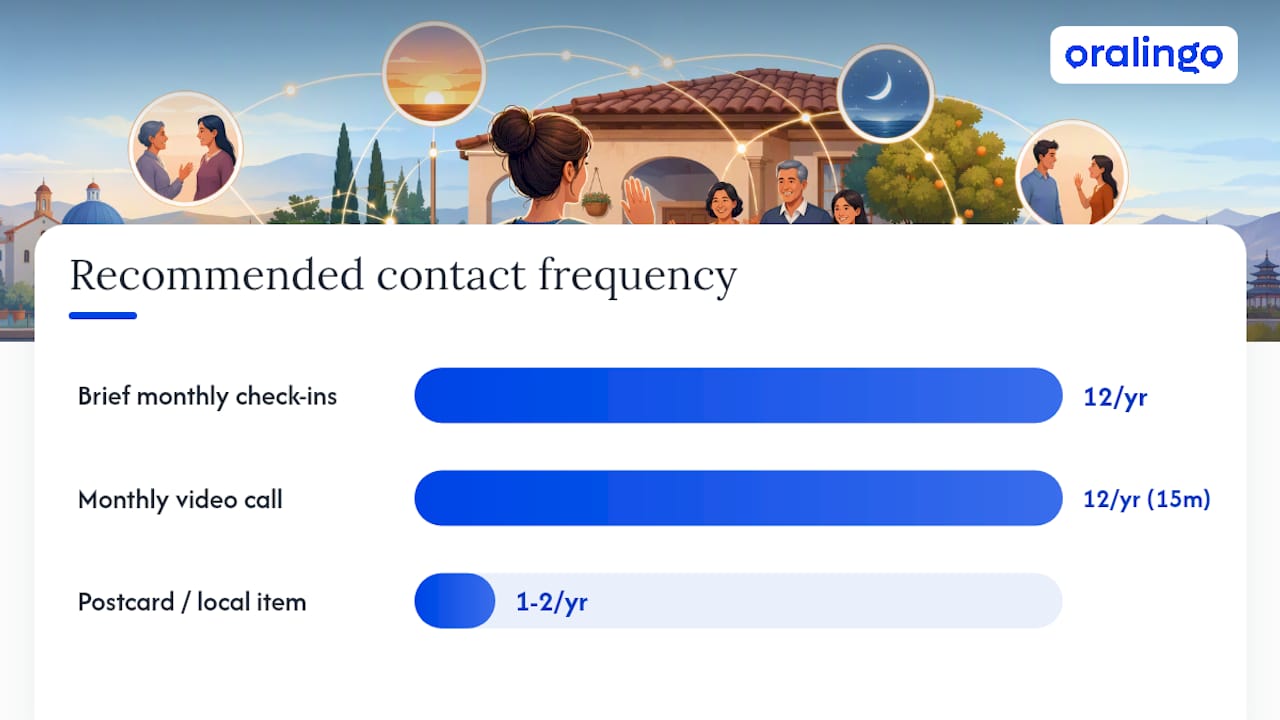
- How often you'll check in (monthly is realistic for most people)
- Which platform works best for everyone (WhatsApp, a group chat, or video calls)
- Whether the extended family wants to be included in a group chat
Habits that sustain the relationship without much effort:
- A short monthly video call — even 15 minutes keeps the connection real
- Occasional photo updates when something exciting happens
- A postcard or small local item mailed once or twice a year
- A message on birthdays and major holidays
Multilingual group chats make it easy to include family members who speak different languages — everyone reads messages in their own language without anyone having to translate manually.
Pro Tip: Add your host family's birthdays and key local holidays to your phone calendar before you leave. A message that arrives on the right day, unprompted, means far more than a catch-up call six months later.
6. Gifts and cultural gestures: what works and what to skip
A small, thoughtful gift at arrival or departure says more than an expensive one. The best gifts are local, inexpensive, and shareable — something from your hometown that your family can't easily buy themselves. Think local candy, a small food item, a postcard set, or a simple craft.
What makes a gift land well:
- It's from where you come from, not a generic airport purchase
- It's easy to share with the whole family
- It comes with a brief handwritten note explaining what it is
What to avoid:
- Anything too expensive — it creates an obligation the family may feel uncomfortable with
- Items with strong cultural or religious associations you're not sure about
- Alcohol, unless you know the family drinks and it's legal for you to give it
A short etiquette checklist for daily interactions:
- Say "please" and "thank you" in the local language, even if your accent isn't perfect
- Knock before entering rooms — privacy norms vary widely between cultures
- If you need to decline something (food, an invitation), do it warmly: "Thank you so much, I'm just not hungry right now"
- Respect shared spaces — clean up after yourself without being asked
Everyday courtesy, repeated consistently, builds more goodwill than any single gesture.
7. Message templates you can copy right now
These are ready to use. Adjust the names and details, and send them.
1. Intro message (send after placement confirmation)
2. Arrival logistics (send 24–48 hours before)
3. Late/plan-change text
4. Homesick note
5. End-of-stay thank-you
One-year follow-up suggestion: A short message on the anniversary of your arrival ("I can't believe it's been a year since I landed!") is one of the most effective ways to restart a connection that's gone quiet.
Tone guidance: keep every message concise, warm, and specific. One personal detail beats three generic sentences every time.
What I've seen when students actually use these steps
The students who build the strongest host family connections share one habit: they communicate before problems grow. A student I know well spent a semester in Germany and used a real-time translation app during her first week to text her host mother about a dietary restriction she'd forgotten to mention before arrival. The host mother replied with a laughing emoji and a photo of the adjusted dinner. That small, clear exchange set the tone for the whole stay. By the end of the program, the family invited her back for a holiday visit the following year.
The app didn't replace her effort to learn German phrases. It handled the moment so she could focus on the relationship. That's the distinction worth holding onto: technology covers the gap while you build the skill.
Oralingo makes these communication steps easier
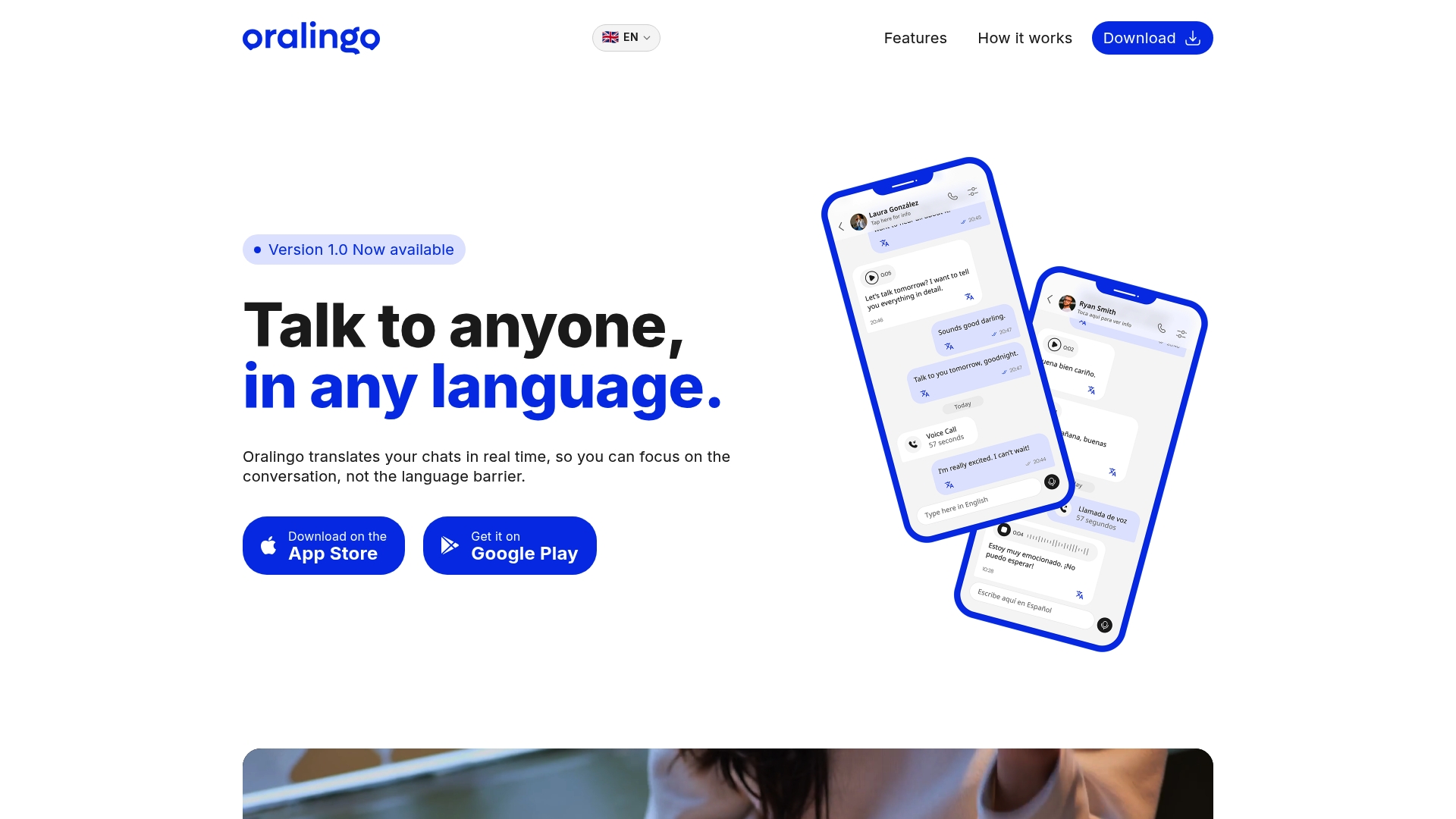
Real-time translation before your message is displayed means your host family reads natural, accurate language, not a clunky literal translation. Oralingo does exactly that, with support for over 100 languages, a hands-free voice mode for in-person conversations, and end-to-end encryption so your family's contact details and private messages stay private.
Two workflows students use most:
- Texting logistics: Type in English, Oralingo translates before sending. Your host family replies in their language, you read it in yours. No copy-pasting, no switching apps.
- Hands-free voice during chores: Turn on voice mode, talk naturally while you help with dinner, and let the app handle the translation in real time. You stay present in the conversation.
For anything involving allergies, medical needs, or safety, real-time translation that preserves tone and context isn't a convenience — it's a safeguard. Download Oralingo and try it free before your first day with your host family.
Sources
These guides are worth bookmarking before you leave:
- Host family letter example | AYUSA
- SISP Host Family Guide 25-26
- Homestay tips - Grand Valley State University
If a conflict arises that you can't resolve directly, contact your program representative. They are trained mediators, and reaching out to them is a normal, supported step — not a last resort.