
Non-verbal communication is defined as the transfer of meaning through facial expressions, gestures, posture, and tone rather than spoken words. You can communicate with locals without speaking their language by mastering these channels, and research confirms they carry the bulk of every human exchange. Non-verbal cues account for 60–90% of human interaction, which means the words you cannot say are far less important than you think. Tools like Oralingo add a real-time translation layer on top of these natural signals, giving you a full communication toolkit even in countries where you know zero of the local language.
What is non-verbal communication and why does it work across cultures?
Non-verbal communication covers every signal you send without opening your mouth. Facial expressions, tone of voice, body posture, gestures, eye contact, and proxemics all shape how people read your intent, your mood, and your trustworthiness within seconds of meeting you. That speed is exactly why non-verbal signals work across language barriers. The brain processes these cues faster than it processes words.
Six core emotions, including happiness, anger, fear, surprise, disgust, and sadness, produce facial expressions that are recognized across cultures. A genuine smile in Tokyo reads the same as a genuine smile in Nairobi. That universality gives you a reliable starting point in any country, with any stranger.
People prioritize non-verbal cues/04%3A_Nonverbal_Communication/4.01%3A_Introduction_to_Nonverbal_Communication) over words when the two conflict, because non-verbal signals are harder to fake under pressure. That means your body language tells the truth even when your vocabulary fails you. Locals pick up on that honesty and respond to it.
| Non-verbal cue type | What it communicates |
|---|---|
| Facial expressions | Emotion, intent, and immediate reaction |
| Gestures | Requests, directions, and quantity |
| Posture and body orientation | Openness, confidence, or discomfort |
| Eye contact | Attention, respect, and sincerity |
| Tone of voice | Urgency, friendliness, or confusion |
| Proxemics (physical distance) | Comfort level and cultural norms |
Cultural variations do exist. Eye contact signals respect in the United States but can feel confrontational in parts of East Asia. Physical distance norms differ between Northern European and Latin American cultures. Knowing these variations before you travel prevents accidental offense and helps you read local behavior accurately.
How to use pantomime, gestures, and visual aids with locals
Pantomimed actions are universally understood. Symbolic gestures, by contrast, vary widely and carry a real risk of causing offense. The practical rule is simple: act out what you mean rather than signal it. Pretend to eat when you want a restaurant. Mime steering a wheel when you need a taxi. These physical demonstrations cross every language boundary cleanly.

Visual aids extend your range further. Showing a photo of your hotel on your phone removes all ambiguity about your destination. Pointing to a picture of a dish on a menu is faster and clearer than any gesture. Your smartphone camera is one of the most powerful silent travel tools you own.
Pointing at objects in your immediate environment also works well. An empty cup or an open menu communicates your need more precisely than a hand gesture alone. Use the physical world around you as your vocabulary.
Effective pantomime actions for common travel situations:
- Eating: Bring your fingers to your mouth and chew to ask for food or a restaurant.
- Paying: Mime writing on your palm or hold out your wallet to request the bill.
- Directions: Point in a direction, then shrug with open palms to ask "which way?"
- Sleeping: Press your palms together and tilt your head onto them to ask for a hotel.
- Drinking: Raise an imaginary cup to your lips to order water or a beverage.
- Numbers: Hold up fingers clearly to indicate quantity or price confirmation.
Pro Tip: Watch how locals gesture and move before you try to communicate. Mirroring their body language builds rapport faster than any phrase you could memorize.
One caution: avoid the "OK" sign, the thumbs-up, and the "come here" finger curl in unfamiliar regions. These carry offensive meanings in several countries. Stick to open palms and full-body actions whenever you are unsure.
How does technology help you connect without language fluency?
Technology fills the gaps that body language cannot cover. Real-time translation apps let you type or speak a message and receive an instant translation, which you can then show to a local. Oralingo translates messages before they appear on screen, so the conversation feels natural rather than stop-and-start. It supports over 100 languages with a 99% accuracy rate, and its hands-free voice mode means you do not even need to type. That combination makes it a practical companion for communicating across cultures in real time.
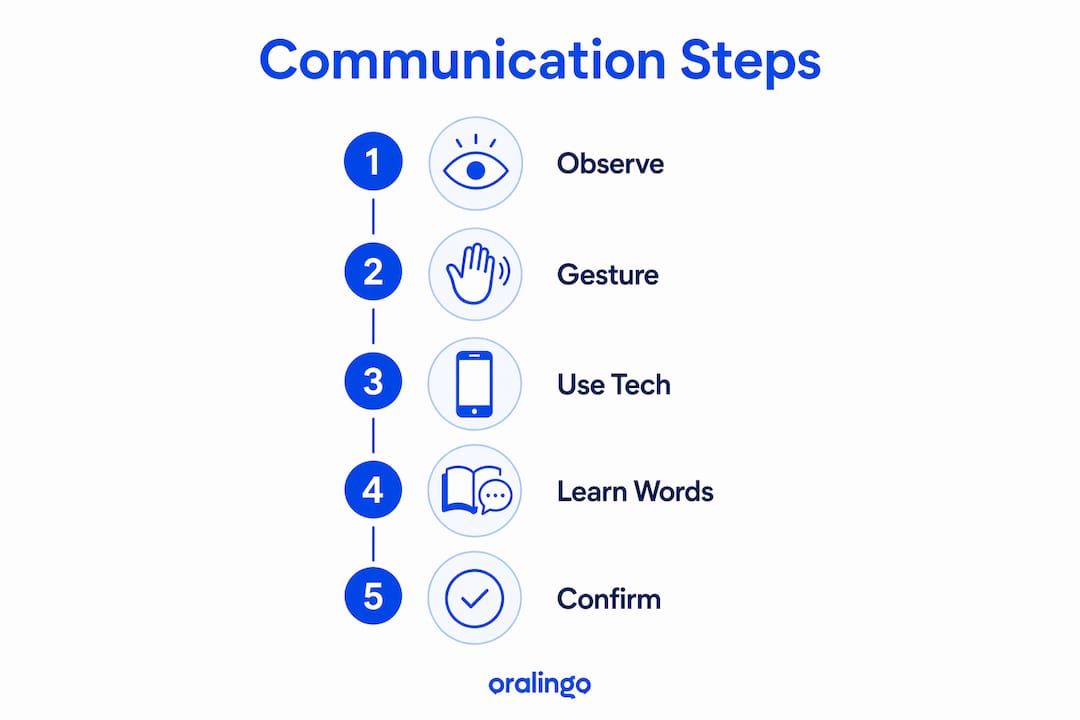
AI translation tools are not replacements for human connection but facilitators that work alongside your natural non-verbal signals. Use Oralingo to clarify specifics like an address, a medical need, or a price, while your face and body carry the emotional tone of the exchange.
Learning 3–5 key words in the local language also pays dividends far beyond their number. "Hello," "please," "thank you," "sorry," and "how much?" signal respect and open doors. Locals respond warmly to any effort, however small.
Speak clearly and at a measured pace rather than resorting to exaggerated or distorted speech. Many locals recognize basic international vocabulary when it is pronounced cleanly. Slowing down and simplifying your sentence structure, without mangling grammar, is the most effective verbal adjustment you can make.
Pro Tip: Create a small emergency card before you travel. Write your hotel address, any medical conditions, and emergency contacts in the local script. Locals respond faster to clear written information than to complex gestures.
| Communication method | Strengths | Limitations |
|---|---|---|
| Non-verbal cues | Universal, instant, no device needed | Cannot convey complex or specific information |
| Smartphone translation apps | Handles complex requests, highly accurate | Requires battery, internet, and a moment to type |
| Simple spoken phrases | Builds goodwill, fast for basics | Limited to memorized content |
| Written notes or cards | Clear, portable, works offline | Requires preparation before travel |
What are the most common mistakes when communicating without words?
The biggest mistake travelers make is excessive apologizing for their language gap. A brief acknowledgment is polite. Repeated apologies waste time and signal helplessness, which makes locals less confident in helping you. Acknowledge quickly, then shift to showing, drawing, or using your phone.
Assuming all gestures are universal is the second major error. A nod means "yes" in most of Europe but "no" in parts of Greece and Bulgaria. The thumbs-up is positive in the United States and deeply offensive in parts of the Middle East and West Africa. Research the specific country you are visiting before you rely on any symbolic gesture.
Congruence between your body language and your attempted speech is critical. If your posture is closed and tense while you are trying to appear friendly, the local reads the tension, not the friendliness. Relax your shoulders, keep your palms visible, and match your facial expression to your intent.
Do's and don'ts for respectful, clear communication:
- Do smile genuinely in the first second of any interaction. A smile builds universal rapport faster than any word.
- Do make eye contact at a culturally appropriate level to show attention and sincerity.
- Do use open palms when gesturing to signal non-aggression and openness.
- Don't raise your voice when you are not understood. Volume does not replace vocabulary.
- Don't use symbolic hand gestures without knowing their local meaning.
- Don't over-explain or repeat the same failed gesture. Switch methods instead.
Read the local's face for feedback. A furrowed brow means confusion. A slight nod and relaxed expression means understanding. These signals tell you whether to continue or change your approach, and they are available in every language on earth.
How to prepare before you travel to communicate without speaking
Preparation is the difference between a stressful exchange and a confident one. Research the cultural norms of your destination before you leave. Identify which gestures are offensive, what physical distance is comfortable, and whether direct eye contact is expected. This takes less than an hour and prevents weeks of avoidable misunderstandings.
Download and test your translation app before you board the plane. Oralingo works across 100+ languages and functions in voice mode, so you can practice the interface at home before you need it under pressure. Offline functionality varies by app, so check whether your chosen tool works without a data connection.
Prepare your visual aids in advance. Save photos of your hotel, key landmarks, and common food items to your phone's camera roll. Print or write an emergency card in the local script. Pack a small notebook and a pen for quick sketches when all else fails.
| Preparation item | Purpose | When to use |
|---|---|---|
| Emergency card in local script | Provides critical info clearly | Medical, lost, or urgent situations |
| Saved photos on phone | Replaces verbal descriptions | Hotels, restaurants, landmarks |
| Translation app (e.g., Oralingo) | Handles complex exchanges | Specific requests, negotiations |
| Key local phrases (3–5 words) | Builds goodwill instantly | Every greeting and transaction |
| Cultural gesture research | Prevents offense | Throughout the trip |
Practice your pantomime actions before you travel. Run through the eating, paying, and direction gestures in front of a mirror. They feel awkward at first and natural within minutes. That small investment in practice pays off the moment you step off the plane.
Key Takeaways
Connecting with locals without a shared language is fully achievable through non-verbal communication, cultural preparation, and real-time translation tools like Oralingo.
| Point | Details |
|---|---|
| Non-verbal cues carry most meaning | 60–90% of communication is non-verbal, so your face and body do most of the work. |
| Pantomime beats symbolic gestures | Act out actions rather than signal them to avoid cultural misunderstandings. |
| Technology fills the gaps | Oralingo's real-time translation handles complex requests that body language cannot. |
| Preparation prevents mistakes | Research local gesture norms and prepare visual aids before you travel. |
| Congruence builds trust | Match your body language to your intent so locals read a clear, consistent signal. |
What I've learned from years of traveling without the local language
I used to believe that not speaking a language meant being locked out of a place. That belief evaporated the first time I navigated a full meal, a taxi ride, and a market negotiation in rural Japan using nothing but gestures, a notebook sketch, and a genuine smile. The transaction was slow. The connection was real.
The fear of looking foolish is the actual barrier, not the language gap. You lose only the lexical layer when you share no language with someone. Every emotional and relational channel stays open. Locals feel your patience, your humor, and your respect through your body, your face, and your pace. Those signals land clearly.
What I have found is that over-preparing for words and under-preparing for presence is the most common traveler mistake. People memorize phrases and forget to make eye contact. They stare at their phones and miss the local's expression telling them they got it right. Put the phone down often enough to read the room.
Technology like Oralingo genuinely changes what is possible for complex exchanges. But the warmth that makes a stranger want to help you comes from your non-verbal signals, not your app. Use the technology for the specifics. Use your face and your body for everything else.
— Poul
Oralingo makes every conversation possible
You now have the non-verbal tools and preparation strategies to connect with locals anywhere. For the moments when body language is not enough, Oralingo is ready.
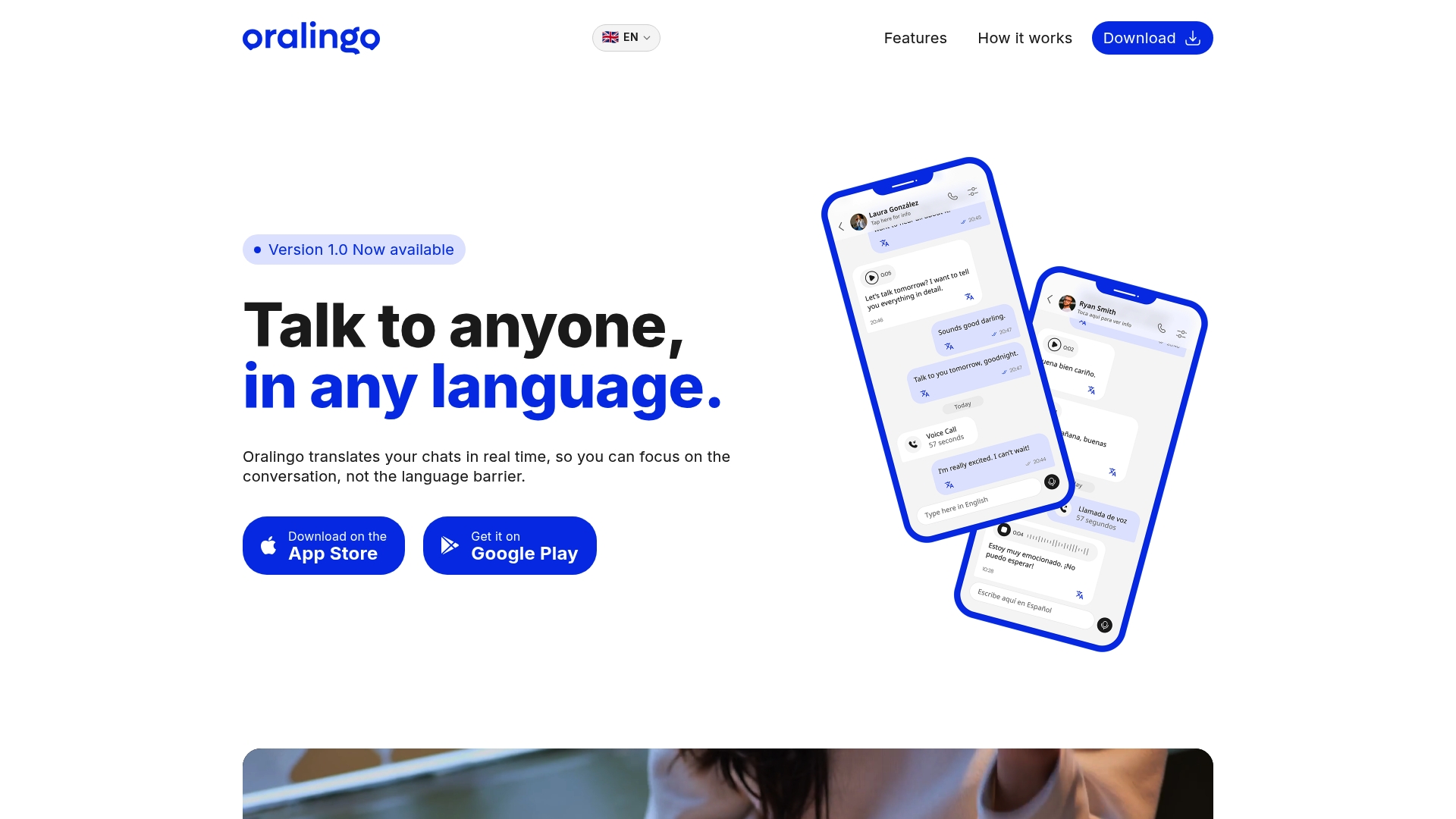
Oralingo translates your messages instantly before they appear on screen, so conversations flow without awkward pauses. Its hands-free voice mode means you can talk to anyone in over 100 languages without typing a word. Every conversation stays private with end-to-end encryption. Whether you are asking for directions, ordering food, or handling something urgent, Oralingo gives you the words your gestures cannot. Download Oralingo and carry a full multilingual travel companion in your pocket.
FAQ
What percentage of communication is non-verbal?
Non-verbal communication accounts for 60–90% of human interaction. That means your facial expressions, posture, and tone carry far more meaning than the words you say.
Which gestures are safe to use in any country?
Open palms, full-body pantomime actions, and genuine smiles are the safest gestures across cultures. Symbolic gestures like thumbs-up or the "OK" sign carry different meanings in different countries and are best avoided.
How do I communicate a medical emergency without speaking the language?
Carry an emergency card written in the local script with your medical conditions, medications, and emergency contacts. Clear written information gets faster and more accurate help than gestures alone in urgent situations.
Does speaking slowly actually help when there is no shared language?
Yes. Clear, slow, grammatically correct speech is more effective than simplified or distorted speech. Many locals recognize basic international words when pronounced at a measured pace.
Can a translation app replace non-verbal communication?
No. Translation apps like Oralingo handle complex or specific exchanges that gestures cannot cover, but the trust and warmth that make locals want to help you come from your non-verbal signals. The two methods work best together.