
Multilingual team chat is defined as a communication platform with built-in real-time translation that lets team members speaking different languages exchange messages in a single shared workspace. The industry term for this category is "multilingual collaboration platform," and it covers everything from AI-powered chat translation to unified multi-messenger interfaces. Teams spread across continents now rely on this technology to cut through language barriers without slowing down their work. Oralingo, for example, supports over 100 languages with a 99% accuracy rate, translating messages before they appear on screen so conversations stay natural and uninterrupted.
What is multilingual team chat, and how does it work?
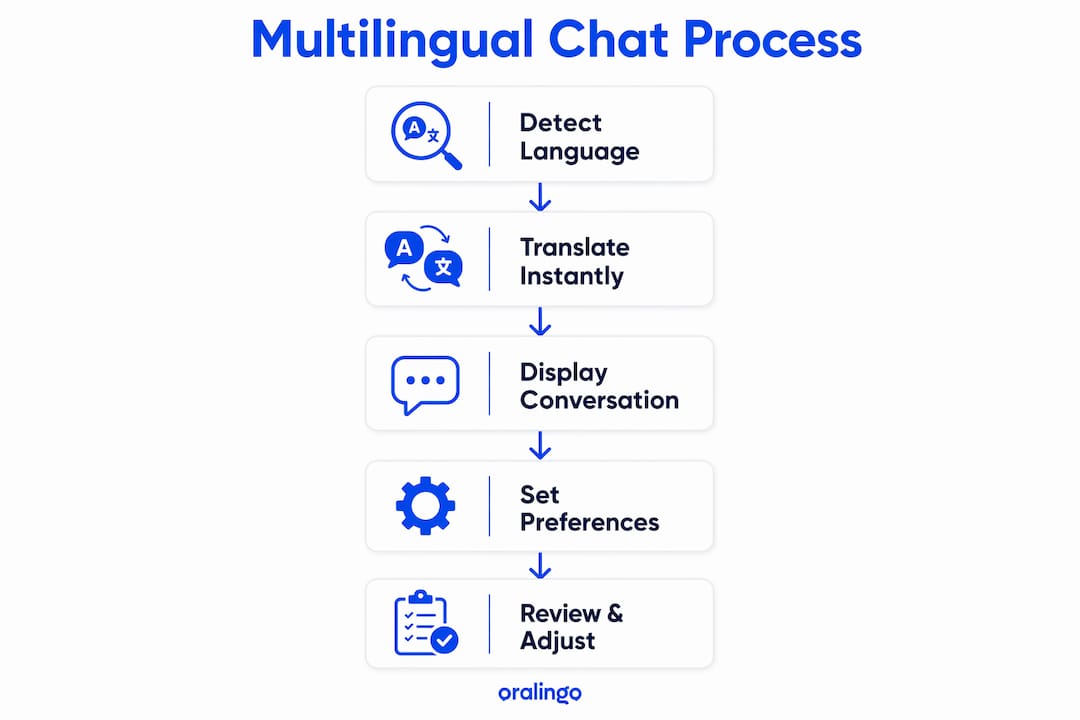
Multilingual team chat technology works by combining automatic language detection, bidirectional translation, and a unified messaging interface into one workflow. When you type a message, the platform detects your language, translates the text in under one second, and delivers the translated version to your teammate. AI translation latency stays under one second in modern pipelines, meaning the exchange feels like a normal conversation rather than a stop-and-wait process.
The backbone of most platforms is a multi-messenger aggregator. This is a front-end interface that pulls conversations from multiple apps, such as WhatsApp, Slack, and Microsoft Teams, into one screen and translates bidirectionally with sub-second latency. Unified multi-messenger platforms reduce time spent switching between apps and manual translation tasks by approximately 27%. That efficiency gain matters when your team is already stretched across time zones.

AI engines power the translation layer. Platforms draw on large language models to handle grammar, idiom, and context, not just word-for-word substitution. Human-in-the-loop translation sits alongside the AI for high-stakes messages, catching nuances that automated systems miss. Combining AI chatbots with human-in-the-loop translation lets small teams handle dozens of languages without needing a native speaker for each one.
Here is what a typical multilingual chat workflow looks like:
- Language detection: The platform identifies the sender's language automatically.
- Translation engine: An AI model converts the message to the recipient's preferred language.
- Delivery: The translated message appears in the chat thread, often alongside the original.
- Human review (optional): A bilingual team member or professional translator checks flagged messages for accuracy.
- Response loop: The recipient replies in their own language, and the cycle repeats instantly.
Pro Tip: Set each team member's preferred language in the platform settings on day one. This removes the guesswork from automatic detection and keeps translations consistent from the start.
For a deeper look at how instant message translation integrates AI and human review, the mechanics are worth understanding before you roll out any platform to your team.
Best practices for managing multilingual team chats
Effective multilingual remote team collaboration requires more than good technology. The norms your team follows matter just as much as the tools you choose. Inclusive communication guidelines recommend balancing real-time chat with asynchronous documentation and rotating responsibilities to give every team member a fair voice.
Follow these practices to get the most out of your multilingual chat setup:
- Write clear, jargon-free messages. Inclusive communication depends on simple language and cultural sensitivity. Idioms and slang confuse both human readers and translation engines.
- Label urgency explicitly. Mark messages as "urgent," "for your review," or "no action needed." Non-native speakers should not have to guess priority from tone alone.
- Rotate meeting ownership. Let team members from different regions lead calls. This builds confidence and surfaces communication styles that the majority might otherwise overlook.
- Maintain a single source of truth. Keep decisions, action items, and project updates in a written log that everyone can access in their own time. Asynchronous documentation prevents critical information from getting lost in a fast-moving chat thread.
- Respect fluency differences. Give non-native speakers extra time to respond. A slower reply is not a sign of disengagement. It is often a sign of care.
Pro Tip: Create a short "team communication charter" that lists your agreed norms: preferred languages for formal decisions, response time expectations, and how to flag a message as urgent. Pin it at the top of your main chat channel.
Writing multilingual remote team guidelines does not need to be complicated. A one-page document covering language norms, urgency labels, and documentation habits covers most of what teams need. Revisit it every quarter as the team grows or changes.
What are the biggest challenges in multilingual team chat collaboration?
Miscommunication is the most common challenge in multilingual team chat collaboration, and it comes from two sources: translation inaccuracies and cultural differences in communication style. A technically correct translation can still carry the wrong tone. A direct statement in German may read as blunt or aggressive to a Brazilian colleague, even though both parties meant no offense.
Digital communication removes nonverbal cues. You cannot see a colleague's face or hear their tone of voice in a chat thread. Digital miscommunications have increased 40% recently, driven by the online disinhibition effect, where people write things in text they would never say face to face. That psychological distance amplifies conflict risks in virtual teams.
Conflict in remote multilingual teams rarely starts with a big disagreement. It starts with a misread message, a missed deadline explanation, or a tone that did not survive translation. The fix is almost always the same: slow down, ask a clarifying question, and move the conversation to a richer medium like video when tension rises.
To resolve conflict in a cross-language remote team, leaders should apply these approaches:
- Shift the medium. Move heated text exchanges to a video call. Faces and voices restore the context that chat strips away.
- Use structured escalation. Clear conflict resolution protocols that include unbiased mediation and defined escalation steps reduce friction before it becomes a formal dispute.
- Apply Adult-to-Adult communication. Transactional analysis teaches that calm, factual exchanges between equals produce better outcomes than emotional or hierarchical ones. Keep messages neutral and specific.
- Set boundaries on urgency. Not every message needs an immediate reply. A team charter that defines response windows stops the pressure that triggers reactive, poorly worded replies.
- Document resolutions. Write down what was agreed after any conflict. Verbal resolutions disappear in a multilingual team where memory and language both vary.
Understanding how translation connects time zone communication also helps teams design handoff protocols that reduce the ambiguity that causes conflict in the first place.
Technology trends shaping multilingual team chat in 2026
The benefits of multilingual chat are growing as the technology behind it matures. AI translation accuracy is improving, latency is dropping, and platforms are adding features that were not possible two years ago. The table below shows the key trends and what they mean for your team.
| Trend | What it means for teams |
|---|---|
| Sub-second AI translation | Messages arrive translated before you finish reading the original |
| Per-participant meeting captions | Each person sees captions in their own language during live calls |
| Multi-messenger aggregation | One interface replaces five separate apps |
| Human-in-the-loop review | AI handles volume; humans catch cultural nuance |
| Async-first workflows | Teams work across time zones without waiting for live overlap |
Live meeting translation with per-participant language selection improves understanding beyond shared room-level captions and preserves accurate records of discussions. That is a significant step forward from the single-language subtitle systems most teams used just a few years ago.
The benefits of async multilingual team chat are particularly strong for global teams. Asynchronous workflows represent the right mindset for global teams, enabling work to continue smoothly despite language and time zone differences. When translation is instant and documentation is centralized, the need for everyone to be online at the same time drops sharply.
Technology complements human skill. It does not replace it. The most effective teams pair good translation tools with explicit communication norms, cultural training, and a habit of asking clarifying questions. For a broader view of multilingual collaboration platform types, comparing categories helps you match the right tool to your team's size and workflow.
Key Takeaways
Multilingual team chat works best when real-time translation technology is paired with clear communication norms, asynchronous documentation, and a team culture that prioritizes empathy over speed.
| Point | Details |
|---|---|
| Define the technology | Multilingual team chat combines AI translation and unified messaging to let teams communicate across languages in real time. |
| Efficiency gains are measurable | Integrated translation platforms reduce app-switching and manual translation time by approximately 27%. |
| Norms matter as much as tools | Jargon-free language, urgency labels, and rotating meeting ownership protect non-native speakers from being sidelined. |
| Conflict needs a richer medium | Move tense text exchanges to video calls to restore the nonverbal cues that chat removes. |
| Async workflows extend the benefits | Centralized documentation and clear handoffs let translation technology deliver value across every time zone. |
What I have learned from watching teams get this wrong
Teams almost always overestimate what translation technology can do on its own. I have watched well-funded global teams deploy excellent translation platforms and still end up with frustrated colleagues and missed deadlines. The technology worked. The culture did not.
The most common mistake is treating auto-translation as a finished product. A translated message is not a clear message. Idioms, passive-aggressive phrasing, and vague requests all survive translation perfectly and cause exactly the same confusion in the target language. The fix is not a better AI. It is a team norm that says: write plainly, confirm understanding, and ask before assuming.
Psychological safety is the factor most leaders underestimate. Non-native speakers often stay quiet in fast-moving chat threads because they fear making a language mistake in front of colleagues. That silence looks like disengagement but is actually self-protection. Rotating meeting leadership and explicitly inviting quieter voices changes that dynamic faster than any software update.
My honest advice: write your team communication charter before you pick your translation platform. The norms come first. The technology serves the norms, not the other way around.
— Poul
Oralingo makes multilingual team chat simple
Real-time translation should feel invisible. You focus on the conversation, and the language takes care of itself.
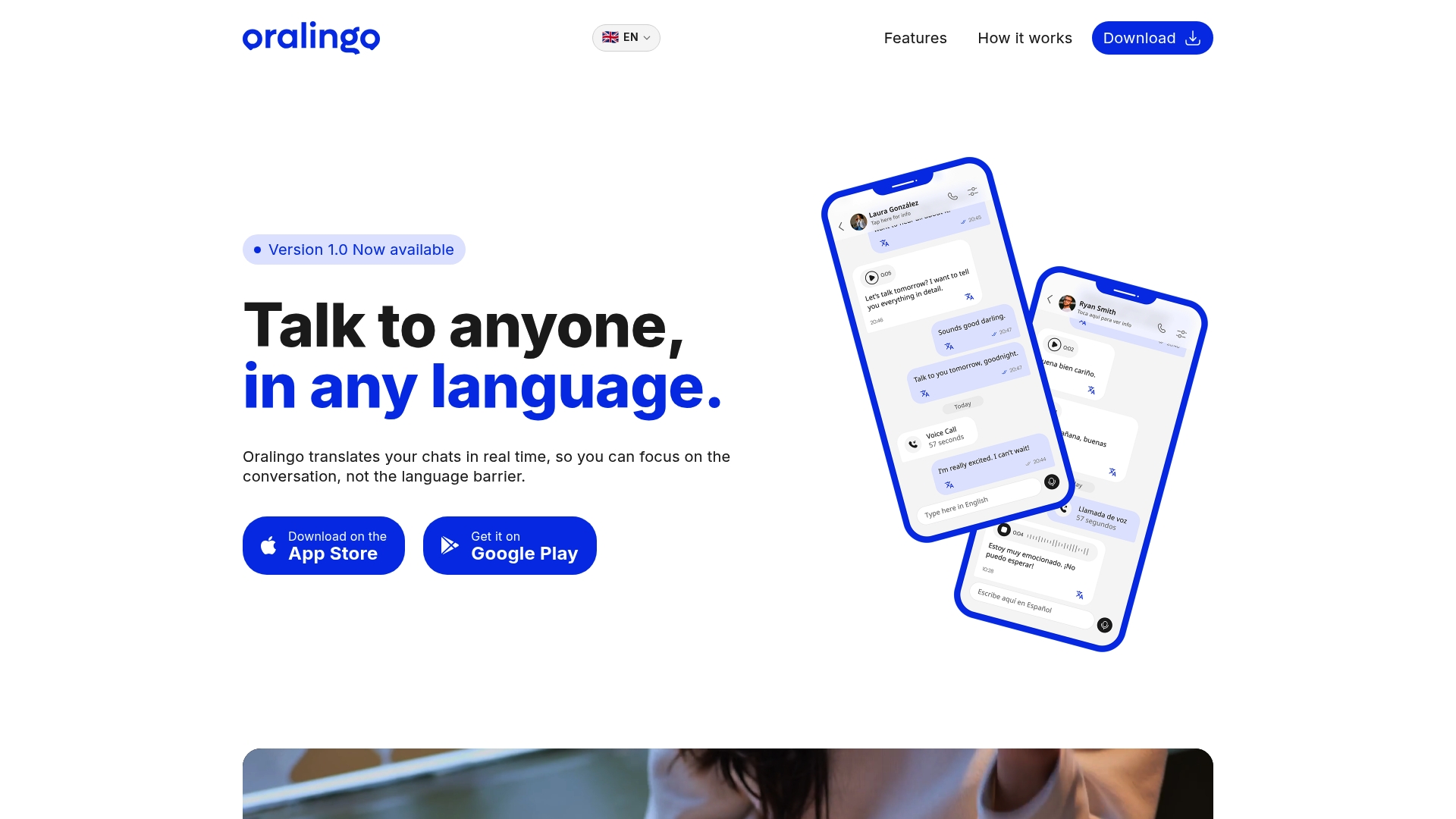
Oralingo translates messages instantly before they appear on screen, so your team reads every message in their own language without any extra steps. It supports over 100 languages with a 99% accuracy rate and uses end-to-end encryption to keep every conversation private. The hands-free voice mode lets team members speak naturally without typing, which is especially useful during fast-moving project discussions. If your team is ready to communicate without language getting in the way, try Oralingo and see how straightforward cross-language collaboration can be.
FAQ
What is multilingual team chat?
Multilingual team chat is a communication platform with built-in real-time translation that lets team members speaking different languages exchange messages in one shared workspace. It combines automatic language detection, AI translation, and unified messaging into a single workflow.
How does real-time translation work in team chat apps?
The platform detects each sender's language, runs the message through an AI translation engine, and delivers the translated version to the recipient in under one second. Human-in-the-loop review can be added for high-stakes or nuanced messages.
What are the main challenges in multilingual remote team collaboration?
The biggest challenges are translation inaccuracies, cultural differences in communication style, and the loss of nonverbal cues in text-based chat. Digital miscommunications have increased 40% recently, making clear protocols and empathy essential for remote multilingual teams.
How do you resolve conflict in a cross-language remote team?
Move tense exchanges from chat to video calls to restore nonverbal context, use structured escalation protocols, and document every resolution in writing. Applying neutral, fact-based communication reduces friction before it escalates.
What are the benefits of async multilingual team chat?
Asynchronous multilingual chat lets teams work across time zones without requiring live overlap, keeps a written translation record of all decisions, and gives non-native speakers time to compose clear, considered replies rather than reacting under pressure.