
Secure multilingual business chat means one-to-one text and voice conversations that get translated before either person sees or hears them, wrapped in end-to-end encryption the whole time. For confidential deals, legal calls, or client talks across languages, a privacy-first app like Oralingo is the right category of tool. Expect some tradeoffs: a slight latency on voice, and remember that encryption alone cannot protect a compromised phone or laptop.
TL;DR:
- End-to-end encryption must be automatic and verification of key ownership is essential for ensuring true message privacy.
- Latency below three seconds is necessary to maintain smooth, natural conversation flow during real-time speech translation.
- Accuracy issues often arise with proper names, jargon, accents, and background noise, requiring thorough pre-use testing in your language pair and environment.
- On-device or hybrid processing models offer stronger data control but may have limitations compared to cloud-based solutions with clear data retention policies.
- Conducting a small pilot conversation helps identify potential translation errors and latency issues before deploying secure multilingual chat at scale.
Table of Contents
- What Secure Multilingual Business Chat Actually Solves
- The Security Checklist You Should Actually Use
- How Latency and Accuracy Actually Play Out in Real Conversations
- On-Device, Botless, or Cloud: Which Privacy Model Fits You
- What to Ask Before You Sign Up
- Publisher Perspective: Why Privacy-First Architecture Isn't Optional
- Try Secure Multilingual Business Chat Built for Confidential Conversations
- Sources
- FAQ
What Secure Multilingual Business Chat Actually Solves
This category is not about staffing a support desk in twelve languages. It's about you, one other person, and a conversation that needs to stay private while crossing a language gap in real time. If you're managing a customer service queue across markets, that's a different tool entirely. This is for direct, one-to-one exchanges where trust and speed both matter.
You'll feel the difference most in a handful of situations:
- Negotiating a contract with a partner who speaks a different language than you
- Taking a legal or compliance call where every word needs to land correctly
- Running a one-on-one client meeting where a human interpreter isn't practical or affordable
- Coordinating with a remote hire or vendor in another country on a sensitive matter
The payoff is a conversation that feels close to natural, duplex flow instead of the stop-and-translate rhythm you get from bolting a translator app onto a phone call. You keep the confidentiality, you skip the extra person on the line, and you talk like you would with someone who speaks your language.
The Security Checklist You Should Actually Use
Before you trust any app with a sensitive conversation, run it through this list.
- Confirm end-to-end encryption is on by default. Not a setting you have to find and flip. Security-first platforms apply E2EE automatically so your privacy doesn't depend on remembering a toggle.
- Ask who holds the keys. If the vendor can decrypt your messages, you don't have true E2EE. You have transport encryption with extra marketing.
- Check endpoint protection. E2EE stops interception in transit, but it does nothing for a phished or malware-infected device. Pair any chat app with real device controls: EDR, MDM, and enforced screen locks.
- Verify operational controls. Look for SSO, mandatory MFA, session timeout policies, and audit logs you can actually pull.
- Ask about data handling. How long are messages stored? Is there a zero-storage or zero-knowledge mode? What does the contract say about deletion?
- Weigh certifications for what they are. SOC 2 and ISO 27001 show a vendor has processes in place. They don't guarantee the app encrypts your specific conversation end-to-end. Read the encryption claim separately from the badge.
For managing device-level risk outside the app itself, a service like Collett Systems' managed endpoint security is worth a look if your team is small and doesn't have dedicated IT.
Pro Tip: Ask a vendor one blunt question: "If your servers were breached today, could an attacker read my past conversations?" A confident, specific "no" tells you more than any brochure.

How Latency and Accuracy Actually Play Out in Real Conversations
Translation speed decides whether a call feels like talking or like waiting. Production-grade real-time translation depends on streaming speech-to-text, streaming translation, and streaming text-to-speech working together, not a single slow round trip. Systems that hit sub-3-second turnaround, using rolling context windows and predictive translation to stay ahead of the speaker, keep negotiation momentum intact. Slower ones create the awkward pause that makes both sides talk over each other.
Accuracy has its own failure modes worth testing before you rely on a tool for anything important:
- Proper names and brand terms often get mangled or skipped
- Industry jargon (legal, financial, technical) needs a wider vocabulary than casual chat translation
- Accents and regional dialects can trip up voice recognition badly
- Background noise in a real office or airport lounge degrades accuracy fast
Before you commit, run your own test: try your actual language pair, drop in a few technical terms from your industry, test it in a noisy room, and try the hands-free voice mode without touching the screen. Watch for whether it streams continuously or stalls between turns, and whether it shows you a visible cue confirming what got translated. That visibility matters more than people expect.
On-Device, Botless, or Cloud: Which Privacy Model Fits You
Not every secure chat app protects your data the same way, and the differences matter more than most buyers realize.
- On-device processing keeps translation local to your phone or laptop. You get the strongest data control, though language coverage and processing power can lag cloud-based models.
- Botless overlay translation captures audio straight from your device's microphone or speakers instead of adding a translation bot as a third participant. This avoids exposing your conversation to an extra party and works well when you can't afford a visible translation tool on screen.
- Cloud processing with zero-storage guarantees can be perfectly acceptable if the vendor backs it with contract terms, not just a claim on a landing page.
- Hybrid setups lean on strong cloud models for the heavy lifting while keeping session data, retention, and audit logs under your own control.
Whichever model you pick, get the specifics in writing: encryption method, data retention period, and where processing physically happens. One detail worth knowing: most collaboration platforms rely on transport encryption alone, and only a smaller set actually deliver end-to-end encryption by default. That gap is exactly where confidential business conversations get exposed without anyone realizing it.
What to Ask Before You Sign Up
Run any candidate through this short framework before you commit your team to it.
- Security baseline. Is E2EE always on, with keys generated and stored on your device rather than the vendor's server?
- Endpoint compatibility. Does it play well with your existing EDR or MDM setup, or does it create a blind spot?
- Retention policy. Can you get a straight answer on how long messages and voice recordings are kept, and can you delete them on demand?
- Performance claims. What languages and dialects are supported, what accuracy rate do they claim, and can you test latency yourself instead of taking their word for it?
- Data use. Is any of your conversation data used to train models? Get this in writing, not in a sales call.
- Audit and support. Can you pull logs for a compliance review, and is there a real support path if translation breaks down mid-conversation?
Run a short pilot with a handful of real conversations before rolling it out. Track three things: how often latency disrupts the back-and-forth, how often domain-specific terms get mistranslated, and whether your team says the conversation felt natural.
Pro Tip: Pick one internal, low-stakes conversation to pilot first, like a scheduling call, before you trust it with anything confidential. You'll spot accuracy gaps fast without any real risk.
Publisher Perspective: Why Privacy-First Architecture Isn't Optional
Confidential one-to-one conversations, M&A discussions, legal calls, and product launch briefings don't get a second chance if a message leaks. That's why Oralingo builds pre-delivery translation with end-to-end encryption on every conversation, not as an add-on setting. The conventional wisdom treats translation accuracy as the whole story. It isn't. A translator that's 99% accurate but stores your conversation on a server you don't control has already failed the actual job: keeping your business private.
— Poul
Try Secure Multilingual Business Chat Built for Confidential Conversations
This app was built around the exact checklist you just read. Every conversation runs on end-to-end encryption by default, translation happens before either side sees the message, and hands-free voice mode lets you talk naturally without typing through a negotiation. It supports many languages and aims to preserve tone and context, not just swap words.
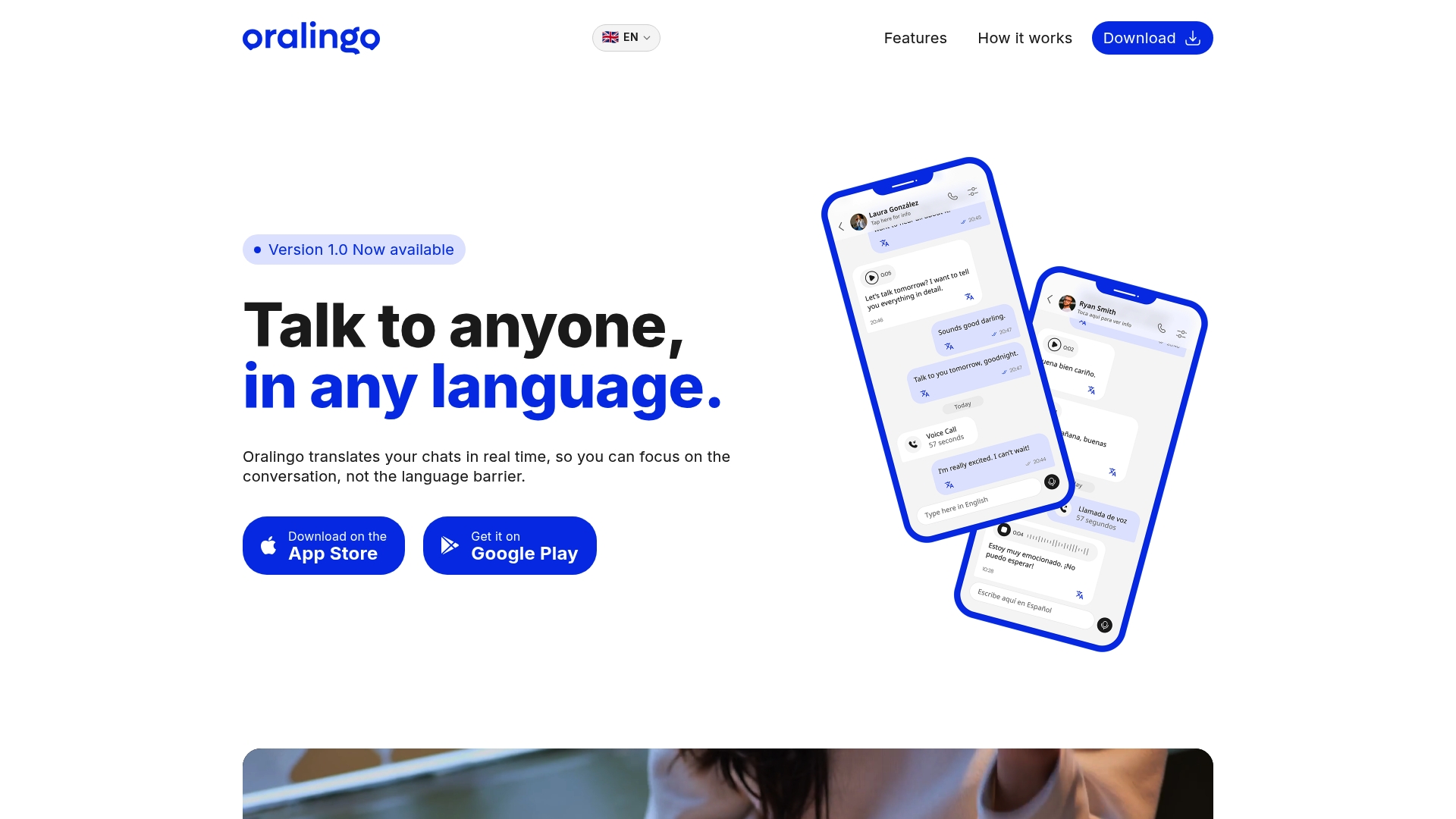
If you're evaluating this for your team, start small: run a pilot conversation with your IT lead watching the security side, and a real cross-language call watching the conversational side. For a deeper walkthrough of setup, read our guide to secure business messaging translation. When you're ready to see it in your own conversations, visit Oralingo and start a trial.
Sources
- Why a layered approach to security is becoming essential — One Advanced
- Secure team messaging software: What security-first organisations actually need — Wire (blog)
- Webrtc
- Privacy First: The Secure Way to Translate Confidential Business Meetings — Super-Intern
For more on how one-to-one translated chat differs from team collaboration tools, see multilingual team chat explained for global teams.
FAQ
Is End-to-End Encryption Enough to Keep a Chat Secure?
No. E2EE protects data in transit, but a compromised device can still expose your conversation, so pair it with endpoint security like EDR or MDM.
What Latency Is Acceptable for Real-Time Translated Voice Calls?
Aim for sub-3-second turnaround. Anything slower starts breaking the natural back-and-forth rhythm a negotiation or client call needs.
Does Oralingo Store My Conversations?
This app encrypts every one-to-one conversation end-to-end and translates messages before they're displayed, keeping the focus on privacy by design. Current pricing and plan details are available on the app's site.
What's the Difference Between Botless Translation and a Translation Bot?
Botless translation captures audio directly from your device instead of adding a third-party bot to your call, which keeps the conversation limited to the people actually in it.
How Many Languages Does Secure Multilingual Business Chat Typically Support?
Coverage varies by vendor. Oralingo supports many languages with a claimed 99% accuracy rate for real-time text and voice translation.