
Translation is the primary mechanism through which local communities share cultural knowledge, traditions, and values across language barriers. The industry term for this process is intercultural mediation, and it goes far beyond swapping words between languages. How translation supports local cultural exchange is a question that touches literature, immigration, heritage preservation, and everyday conversation. Research from PEN America confirms that translators act as cultural ambassadors, shaping narratives with real consequences for communities. When translation works well, it does not just move words. It moves meaning, identity, and belonging.
How translation supports local cultural exchange through art and literature
Translation makes literature, music, and film accessible to audiences who would otherwise never encounter them. A novel written in Yoruba, a folk song from the Andes, or a documentary filmed in Cantonese all carry cultural weight that stays locked away without translation. Translation enables access to these cultural goods, promoting diversity and intercultural appreciation across geographic and linguistic lines.
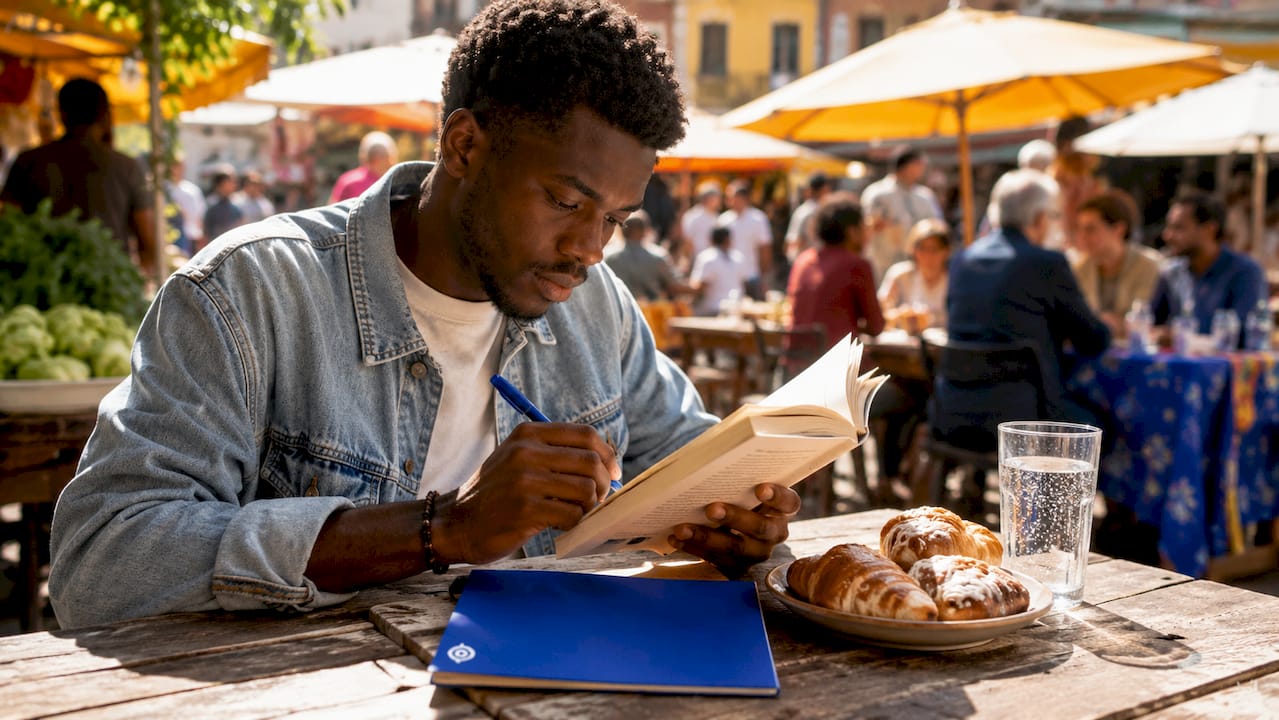
Cultural mediation is the key concept here. A skilled translator does not just find equivalent words. They reconstruct the emotional and social context that gives a text its meaning. A Japanese haiku loses its resonance if a translator prioritizes syllable count over seasonal imagery. A Nigerian proverb falls flat if rendered literally without explaining its communal significance. This is why translation scholars distinguish between linguistic equivalence and cultural equivalence, treating the latter as the higher standard.
The benefits of translation for communities that engage with foreign art are concrete and measurable in cultural terms:
- Literary translation introduces readers to moral frameworks, humor, and grief that differ from their own, building empathy across cultures.
- Film subtitling and dubbing bring local cinema to global audiences, turning regional stories into shared human experiences.
- Music translation preserves the emotional intent of songs while making them singable or understandable in a new language.
- Oral history translation captures the voices of elders and community leaders before those voices are lost.
Pro Tip: When reading translated literature, seek out editions that include a translator's note. These notes reveal the cultural decisions behind the text and deepen your appreciation of both cultures involved.
How does translation help immigrant communities integrate?
Translation is the most direct tool for social inclusion available to immigrant communities. Without it, access to education, healthcare, and employment remains out of reach regardless of a person's skills or motivation. Community-based translation and mentorship improve immigrant employment placement by 28%. That figure reflects a structural reality: language access is not a soft benefit. It is a prerequisite for economic participation.
The pathway from arrival to integration follows a clear sequence when translation support is present:
- Healthcare access. Translated intake forms, interpreter services, and multilingual patient portals allow immigrants to describe symptoms accurately and follow treatment plans correctly.
- Education enrollment. Schools with translated materials and bilingual staff see higher attendance and parental engagement from immigrant families.
- Employment readiness. Resume translation, job application support, and workplace communication training directly increase hiring rates.
- Civic participation. Translated ballots, public notices, and community meeting materials allow immigrants to vote, attend hearings, and engage with local government.
Cultural context matters as much as language accuracy in each of these areas. A translated healthcare form that uses clinical terminology unfamiliar to a rural community from Guatemala will not produce better outcomes than no translation at all. Effective translation for social inclusion requires translators who understand the community's cultural reference points, not just its grammar.
Statistic callout: Community-based translation programs that combine language support with mentorship raise employment placement rates by 28% compared to programs that offer neither service.
What role does translation play in preserving minority cultures?
Translation preserves minority and endangered cultures by making their texts, oral traditions, and rituals accessible beyond the communities that created them. Without translation, intangible cultural heritage, the songs, stories, ceremonies, and craft knowledge that define a people, remains invisible to the wider world and vulnerable to disappearance. Effective heritage translation requires reconstructing discourse with a focus on cultural subjectivity, not just linguistic accuracy.

Researchers describe this as a three-part model: translation, discourse construction, and dissemination. Each stage matters. A translated oral history that strips out the speaker's rhetorical style loses the cultural subjectivity that makes it authentic. A ceremony description that flattens ritual language into plain prose erases the spiritual dimension the community considers central. The goal is not a clean text. The goal is a living document that carries the original culture's confidence and complexity into a new language.
| Preservation challenge | Translation strategy | Cultural outcome |
|---|---|---|
| Oral histories at risk of loss | Record, transcribe, and translate with community input | Accessible archive for future generations |
| Minority language literature | Publish bilingual editions with cultural annotations | Wider readership without loss of original voice |
| Ritual and ceremonial language | Work with community elders to agree on acceptable equivalents | Respectful representation that avoids distortion |
| Endangered language songs | Translate lyrics with phonetic guides for learners | Language revitalization through music |
Ethical considerations shape every decision in heritage translation. Translators working with Indigenous communities, for example, must navigate questions of ownership, consent, and the risk of exposing sacred knowledge to audiences that lack the context to receive it responsibly.
Pro Tip: If you are involved in a community translation project for cultural heritage, always include a community review stage before publication. Native speakers and cultural insiders catch errors that even expert translators miss.
How does technology change translation's role in cultural exchange?
Modern translation technology has expanded the reach of cultural exchange through translation in ways that were not possible a decade ago. Voice input, camera translation, and real-time chat translation now allow people to communicate across languages during live cultural events, market visits, and community gatherings without waiting for a professional interpreter.
Training programs for migrant communities show that voice-to-text and camera translation tools require clear instruction to be genuinely useful. Without digital literacy support alongside the tools themselves, many users cannot access the features that would most benefit them. This is a critical gap. Technology that sits unused because its interface is confusing does not produce inclusion. It produces a different kind of exclusion.
The practical picture of technology-supported cultural exchange looks like this:
- Live event translation allows festival visitors to read program notes, follow performances, and ask questions in their own language.
- Museum audio guides in multiple languages give visitors cultural context that transforms a passive visit into an active learning experience.
- Community app groups using real-time translation let neighbors from different language backgrounds coordinate on local issues without needing a shared language.
- Digital literacy training paired with translation tools ensures that older immigrants and those with limited tech experience can participate fully.
The risks of overreliance on machine translation are real. Automated tools handle common phrases well but struggle with idiom, humor, and culturally specific references. Combining human translation with technology produces the most accurate and culturally respectful results. Privacy is also a concern: any translation tool handling sensitive community conversations should use end-to-end encryption to protect users.
Practical ways to support translation-based cultural exchange
Cultural enthusiasts have more ways than ever to support and participate in translation-driven cultural exchange. The connection between translation and cultural understanding is not abstract. It shows up in specific venues, programs, and community roles that you can engage with directly.
Translation-friendly infrastructure in cultural businesses increases visitor numbers and local engagement. A restaurant that posts its menu in three languages, a community theater that offers subtitled performances, or a library that stocks translated editions of local authors all create entry points for people who would otherwise feel excluded.
Emerging trends in translation-based cultural work include:
- Cultural ambassador programs that train bilingual community members to serve as informal translators at public events, schools, and health clinics.
- Translation education initiatives that teach high school and college students the cultural dimensions of translation, not just the linguistic mechanics.
- Cultural diplomacy projects that fund the translation of minority-language literature for international distribution, giving small communities a global voice.
- Translation activism where translators publicly advocate for the communities whose work they translate, pushing back against misrepresentation in mainstream media.
- Cross-language community sessions that bring together residents from different language backgrounds to solve shared local problems using real-time translation support.
Tourism is another area where translation's role in local culture pays direct dividends. Visitors who can read signage, understand guides, and communicate with local vendors spend more time and money in a community. They also leave with a more accurate picture of the culture they visited, which matters for how that culture is represented in the wider world.
Key Takeaways
Translation enables local cultural exchange by making language accessible, preserving heritage, and giving immigrant communities the tools they need to participate fully in social and civic life.
| Point | Details |
|---|---|
| Translation is cultural mediation | Skilled translators reconstruct meaning and context, not just words, to preserve cultural integrity. |
| Social inclusion depends on language access | Community-based translation raises immigrant employment placement by 28%, showing its direct social impact. |
| Heritage preservation requires community input | Effective minority culture translation uses a three-part model: translation, discourse, and dissemination. |
| Technology expands reach but needs support | Digital literacy training alongside translation tools is required to avoid creating new forms of exclusion. |
| Cultural enthusiasts can act now | Supporting bilingual venues, ambassador programs, and translation education creates real community impact. |
Translators are social actors, not just language workers
I have spent years watching how communities change when translation is done well versus when it is done carelessly. The difference is not subtle. When a translator prioritizes cultural context over a quick word swap, the community on the receiving end feels seen. When translation is rushed or culturally tone-deaf, it produces confusion at best and harm at worst.
Modern translators function as social actors whose language choices influence collective perceptions and social actions. That is not an abstract academic claim. I have seen it play out in neighborhood meetings where a single mistranslated phrase derailed months of community trust-building. The translator in that room was not just a language technician. They were shaping the outcome of a civic process.
Technology is genuinely useful, and I am not dismissive of it. Real-time translation tools have opened doors for communities that previously had no access to professional interpreters. But the enthusiasm for automation sometimes obscures a harder truth: machines do not understand stakes. They do not know when a word choice will offend an elder or misrepresent a sacred practice. Human judgment remains the non-negotiable layer in any translation that carries cultural weight.
My honest recommendation is this: support community-driven translation projects with the same energy you bring to supporting local art or local food. Translation is how culture travels. When it travels well, everyone benefits.
— Poul
Real-time translation you can use every day
Cultural exchange happens in real conversations, not just in books and museums. Oralingo makes those conversations possible across more than 100 languages, with a 99% accuracy rate and end-to-end encryption that keeps your chats private.

Whether you are chatting with a neighbor from a different country, attending a multilingual community event, or connecting with family abroad, Oralingo translates messages instantly before they appear on screen. You focus on the conversation. The language part takes care of itself. The hands-free voice mode means you do not even need to type. Just talk, and Oralingo handles the rest. Download the app and start connecting across languages today.
FAQ
How does translation support local cultural exchange?
Translation makes cultural products, civic information, and everyday conversation accessible across language barriers. It enables communities to share traditions, art, and values with people who speak different languages, building mutual understanding at the local level.
What is intercultural mediation in translation?
Intercultural mediation is the practice of translating cultural meaning, not just words. A skilled translator reconstructs the emotional, social, and historical context of a text so that the target audience receives the same cultural experience as the original audience.
How does translation help immigrants integrate into local communities?
Community-based translation programs that combine language support with mentorship raise employment placement rates by 28%. Translation also improves access to healthcare, education, and civic participation, which are the core requirements for genuine social integration.
What are the risks of relying only on machine translation for cultural exchange?
Machine translation handles common phrases accurately but struggles with idiom, humor, and culturally specific references. Digital literacy training alongside automated tools is required to prevent exclusion and ensure that translation serves cultural understanding rather than distorting it.
How can cultural enthusiasts support translation-based cultural exchange?
You can attend bilingual events, advocate for translated signage and materials at local venues, support cultural ambassador programs, and use real-time translation tools like Oralingo to participate in cross-cultural conversations in your own community.