
Translation apps materially accelerate cross-border deals by enabling near-real-time comprehension, fast document triage, and private multilingual chat. A Management Science study found that machine translation adoption correlated with a significant increase in international trade exports—a figure that gets the attention of any revenue-focused team. Bernardette Holmes, MBE, puts the limit plainly: real-time translation is a powerful business tool, but it cannot fully replace human interpersonal connection, cultural nuance, or emotional intelligence. That tension is the whole story.
Three core impacts for deal teams:
- Speed and efficiency: Live voice and text translation compress response cycles from days to minutes.
- Access and coverage: Teams can engage counterparts in 100+ languages without waiting for a human interpreter to be scheduled.
- Confidentiality and control: End-to-end encrypted chat keeps sensitive deal terms off shared servers.
Table of Contents
- How do translation apps support dealmaking in practice?
- What can translation apps get wrong?
- How do you embed translation apps into your deal workflow?
- What does a negotiation playbook look like?
- What does the evidence say about impact?
- When is a chat-first, encrypted translation app the right fit?
- Key Takeaways
- Why this moment matters more than most people realize
- Oralingo: private, real-time chat translation for deal teams
- Sources and recommended further reading
How do translation apps support dealmaking in practice?
The role of translation apps in global deals shows up most clearly in four concrete moments.
- Live negotiations: Voice translation under one second keeps conversational flow intact on a multi-party video call. A procurement team in Chicago and a supplier in Seoul can clarify pricing terms in real time without a three-day email chain.
- Document triage: Camera and AR scanning let you get a fast first read of a proposal, RFP, or contract before the formal review. Apps are suitable for first-read triage — not a substitute for certified translation on binding documents.
- Relationship building: Localized tone adjustments in follow-up messages signal respect. A quick translated thank-you note after a meeting lands differently than a generic English email.
- On-the-ground logistics: At a conference venue or airport, real-time chat translation handles signage, vendor conversations, and last-minute logistics without slowing the team down. For corporate travelers managing tight itineraries, pairing a translation app with a business travel management platform keeps every moving part coordinated.
What can translation apps get wrong?
Knowing the failure modes is what separates a deal team that uses translation apps well from one that gets burned.
- Accuracy edge cases: Idioms, sarcasm, legal boilerplate, and low-resource languages all trip up machine translation. A mistranslated indemnity clause reads as agreement when it is not.
- Cultural and emotional nuance: Bernardette Holmes, MBE, notes that machine translation cannot replicate the interpersonal connection a skilled human interpreter builds. For relationship-sensitive deals, that gap matters.
- Legal risk: Machine output is a first read only. Binding documents require certified human translators or legal counsel review.
- Technical failures: Connectivity drops mid-call. Offline language packs are not optional for remote or international venues — they are a must-have.
- Privacy exposure: Not every app encrypts data in transit or at rest. Before a confidential negotiation, verify the app's data retention policy, logging practices, and encryption standard.
Pro Tip: Set an agreed escalation step before the first translation-enabled call. If a term is ambiguous or the stakes are high, both parties should know in advance to pause and bring in a human interpreter. This one rule prevents most translation-related misunderstandings in negotiations.
How do you embed translation apps into your deal workflow?
Treating translation as a continuous operational capability, rather than a one-off tool, is what separates teams that scale multilingual operations from those that stay stuck in manual bottlenecks. Enterprise leaders advocate integrating translation into CRMs and workflows as the practical path to scale.
Operational model options:
- User-level apps: Best for individual negotiators, travel, and ad-hoc chat. Low setup cost, fast to deploy.
- Platform APIs: Connect translation directly into your CRM, email, or deal management system. Suitable for teams handling high volumes of multilingual correspondence.
- CMS/CRM integration: Automates document and proposal translation across the pipeline. Requires IT involvement and a governance policy.
Security and privacy checklist before any confidential negotiation:
- Confirm end-to-end encryption for all chat and voice channels.
- Review the vendor's data retention and logging policy.
- Check for admin controls that let you restrict access and audit usage.
- Verify compliance with applicable data-privacy regulations (GDPR, CCPA, or sector-specific rules).
Deployment phases: Start with a pilot on a low-stakes deal, integrate into one workflow (email or CRM), train the team on escalation rules, then scale. For multilingual collaboration platforms, offline mode and device compatibility are non-negotiable for mobile-first deal makers who travel frequently.
What does a negotiation playbook look like?

Concrete steps make the difference between a smooth translation-enabled call and a chaotic one.
Before the call:
- Share the agenda and a glossary of key technical or legal terms with all parties.
- Confirm which translation app and mode (voice, chat, or both) everyone will use.
- Test offline mode if the venue has unreliable connectivity.
- Agree on the escalation path: who calls for a human interpreter and under what conditions.
During the call:
- Slow down when technical or legal terms appear. Slow-down mode helps capture specific terminology accurately.
- Use a private chat channel to flag ambiguous translations without interrupting the main conversation.
- Confirm critical language out loud: "Just to confirm, we agreed to X — is that correct?"
- Pause and escalate if a term is disputed or the stakes are binding.
After the call:
- Review the translation log for any flagged terms before circulating meeting notes.
- Have binding commitments verified by a certified translator or legal counsel.
- Send follow-up messages with tone-adjusted translations to preserve the relationship.
For a deeper operational guide, the real-time multilingual negotiation playbook covers team-specific roles and escalation frameworks.
What does the evidence say about impact?
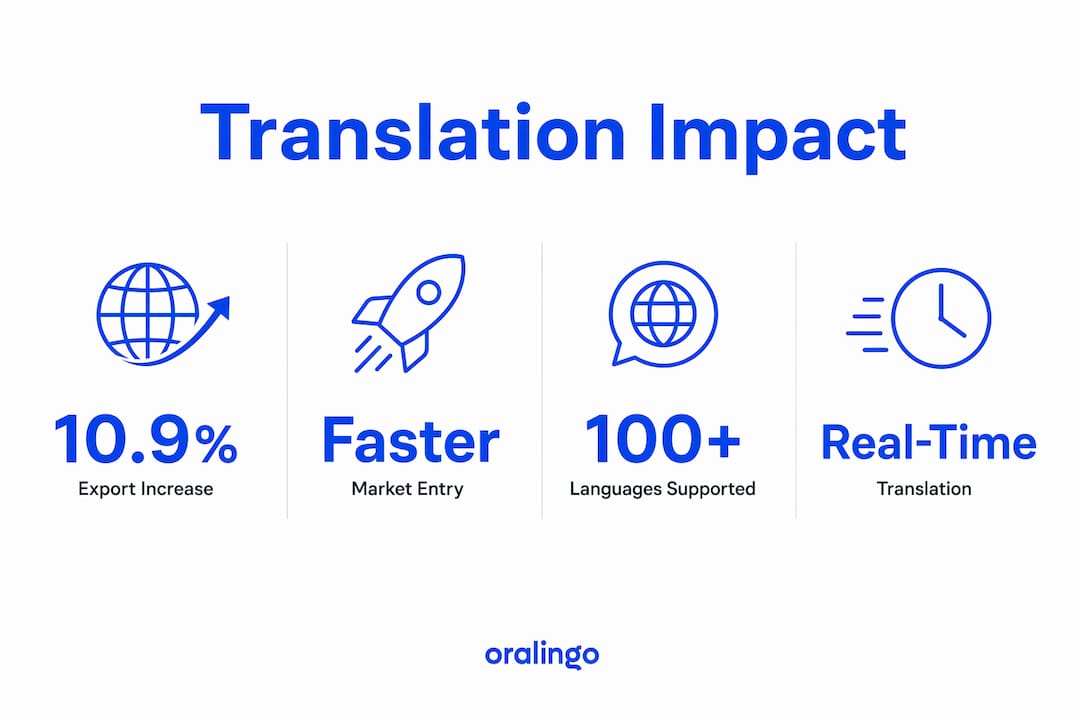
A Management Science study found that machine translation adoption on digital platforms correlated with a 10.9% increase in international trade exports.
For a deal team, this 10.9% uplift in export volume translates directly into faster market entry timelines and more revenue from markets that were previously too costly to engage. That is not a marginal efficiency gain.
Research on cross-cultural business negotiations adds important nuance: AI translation tends to speed up completion time and improve communication accuracy compared to a shared lingua franca, but human interpreters consistently score higher on trust and rapport. The practical implication is a hybrid model, not a replacement.
| Evidence | Metric | Takeaway |
|---|---|---|
| Management Science study | 10.9% export increase after machine translation adoption | Quantified trade uplift from translation technology |
| Cross-cultural negotiation research | Faster completion time with AI translation | Speed advantage over lingua franca communication |
| Cross-cultural negotiation research | Human interpreters score higher on trust and rapport | Hybrid model needed for relationship-sensitive deals |
| BBC / Bernardette Holmes, MBE | Qualitative expert assessment | Machine translation cannot replicate emotional intelligence |
Translation tools also reshape access in ways that compound over time. Real-time translation routes customers who would otherwise avoid language friction, opening micro-markets and small vendor relationships that never existed before.
When is a chat-first, encrypted translation app the right fit?
Not every deal context needs an enterprise localization platform. For transactional negotiations, confidential client chat, and travel logistics, a purpose-built chat translation app covers the core need faster and with less setup.
Features that matter for deal teams:
- Real-time chat translation that displays before the message is sent
- Hands-free voice mode for verbal conversations without typing
- End-to-end encryption for every session
- 100+ language coverage with offline packs for low-connectivity environments
- 99% accuracy rate for everyday business language
| Use case | Key feature needed |
|---|---|
| Transactional negotiation chat | Real-time translation + end-to-end encryption |
| Confidential client communication | End-to-end encryption + no data logging |
| Travel and on-the-ground logistics | Offline packs + voice mode |
| First-read document triage | Camera/AR translation |
When to go beyond a chat app: Binding contracts, certified legal filings, and high-volume localization workflows require professional human translators or an enterprise platform with post-editing controls. A chat app is a first-read and conversation tool, not a legal translation service.
Key Takeaways
Translation apps give deal teams a measurable speed and access advantage, but the human-in-the-loop remains non-negotiable for binding documents and relationship-critical moments.
| Point | Details |
|---|---|
| Quantified trade impact | Machine translation adoption correlated with a 10.9% export increase per the Management Science study. |
| Speed vs. trust trade-off | AI translation speeds negotiations but human interpreters score higher on trust; use a hybrid model. |
| Security checklist first | Verify end-to-end encryption, data retention policy, and admin controls before any confidential negotiation. |
| Escalation rule is mandatory | Agree on a human interpreter escalation path before the first translation-enabled call. |
| Oralingo for secure chat | Oralingo covers real-time chat, voice mode, 100+ languages, and end-to-end encryption for private deal conversations. |
Why this moment matters more than most people realize
The conventional wisdom treats translation apps as a convenience layer — something you pull out when a human interpreter is unavailable. That framing undersells what is actually happening. The export uplift from the Management Science study is not a convenience metric. It is a market-access metric. Teams that treat translation as an operational capability, integrated into their CRM and deal workflows, are opening markets that competitors are not even attempting.
The risk I see most often is the opposite error: teams that over-rely on machine translation for relationship-sensitive deals and then wonder why the counterpart went cold. Bernardette Holmes is right. The technology handles words. It does not handle the pause before an answer, the shift in tone when trust is low, or the cultural weight of a specific phrase. The playbook is not "use the app" or "hire an interpreter." It is both, with clear rules for when each applies. Cross-functional pilots, where legal, sales, and IT align on the escalation rules before the first call, are the fastest path to getting this right.
Oralingo: private, real-time chat translation for deal teams
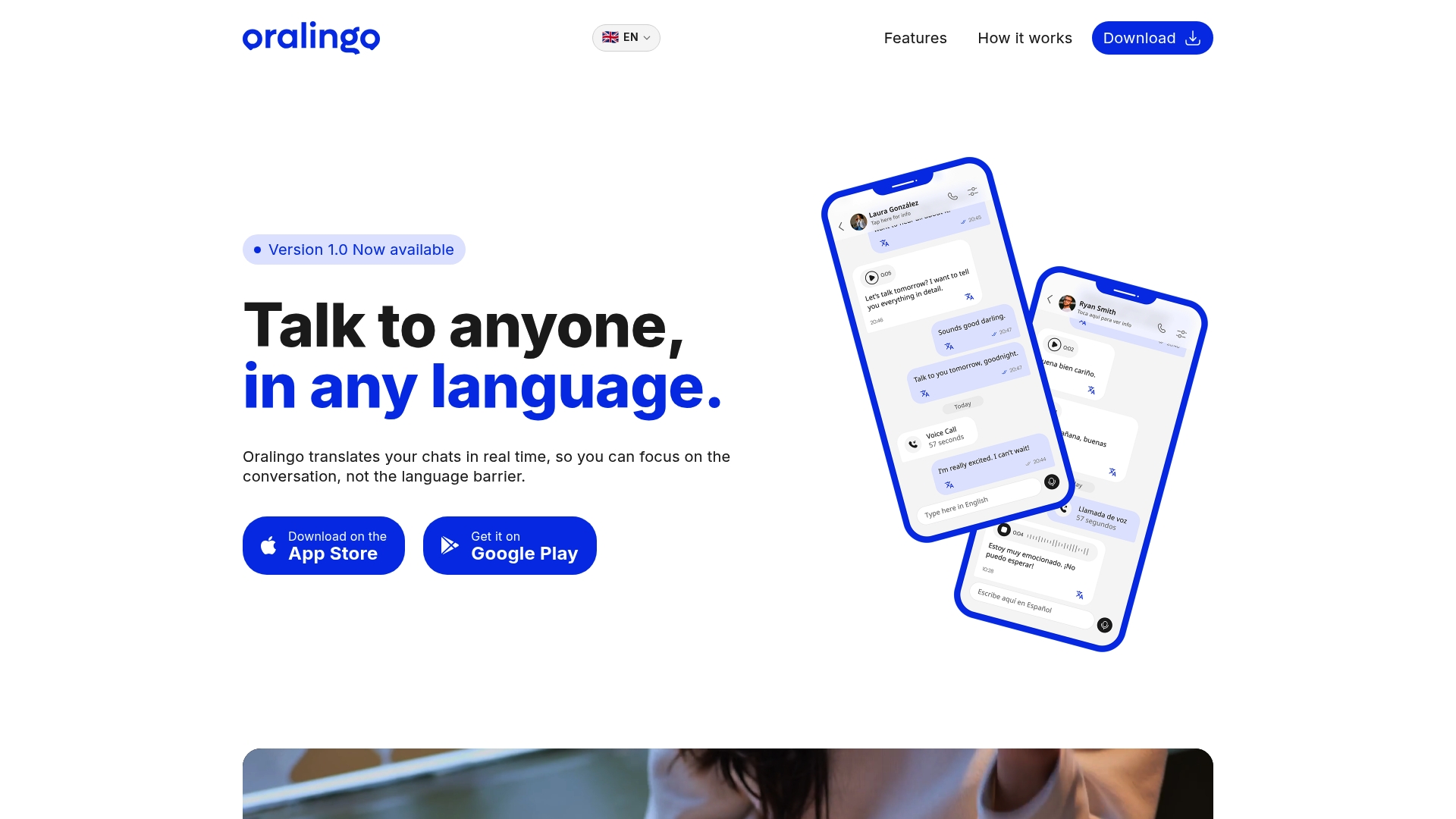
When your deal conversations need to stay confidential, Oralingo gives you real-time chat translation across 100+ languages with end-to-end encryption on every session. Messages translate before they display, so the conversation flows without interruption. The hands-free voice mode handles verbal exchanges without typing, and a 99% accuracy rate keeps everyday business language on track.
Run a 15-minute pilot call: pick a counterpart in a target market, set the app to voice mode, and work through your standard opening agenda. You will know within one call whether it fits your workflow. Always verify binding language with a certified translator before signing anything. Try Oralingo and focus on the conversation, not the language barrier.
Sources and recommended further reading
- Management Science study on machine translation and trade — Primary quantitative evidence for the 10.9% export uplift; essential reading for any ROI case.
- Facilitating cross-cultural business negotiations (IJERD) — Research on speed, trust, and rapport trade-offs between AI and human interpreters.
- How real-time translation could transform travel (BBC) — Includes Bernardette Holmes, MBE, on cultural nuance limits.
- Translation App for Business: A Practical Guide (Mobisystems) — Practical feature guidance on voice, camera, and offline modes.
- Travel Translation Apps: Benefits and Issues (Global Rescue) — Covers technical risks, privacy concerns, and offline mode requirements.
- Oralingo — Talk to anyone, in any language — Product landing page for secure, real-time chat translation across 100+ languages.
- Real-Time Multilingual Negotiation: A Practical Guide (Oralingo Blog) — Operational playbook for negotiation teams using translation apps.