
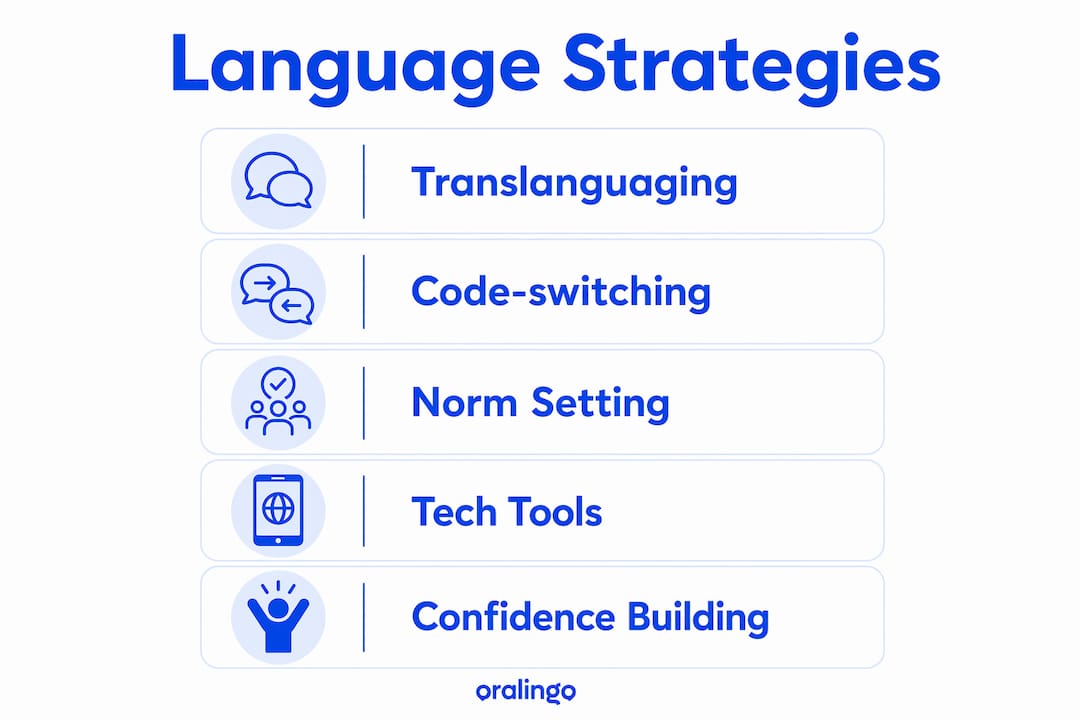
Effective study group communication across languages means every member can participate, understand, and contribute regardless of their native language. Multilingual study sessions rely on two core strategies from linguistics: translanguaging and code-switching. Translanguaging means using all your language resources together, not switching between separate systems. Code-switching means shifting between languages for a specific purpose, like clarifying a concept or signaling group identity. Both strategies appear naturally in multicultural groups, and research confirms that encouraging them rather than suppressing them leads to better learning outcomes. Getting these dynamics right is the foundation of productive cross-cultural communication in any study setting.
What are the key language strategies used by multilingual study groups?
Translanguaging is the most effective communication strategy for multilingual study groups. Research with online German learners shows students use translanguaging spontaneously to fill gaps in their target language and to help peers understand difficult material. This is not a workaround. It is a legitimate learning tool that builds trust and deepens comprehension.
Code-switching serves a different but equally important function. A study of academic WhatsApp groups found that students switch languages for clarification, emphasis, humor, and cultural identity. These are not random switches. Each one carries a social or cognitive purpose that supports the group's shared understanding.

Non-verbal and paralinguistic cues matter just as much as words. Backchanneling techniques like aizuchi, a Japanese practice of giving small verbal or non-verbal signals to show you are listening, help multilingual groups maintain emotional connection during online sessions. Nodding, reacting with emojis in chat, or saying "mm-hmm" all signal active engagement and reduce the isolation that remote learners often feel.
Here are the three core strategies your group should recognize and use:
- Translanguaging: Draw on all available languages to explain, clarify, and teach. Do not restrict members to one language when another would communicate better.
- Code-switching: Allow purposeful language shifts for humor, emphasis, or cultural context. These shifts build group cohesion.
- Backchanneling: Use small verbal and non-verbal signals to show understanding and keep the conversation moving.
Pro Tip: Set a group norm at the start of each session that explicitly welcomes all languages. A single sentence like "Use whatever language helps you explain best" removes the pressure to perform in one language and opens the door to richer discussion.
How can technology enhance communication across languages in study groups?
Technology is the most practical way to close language gaps in real time. AI meeting agents now support 45+ languages for live transcription, summarization, and action item extraction. That means a student speaking Spanish and a peer responding in Mandarin can both see a shared written record of the conversation immediately after each exchange.
Structured online language exchange programs add another layer of support. Programs like the EU-CONEXUS Language Café connect students across institutions for low-pressure multilingual practice. These programs build the conversational confidence that formal study sessions often cannot provide. Weekly events in cities like Boise and Medellín draw hundreds of participants, proving that language exchange groups at scale are both practical and popular.
Real-time translation apps go further by removing the lag between speaking and understanding. Oralingo translates messages instantly before they are displayed, so the conversation flows without interruption. Its hands-free voice mode means you can speak naturally without stopping to type. With support for over 100 languages and a 99% accuracy rate, Oralingo is built for exactly the kind of real-time chat translation that multilingual study groups need.
However, technology has real limits. AI transcription tools struggle with multi-speaker, mixed-language sessions where code-switching happens mid-sentence. A tool that cannot identify who is speaking or which language is being used will produce a transcript that loses critical context.
| Technology type | Best use case | Key limitation |
|---|---|---|
| AI transcription agents | Real-time notes and summaries | Struggles with mid-sentence code-switching |
| Language exchange platforms | Confidence building and practice | Requires scheduled sessions, not instant |
| Real-time translation apps | Live conversation across languages | Accuracy varies by language pair |
| Shared document tools | Async collaboration and review | No spoken language support |
Pro Tip: Combine tools rather than relying on one. Use a real-time translation app like Oralingo for live conversation, then follow up with a shared document where members can add notes in their strongest language.
What practical steps can study groups take to improve cross-language communication?
Structure reduces anxiety more than any single tool or strategy. When multilingual groups operate without clear norms, the most fluent English speakers tend to dominate, and quieter members disengage. A few deliberate practices fix this.
- Set ground rules before the first session. Agree that all languages are welcome. State explicitly that members can use their native language to explain a concept, even if the group's working language is English.
- Use slow pacing and deliberate turn-taking. Assign a facilitator who pauses after each speaker to check for understanding. This is especially useful in cross-language brainstorming sessions where ideas come fast.
- Repeat and paraphrase key points. After a complex explanation, ask one member to restate it in simpler terms. This catches misunderstandings before they compound.
- Use shared visuals. Diagrams, flowcharts, and annotated slides communicate across language gaps in ways that spoken words cannot. A shared screen with labeled visuals gives every member a reference point.
- Build in peer teaching moments. Assign each member a concept to explain to the group. Teaching forces clarity and gives every member a moment of authority regardless of their language level.
- Create low-pressure social time. Peer relationships and trust predict learning outcomes in multilingual groups more reliably than language proficiency alone. A 10-minute informal chat before the session starts builds the social foundation that makes academic work easier.
Emotional safety is not a soft concern. Research at a Finnish university found that students in multilingual mobility programs learned more and participated more actively when they felt their language resources were respected. The group's attitude toward language diversity directly shapes individual confidence.
Pro Tip: Rotate the facilitator role each session. When every member takes a turn managing the group's pace and turn-taking, no single language or personality dominates the dynamic.
What are common challenges in multilingual study groups, and how do you fix them?
The single biggest obstacle in multilingual study groups is what researchers call "monolingual habitus." This is the unspoken expectation that everyone should communicate in one language, usually English, even when doing so disadvantages most of the group. COIL program observations show that this pressure creates identity struggles and reduces participation among non-native speakers. The fix is not technical. It requires the group to consciously reject the idea that one language equals one standard.
Other common challenges include:
- Language anxiety: Members who feel judged for their accent or grammar stop contributing. Address this directly by praising content over form.
- Unequal participation: Fluent speakers fill silence. Use structured turn-taking to give every member equal floor time.
- Technology failures: AI tools that cannot handle mixed-language input produce incomplete transcripts. Test your tools before a session, not during it.
- Cultural misunderstandings: A phrase that signals agreement in one culture may signal polite disagreement in another. Build in a norm of asking for clarification without embarrassment.
"Monolingual expectations in multilingual online collaboration create identity tensions. Recognizing multilingualism promotes collective autonomy and better outcomes." — From Lingua Franca to Multilingual Place-Making
The solution to most of these challenges is the same: make multilingualism the explicit norm, not the exception. Flexible language use that allows native languages for clarification and bonding reduces anxiety and improves group cohesion compared to forced monolingualism. When the group treats every language as a resource, members stop hiding their linguistic identity and start contributing their full knowledge.
Key takeaways
Effective multilingual study groups require explicit language norms, peer trust, and technology that supports mixed-language interaction rather than suppressing it.
| Point | Details |
|---|---|
| Translanguaging builds comprehension | Allow all languages in explanations to fill gaps and support peer learning. |
| Code-switching has real functions | Language shifts for humor, clarity, and identity strengthen group cohesion. |
| Peer trust predicts outcomes | Relationships and emotional safety matter more than language proficiency alone. |
| Technology has limits | AI transcription tools struggle with multi-speaker, mixed-language sessions. |
| Monolingual pressure harms groups | Rejecting single-language norms reduces anxiety and increases participation. |
Why I stopped treating language barriers as the main problem
After spending years watching multilingual study groups operate, the pattern that stands out most is this: the groups that struggle are rarely struggling because of language. They are struggling because of hierarchy. Someone in the group has decided, consciously or not, that one way of communicating is the right way. Every other approach gets treated as a deficit.
The research backs this up. Students' anxiety in multilingual groups drops when peer relationships are strong, not when everyone reaches the same language level. That reframes the whole problem. You do not need to fix anyone's English. You need to build a group where people feel safe enough to think out loud in whatever language helps them think best.
Technology is genuinely useful here, and Oralingo does something specific that matters: it translates before the message appears, so the conversation does not stop. That is a real difference from tools that make you wait. But technology is a support, not a substitute for the group culture you build. The best multilingual study sessions I have seen use tools to reduce friction, not to replace the human work of listening carefully and making space for every voice.
My honest advice: spend the first 15 minutes of your group's first session talking about language, not the subject you are studying. Agree on what is allowed. Name the languages in the room. That conversation does the most work.
— Poul
Oralingo for your multilingual study group
Multilingual study sessions work best when the technology gets out of the way and lets you focus on the ideas.
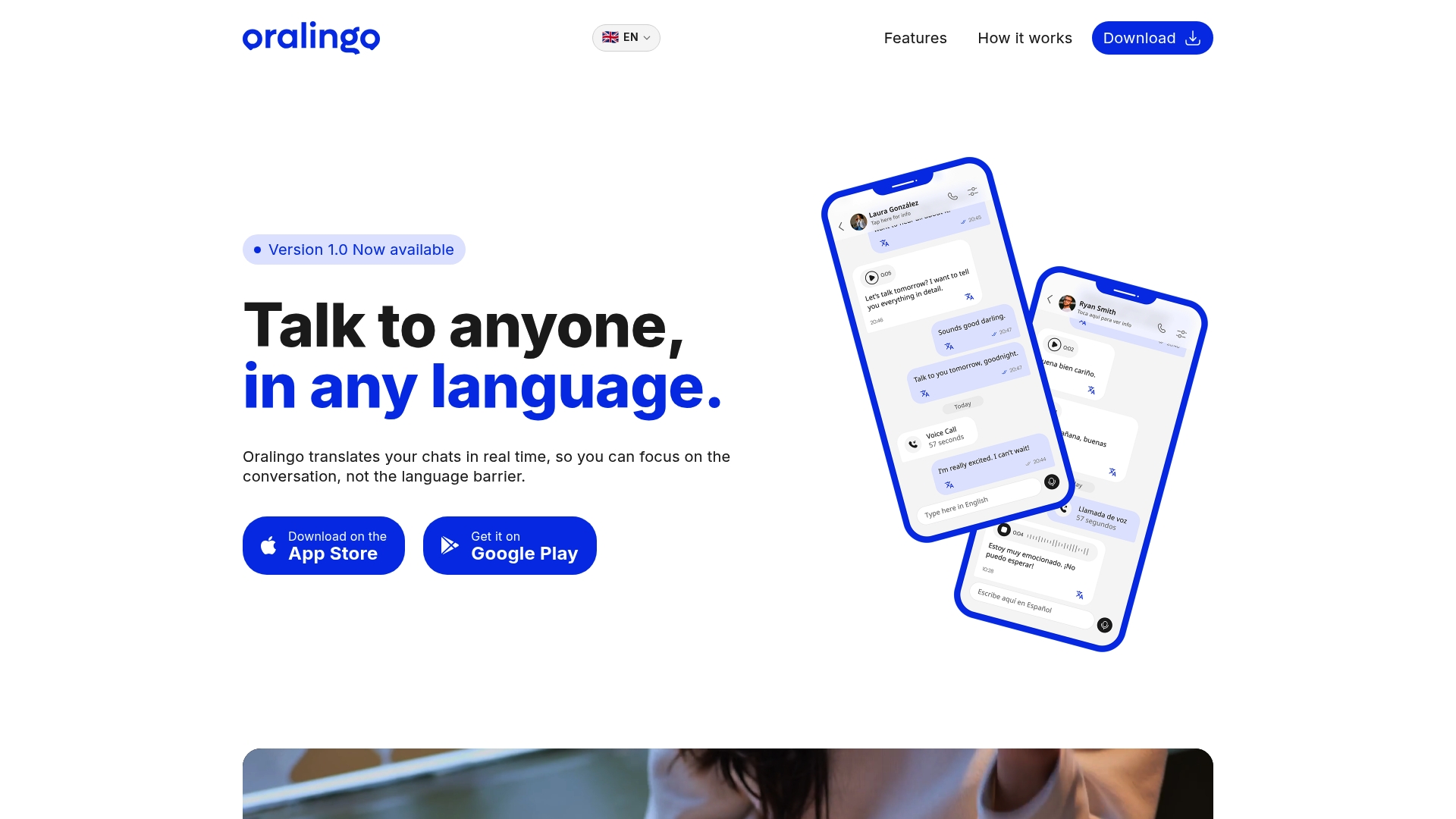
Oralingo translates messages instantly before they appear, so your group reads in its own language without any pause in the conversation. The hands-free voice mode means you can speak naturally, and Oralingo handles the rest. With over 100 languages supported and a 99% accuracy rate, it covers the language combinations most study groups actually use. Every conversation is end-to-end encrypted, so your group's discussions stay private. If your group is ready to talk across any language, Oralingo makes that possible without setup complexity or interruptions. Learn more about how instant message translation works in practice.
FAQ
What is translanguaging in a study group?
Translanguaging means using all your available languages together to communicate and learn, rather than keeping each language separate. Research shows it helps students fill gaps in their target language and supports peer teaching in multilingual groups.
How does code-switching help multilingual study sessions?
Code-switching lets group members shift languages for clarification, emphasis, or cultural context. Studies of academic WhatsApp groups confirm these switches serve specific communicative functions that improve shared understanding.
What technology works best for cross-language group communication?
Real-time translation apps like Oralingo work well for live conversation, while AI transcription agents handle note-taking in 45+ languages. Combining both tools covers speaking and written record-keeping in multilingual sessions.
Why do some multilingual study groups fail to communicate effectively?
The most common cause is monolingual pressure, where the group expects everyone to use one language only. COIL program research shows this creates identity tension and reduces participation among non-native speakers.
How can you build confidence in a multilingual study group?
Focus on peer relationships before language proficiency. Research from a Finnish university found that trust and emotional safety predict participation and learning outcomes more reliably than language skill alone.