
Setting communication norms for multilingual teams is the process of defining shared expectations that allow people speaking different languages and carrying different cultural assumptions to work together without constant friction. Most managers treat this as a language problem. It is actually a systems problem. The real industry term for this practice is "cross-cultural communication standards," and getting it right requires more than a shared language. Research confirms that implicit norms cause exhaustion from constant code-switching, while explicit documentation reduces that fatigue and builds psychological safety. Teams that write their norms down perform better and stay more engaged.
What does it take to set communication norms in multilingual teams?
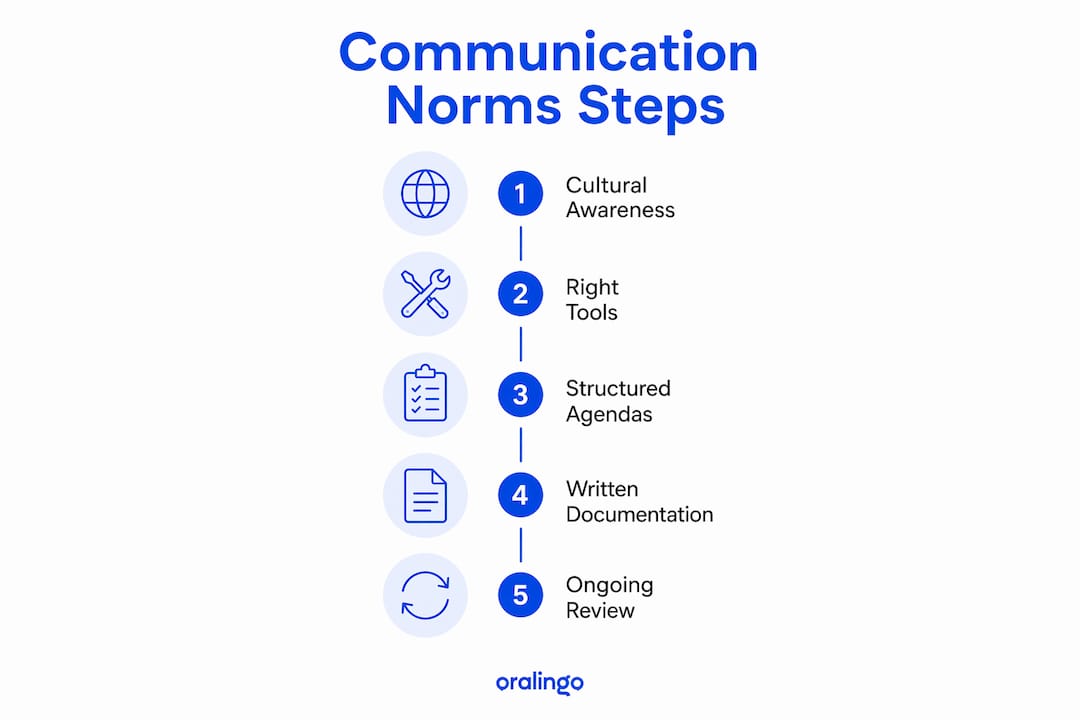
Every manager needs two things before writing a single norm: cultural awareness and the right tools. Cultural awareness means knowing that your team members do not share the same assumptions about directness, silence, or hierarchy. A team member from a high-context culture may interpret silence as agreement. A colleague from a low-context culture may read the same silence as confusion. Without that baseline knowledge, any norm you write will favor one group over another.
The tools layer sits on top of that awareness. AI-powered real-time translation has become a practical option for multilingual meetings, but it works best when you pair it with a clear usage policy. Research shows that AI interpreters serve best when targeting specific pain points like meetings that require repeated explanations, not as a blanket replacement for human judgment. Human oversight stays non-negotiable for complex or sensitive conversations.

Structured agendas and written documentation round out the foundation. Successful multilingual teams balance real-time verbal communication with written records so non-native speakers get the processing time they need. The table below shows the core tool categories and what each one contributes.
| Tool category | Primary contribution |
|---|---|
| AI real-time translation | Reduces language gaps in live meetings and chat |
| Shared written agendas | Gives all participants equal preparation time |
| Asynchronous messaging channels | Allows processing time before responding |
| Documented norm guidelines | Removes ambiguity about expected behavior |
| Multilingual collaboration platforms | Centralizes communication across languages |
Key prerequisites before you write any norm:
- Conduct a cultural awareness audit of your team's backgrounds and communication styles.
- Identify which meetings or channels create the most friction.
- Choose translation tools with a clear policy on when human review is required.
- Confirm that all team members can access every channel you plan to use.
How to establish clear, inclusive communication guidelines for multilingual teams
Clear guidelines start with writing down what you already expect but have never said out loud. Most teams operate on invisible rules. Making those rules visible is the single most effective thing you can do to create an inclusive multilingual team culture.
Follow these steps to build your guidelines:
- Document meeting etiquette. State the expected language for meetings, how to signal you need clarification, and who summarizes decisions in writing afterward. Rotating meeting times across time zones prevents the same group from always attending at inconvenient hours.
- Set response time expectations. Write down how quickly team members should reply to messages on each channel. A 24-hour window for asynchronous channels respects processing time for non-native speakers.
- Define feedback norms. Specify whether feedback is given publicly or privately, directly or through a manager. Cultural differences in feedback styles mean that a norm favoring blunt public critique will silence team members from cultures that prefer private, indirect approaches.
- Clarify decision-making paths. Write down who owns each type of decision and how escalation works. Language friction often masks deeper gaps in hierarchy, and managers must clarify decision ownership explicitly rather than assuming everyone understands the chain of command.
- Simplify your language standard. Require plain language in written communication. Ban idioms, sports metaphors, and culture-specific humor in official channels. For complex topics, default to writing over verbal discussion so everyone can re-read and process at their own pace.
Pro Tip: Phrase norms as shared agreements, not rules. "We ask for clarification without judgment" lands better than "You must ask questions." That small shift reduces code-switching exhaustion and signals psychological safety.
Cross-language brainstorming sessions benefit from the same written-first approach. Send prompts in advance, collect written responses before the live session, and use the meeting to discuss rather than generate ideas from scratch.
What common challenges arise in multilingual team communication?
The most common challenge is not a language gap. It is a cultural assumption gap. Unspoken cultural assumptions about clarity, hierarchy, and feedback cause more misunderstandings than vocabulary differences. A manager who values directness may read a polite, indirect response as evasion. The team member writing that response may believe they communicated clearly.
Watch for these specific friction points:
- Participation imbalance. Non-native speakers often contribute less in fast verbal meetings. Track who speaks and who stays silent across several meetings before drawing conclusions.
- Feedback avoidance. Team members from cultures that avoid direct disagreement may say "yes" when they mean "I need more information." Build in written follow-up after verbal agreements.
- Translation over-reliance. Using AI translation without human review for nuanced topics creates errors that compound over time. Set a policy that flags sensitive topics for human verification.
- Exhaustion from code-switching. Team members who constantly shift between their native language and the team's working language carry a cognitive load that reduces performance. Explicit norms reduce this burden.
"Language diversity is not just about translation. Addressing cultural dynamics in communication is the key to true inclusion. Teams that treat language as the only barrier miss the deeper work of building shared expectations across cultures."
Monitoring is the fix for most of these challenges. Run a short pulse check every quarter. Ask team members whether the current norms feel fair and whether they feel confident participating. Adapt based on what you hear, not what you assume.
How do you lead and sustain an inclusive communication culture?
Leadership behavior sets the actual norm, regardless of what the written guidelines say. If you interrupt non-native speakers, use idioms in meetings, or skip the written summary, your team will follow your example rather than the document. Intentional leadership communication directly impacts trust, engagement, and psychological safety in multilingual teams.
Sustaining an inclusive culture requires these leadership practices:
- Model the norms publicly. Use plain language in your own messages. Ask for clarification yourself, so team members see that asking is safe.
- Integrate norms into onboarding. New team members should receive the communication guidelines on day one, with a short walkthrough from their manager. Do not assume they will absorb norms by observation.
- Build cultural intelligence. Learn the basic communication preferences of each culture represented on your team. You do not need to become an expert. You need enough knowledge to avoid the most common misreads.
- Create space for norm revision. Schedule a quarterly review where team members can flag norms that are not working. A norm that made sense six months ago may not fit a team that has grown or changed.
Pro Tip: When a conflict arises that seems like a personality clash, check first whether it is actually a cultural communication mismatch. Ask both parties to describe what they expected, not just what happened. The gap between those two descriptions usually reveals the real issue.
Connecting communication across time zones is one area where technology and leadership practice must work together. Rotating meeting times is a norm. Using AI translation to support asynchronous updates is a tool. Neither works without the other.
Psychological safety is the outcome you are building toward. Team members who feel safe asking questions, admitting confusion, and offering dissenting views produce better work. That safety does not happen by accident. It comes from consistent leadership behavior and written norms that back it up.
Key Takeaways
Setting communication norms in multilingual teams requires explicit written guidelines, cultural awareness, and consistent leadership modeling to reduce misunderstandings and build psychological safety.
| Point | Details |
|---|---|
| Write norms explicitly | Document meeting etiquette, response times, and feedback styles so nothing stays implicit. |
| Address cultural gaps, not just language | Unspoken assumptions about hierarchy and feedback cause more friction than vocabulary differences. |
| Use AI translation with oversight | AI tools reduce language barriers in meetings but require human review for complex topics. |
| Model the norms as a leader | Leadership behavior sets the real standard; written guidelines only work if leaders follow them. |
| Review and adapt regularly | Run quarterly pulse checks and revise norms based on team feedback, not assumptions. |
What I've learned from watching multilingual teams get this wrong
The mistake I see most often is treating communication norms as a one-time setup task. A manager writes a guidelines document, shares it in a kickoff meeting, and considers the job done. Six months later, the team is back to operating on invisible rules, and the document lives forgotten in a shared folder.
The second mistake is confusing English fluency with communication clarity. A team where everyone speaks English does not automatically share the same assumptions about how to give feedback, signal disagreement, or escalate a problem. Most multilingual teams mistakenly focus on English fluency when the real work is structured documentation and asynchronous communication that gives everyone processing time.
What actually works is treating norms as a living system. The best managers I have observed revisit their guidelines every quarter, ask direct questions about what is and is not working, and make small adjustments without drama. They also model the norms themselves, which is the part most leaders skip. You cannot write "we ask for clarification without judgment" and then visibly sigh when someone asks a basic question in a meeting.
Technology helps, but it does not replace the cultural work. AI translation removes a real barrier. It does not remove the need to understand why a team member from a high-context culture will never tell you directly that your plan has a flaw. That understanding comes from curiosity, not software.
— Poul
How Oralingo supports multilingual team communication
Managing a multilingual team gets easier when your tools match your norms.
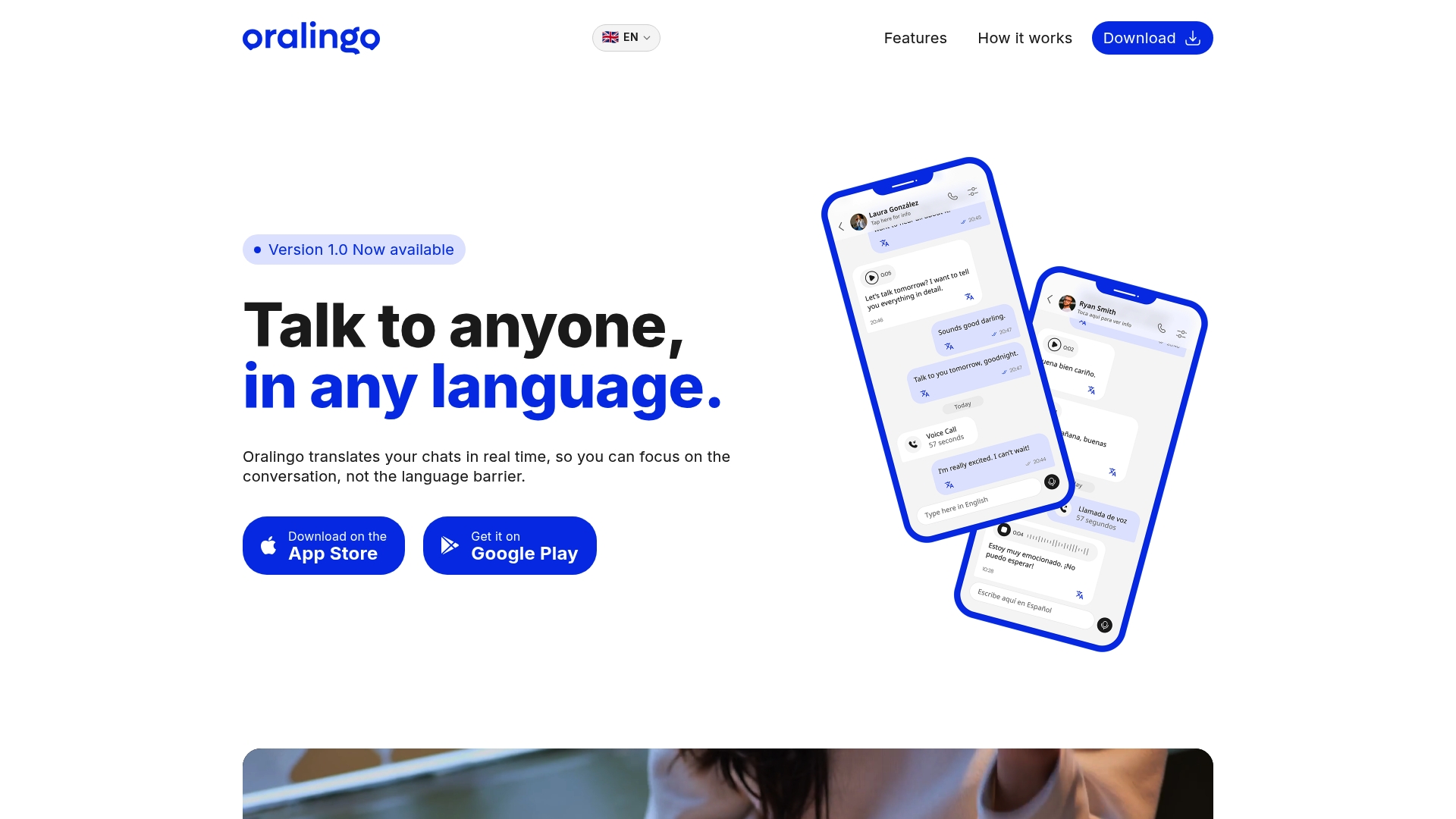
Oralingo translates messages instantly before they appear, so your team reads in their own language without any delay or interruption. With support for over 100 languages and a 99% accuracy rate, Oralingo fits directly into the kind of asynchronous and real-time communication workflows that multilingual teams rely on. Its hands-free voice mode also supports verbal check-ins without requiring anyone to type. Every conversation stays private with end-to-end encryption. If you are building communication guidelines for a multilingual team and need a translation layer that works quietly in the background, try Oralingo and see how much smoother your team's daily communication becomes.
FAQ
What are communication norms in multilingual teams?
Communication norms in multilingual teams are documented expectations about how team members exchange information across language and cultural differences. They cover meeting etiquette, response times, feedback styles, and decision-making processes.
Why do explicit norms reduce code-switching exhaustion?
Explicit norms remove the guesswork that forces non-native speakers to constantly adapt their communication style. When expectations are written down, team members spend less cognitive energy interpreting unspoken rules.
How often should multilingual communication guidelines be updated?
A quarterly review is the standard practice. Teams change, new members join, and norms that worked at one size or composition may not fit six months later.
What role does AI translation play in multilingual team norms?
AI translation reduces language barriers in live meetings and asynchronous messaging, but it works best when paired with a clear policy on when human review is required for sensitive or complex topics.
How do you build psychological safety in a multilingual team?
Psychological safety comes from consistent leadership behavior and written norms that back it up. Managers who model plain language, ask for clarification themselves, and respond without judgment create the conditions where all team members feel confident participating.